UC ANR is committed to providing an accessible and inclusive web experience for all users. If you encounter an accessibility barrier or need content in an alternative or remediated accessible format, please contact anraccessibility@ucanr.edu.
Today is the fourth in a series of posts outlining current University of California weed science research published in the California Weed Science Society (CWSS) Research Update and News (June 2013, Volume 9, #2).
Watching honey bees zero in on the zinnias: Zounds! Zinnias, known throughout the world as showy and easy-to-grow flowers, are as colorful as they are attractive to bees. Last week we watched a honey bee head toward a zinnia, grab some nectar, buzz around the blossom, and return again and again.
Kassim Al-Khatib, Director of the UC-Statewide Integrated Pest Management (UC-IPM) Program, sent a couple links about the identification of Palmer amaranth and comparison to other amaranth (pigweed) species.
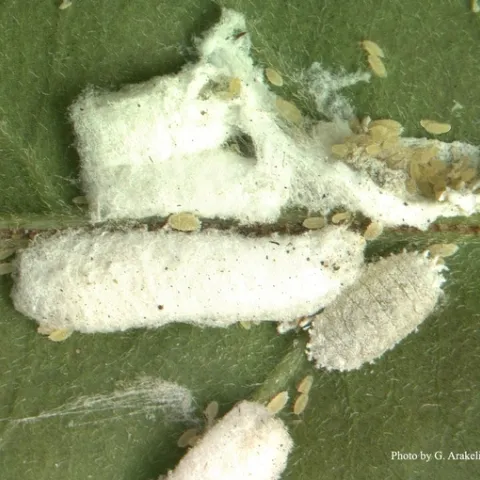
Bougainvillea mealybug, Phenacoccus peruvianus was recently found in Los Angeles County. Dr. Gevork Arakelian, Senior Biologist, Los Angeles County Department of Agricultural Commissioner/Weights and Measures prepared this report.
At first thought this sounds like a dumb question. Of course we need to schedule irrigations just like we schedule lunch; we get hungry, plants get thirsty. End of story.
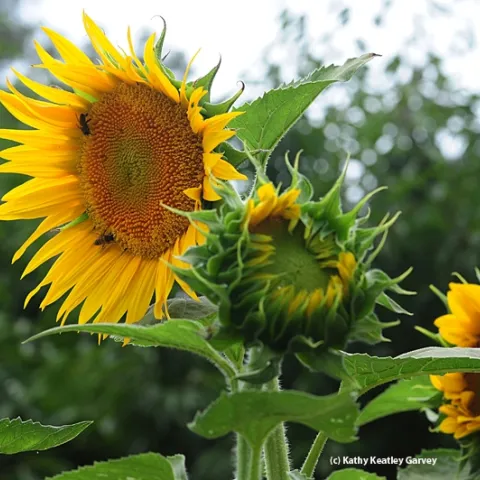
Bees, butterflies and sunflowers at the California State Fair? Yes. The state fair, which opened July 12 and ends July 28, is a good place to see a bee observation hive, honey bees on sunflowers, carpenter bees on petunias, and butterflies in the Insect Pavilion, aka Bug Barn.
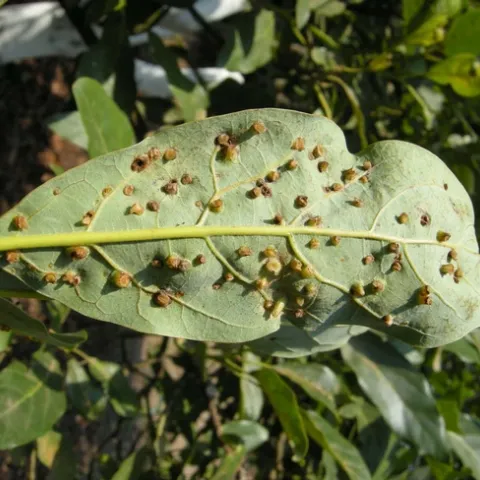
Avocado leaves infested with trioza was intercepted in March at the San Diego/Mexico border. Avocado leavers are used to wrap tamales. Trioza infested leaves make a tastier tamale. Introduction Figure 1. Adult Trioza on a Hass avocado leaf.
Rather than applying herbicides, try a cover crop to prevent weeds in anchor rows. Cover crops in anchor rows can suppress weed growth and additionally help to minimize soil erosion and nutrient and sediment loss when it rains.
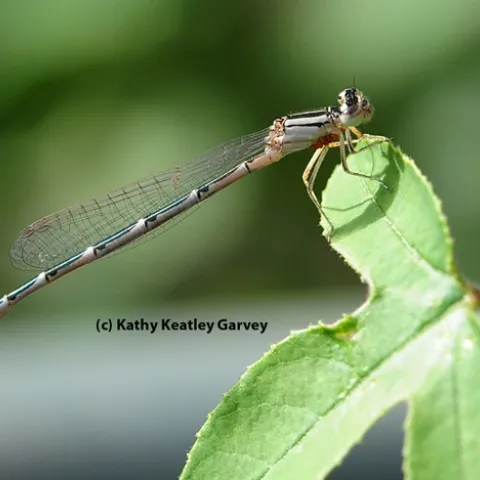
It pays to have a pond. A pond attracts dragonflies and damselflies. Last weekend, though, we spotted a damselfly a good 65 feet away from our pond. It touched down on our passion flower vine (Passiflora). Lights, camera, action...