UC ANR is committed to providing an accessible and inclusive web experience for all users. If you encounter an accessibility barrier or need content in an alternative or remediated accessible format, please contact anraccessibility@ucanr.edu.
Take one nationally celebrated artist and one nationally renowned entomologist. Blend together. Add their deep concern for the declining honey bee population. Then just add bees. Ceramic bees.
Join UC Farm Advisor Janet Caprile for an overview of weed management techniques for perennial and annual cropping systems that don't rely on synthetic herbicides or chemicals. Wednesday, July 31, 2013 Livermore, California For more information, click HERE.
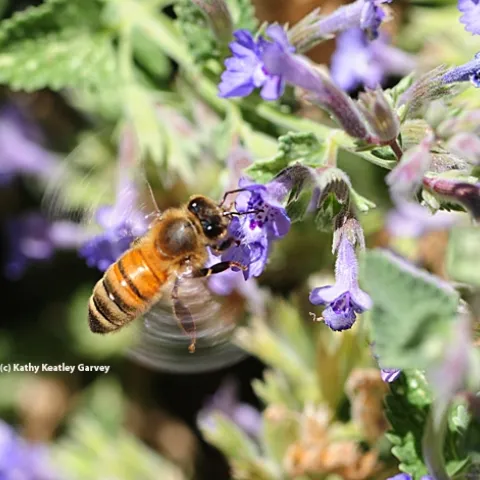
How fast can a honey bee fly? We captured these photos today of a honey bee nectaring on catmint (genus Nepeta). The bee was moving fast. To blur the wings, we set the shutter speed at 1/640 of a second with an f-stop of 13 and IS0 of 800.
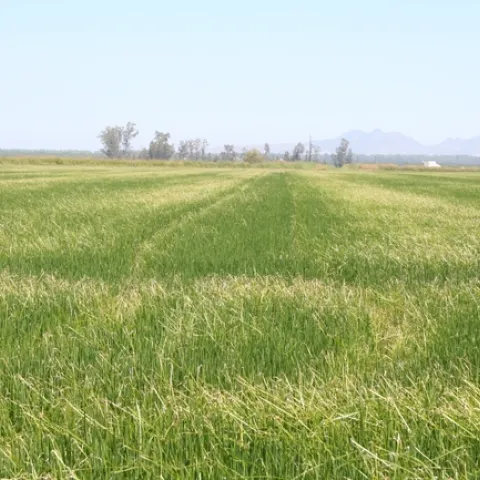
I've been getting calls about sedge surviving propanil applications. Last year, research conducted by Albert Fischer showed that there are populations of smallflower umbrellasedge that are truly resistant to propanil (read the article here).
Farming has plenty of challenges. One of the hazards that farmers worry about the least are the dangers from working in the sun year-round. Harvest time can provide a reminder for farmers to pay attention to the condition of their skin.
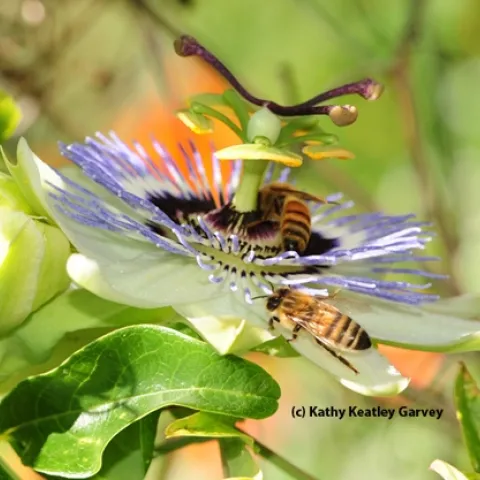
Honey bees are passionate about passion flowers (Passiflora). The intricate tropical flower is their private merry-go-round, their favorite hide 'n seek place, their gathering spot.
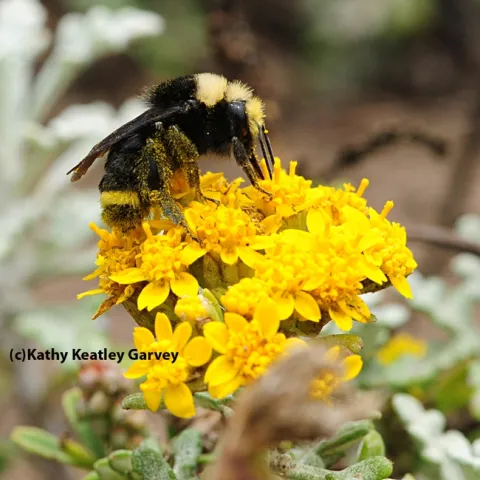
If you're on your way to Bodega Bay in Sonoma County, stop at Bodega Head and see all the yellow-faced bumble bees on a yellow coastal plant, Eriophyllum, commonly known as the woolly sunflower. The bumble bees, Bombus vosnesenskii, are back and they particularly like the Eriophyllum.
I thought I share a rundown of last week's 57th Annual Weed Day hosted by the UC Davis Weed Science Program and the UC Weed Research and Information Center. This year the program was organized and (mostly) hosted by CE Weed Specialist Joe DiTomaso.
Squirrels eat a variety of fresh greens as well as seeds and dried nuts. In spring, ground squirrels prefer greens over seeds and nuts. Once the natural grasses begin to dry and wither, squirrels will actively forage for seeds.