UC ANR is committed to providing an accessible and inclusive web experience for all users. If you encounter an accessibility barrier or need content in an alternative or remediated accessible format, please contact anraccessibility@ucanr.edu.
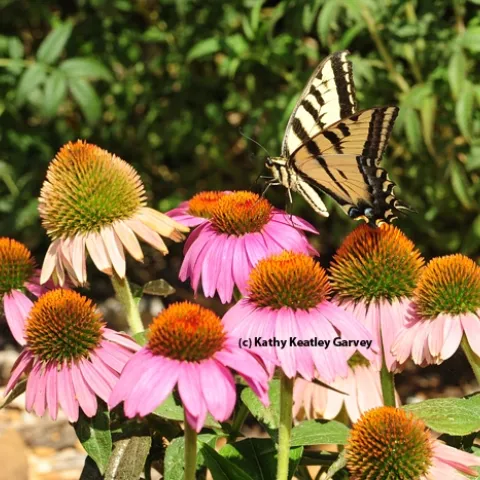
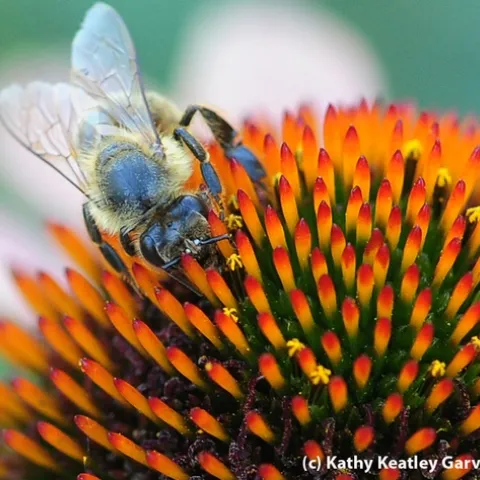
You never know what you'll see on a purple coneflower (Echinacea purpurea). Honey bees. Check. Sweat bees. Check. Hummingbirds. Check. But sometimes these rough-and-tumble blossoms are graced with a Western tiger swallowtail butterfly (Papilio rutulus).
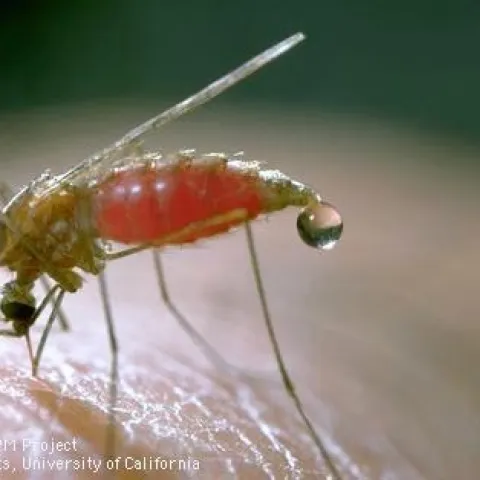
This article was originally published in the June 2013 issue of the Retail Nursery and Garden Center IPM News. Read the entire article at http://www.ipm.ucdavis.edu/RETAIL/retail-newsletter.html Adult mosquito.
In this Issue: Cultural Practices to Reduce Pest and Disease in Avocado and Citrus Polyphagous Shot Hole Borer in California Electronic "sniffer" for Detecting HLB Important Information Sources related to Fire Management and Protection Be Kill in Oregon - A Reminder of Pesticide Use...
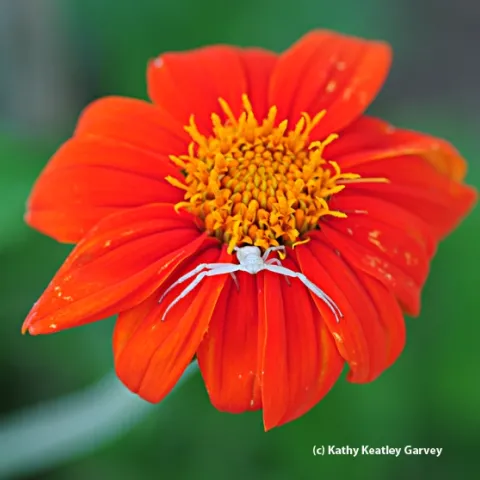
They're ambush predators. Here you are, a bee, touching down on a flower and little do you know there's a patient and persistent crab spider lying in wait.
Irrigation Management Tools for Developing Walnut Trees Walnut Husk Fly Trap Study Howard Nut Drop Ethephon Use Consideration in the Sacramento Valley...
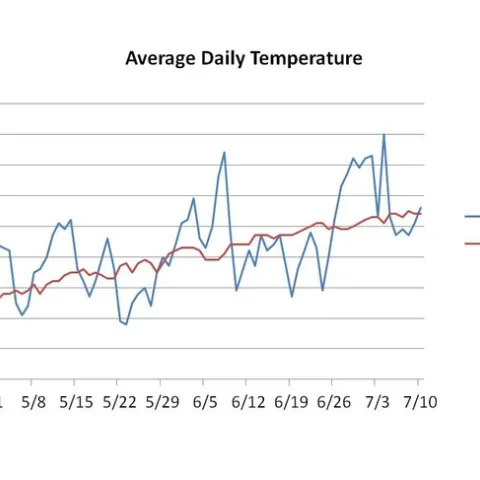
A few weeks ago I was on the phone with a grower worried that he had put too much nitrogen on his rice for the cool year we were having. Then, the weather turned and got really hot.
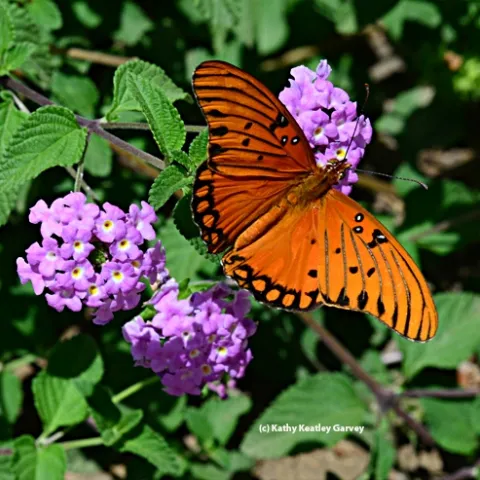
First the lantana, and then the passion flower vine. The Gulf Fritillary butterflies (Agraulis vanillae) flutter daily around our backyard. They stop for a little nectar from lantana (family Verbenaceae), and then head over to the passion flower vines (genus Passiflora) to breed or lay their eggs.
You've probably seen a blue moon, which happens every two to three years. That's when a second full moon occurs in a single calendar month. You've also probably seen blueprints, blue books and blue-plate specials. You've sung the blues and you've been blue.
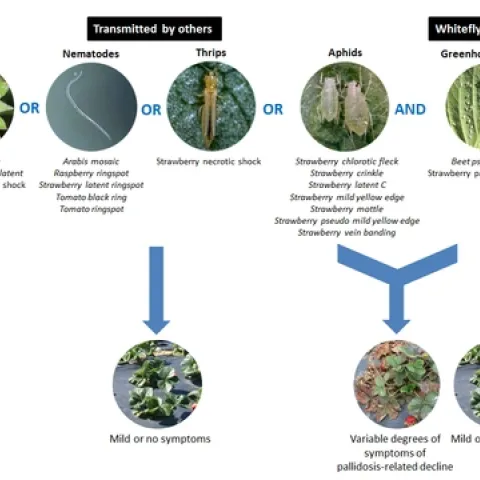
Greenhouse whitefly (Trialeurodes vaporariorum) is the predominant species of whiteflies on strawberries in the Central Coast. What used to be a pest causing yield loss through direct damage has now emerged as a vector of a devastating viral disease called pallidosis-related decline of strawberries.
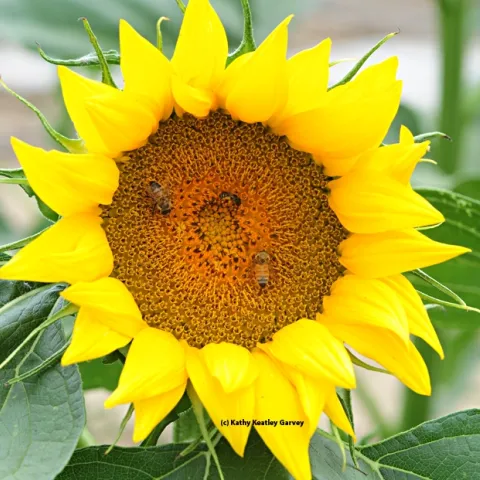
You can tell it's summer along Yolo County roads by the acres and acres of sunflower fields. Looking like real-life Van Gogh paintings (Van Gogh painted them in vases, Mother Nature paints them in rows), the sunflower fields are nothing short of spectacular.