UC ANR is committed to providing an accessible and inclusive web experience for all users. If you encounter an accessibility barrier or need content in an alternative or remediated accessible format, please contact anraccessibility@ucanr.edu.
Joe DiTomaso and I are supposed to monitor the effectiveness of a hydrilla treatment in a pond near Marysville. I usually work on rangeland, where things stay put - the plants don't float away, and the equipment doesn't sink out of sight.
Chemical treatment of water for microirrigation systems is required when the water may cause chemical precipitate or biological clogging of the microirrigation drippers or microsprinklers. The chemical treatment varies depending on the clogging source.
A reminder to all who registered already that the 57th Annual UC Davis Weed Day is this Thursday (July 11th). I've attached the agenda for the morning field tour and the afternoon presentation schedule at the end of this post.
A link today to an article in the newest issue of the California Weed Science Society (CWSS) Research Update and News. (June 2013, Vol 9, Number 2) edited by UC Farm Advisor Steve Orloff.
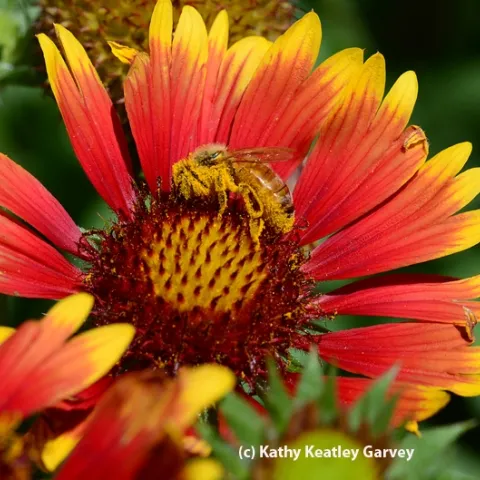
The California Gold Rush (1848-1855) has nothing on honey bees. Sometimes foraging honey bees are covered with their own kind of gold--pollen--or protein for their colonies.
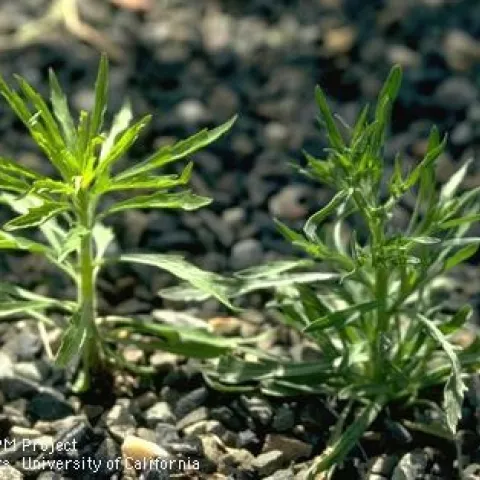
It is not always easy to kill weeds with herbicides for several reasons, but if you apply the right material at the right time to susceptible weeds you expect control. But you should never assume it, because resistant weeds rely on this assumption.
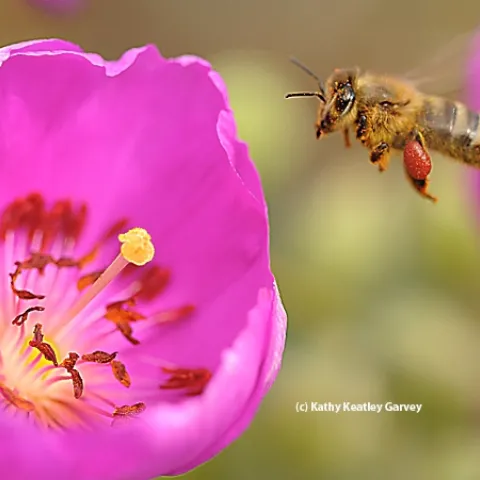
It's the Fourth of July--a time to celebrate our nation's Independence Day. Hurrah for the red, white and blue! That also covers red, white and blue pollen collected by our honey bees. If you look closely, you'll see their "patriotic" colors.
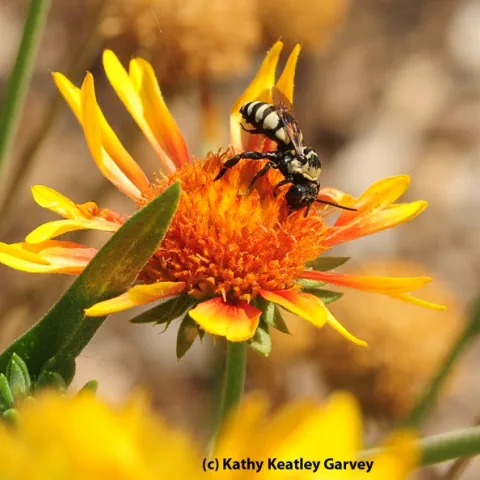
When you visit the half-acre Hagen-Dazs Honey Bee Haven, a bee friendly garden on Bee Biology Road at the University of California, Davis, you might just see a cuckoo bee.
![S-AV-CULT-IR[1]](/sites/default/files/styles/large_square/public/2013-07/blog16413.jpg.webp?h=d7a97d08&itok=P2MPBPk4)