UC ANR is committed to providing an accessible and inclusive web experience for all users. If you encounter an accessibility barrier or need content in an alternative or remediated accessible format, please contact anraccessibility@ucanr.edu.
According to a previous ANR blog post, the 2013 processing tomato crop in California is experiencing worse-than-usual curly top problems, which is caused by a complex of Beet Curly Top Viruses (BCTVs) (Processing tomatoes face critical threat: curly top).
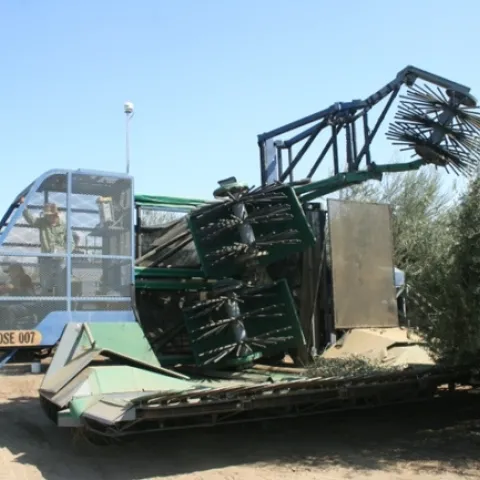
INTRODUCTION When and how olives are harvested are among the most important factors in both the quantity and quality, and therefore value of processed table olives and olive oil.
Poison hemlock, Conium maculatum, was brought from Europe into the U.S. as an ornamental in the 1880s and now occurs throughout North America. In California it is most commonly found at lower elevations and coastal regions but it is continuing to spread into other areas.
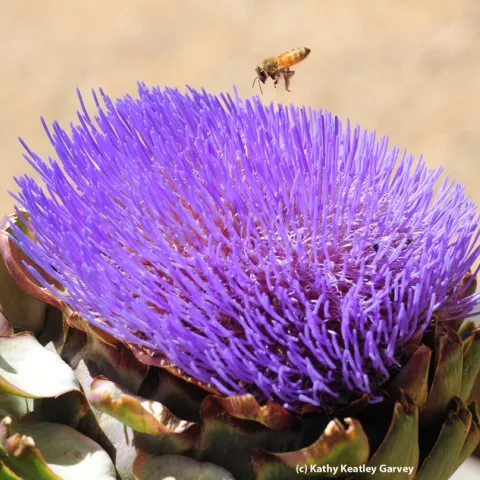
Flowering artichokes indicate one of two things (1) someone never bothered to harvest them or (2) someone loves bees. We let our artichokes flower. So does the Hagen-Dazs Honey Bee Haven, a half-acre bee friendly garden on Bee Biology Road next to the Harry H. Laidlaw Jr.
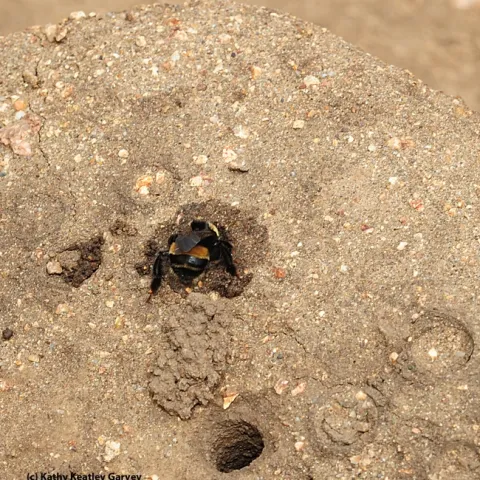
Those who hike the trails of Bodega Head, a small promontory in Sonoma County overlooking the Pacific Ocean, enjoy the colorful wildflowers, the roaring ocean, and a sheltered sandy beach. They picnic. They play. They pose for photos. But there's one thing they don't do.
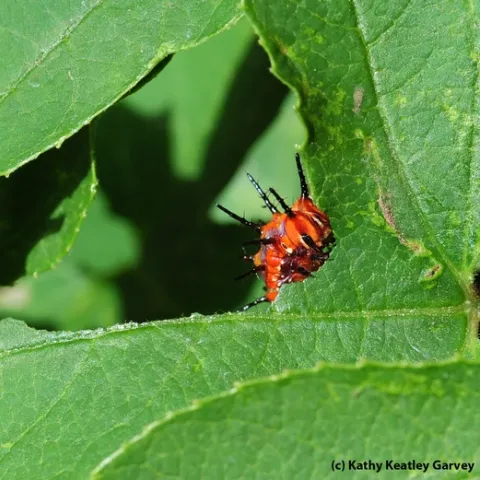
The scrub jays are just doing their job. But they're doing it too well. The gulf frittillary butterflies (Agraulis vanillae) are mating and depositing their eggs on our passion flower vines--as we want them to do--but complete metamorphosis always seems to be incomplete.
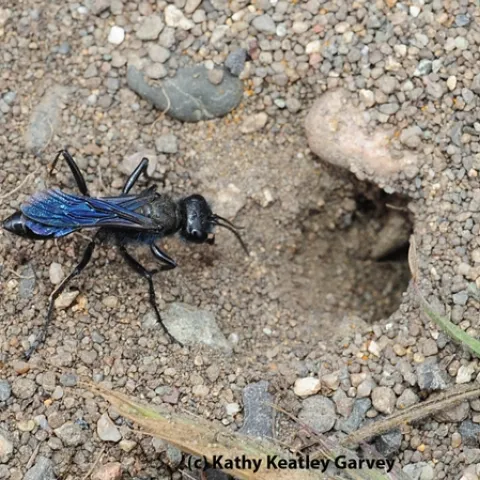
Visitors to Bodega Head, Sonoma County, will see lupine, California golden poppies, wild radish, mustard, seaside daises and scores of other flowers in bloom. And if they're lucky--a metallic blue digger wasp from the Sphecidae family of thread-waisted wasps.