UC ANR is committed to providing an accessible and inclusive web experience for all users. If you encounter an accessibility barrier or need content in an alternative or remediated accessible format, please contact anraccessibility@ucanr.edu.
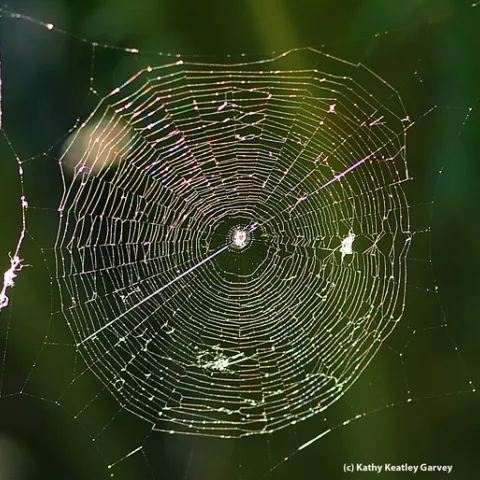
A spider web is one of nature's most marvelous wonders. It's art, it's architecture, and it's engineering. The silk is as beautiful as it is deceiving. It's 10 times stronger than Kevlar; as sticky as cotton candy covered with honey; and as flexible as a classical ballet dancer.
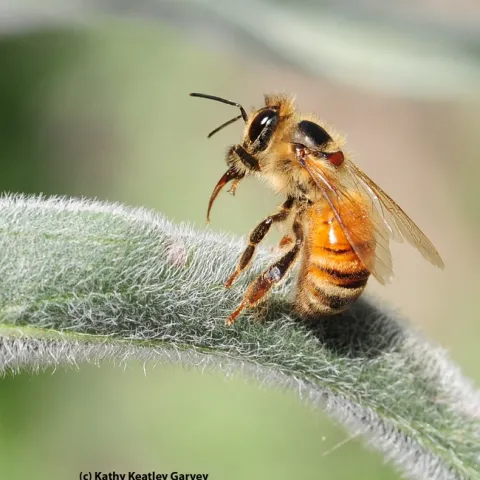
"Where do foraging bees go to die?" That question was asked this week of honey bee guru Eric Mussen of the UC Davis Department of Entomology, who serves as the statewide Extension apiculturist. "Do they return to the hive? Do they retire and live out their last days inside?" he was asked.
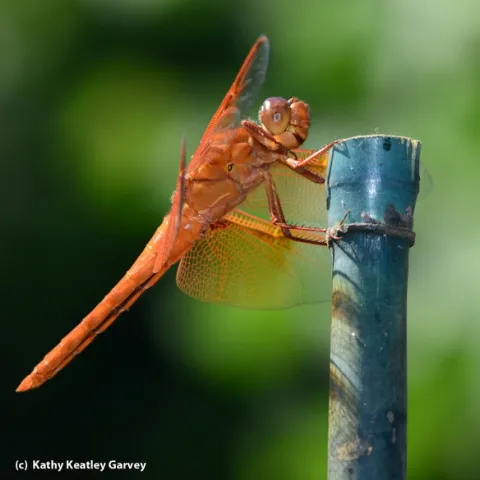
I usually can't get within 25 yards of a dragonfly. Not so in our back yard. A flame skimmer or firecracker skimmer (Libellula saturata) has apparently decided that this is where he wants to be.
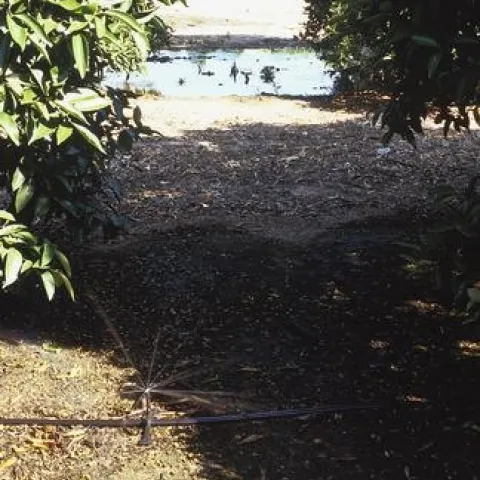
By the beginning of the irrigation season, the entire root zone is usually wetted by winter rainfall. Under low volume irrigation during the irrigation season only fifty percent or less of the root zone is wetted with each irrigation on most soil types.
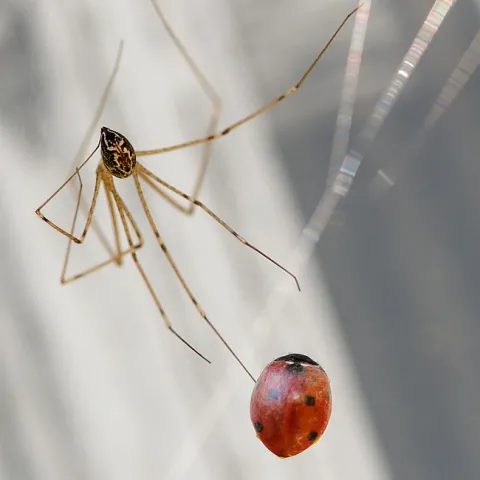
The lady beetle, aka ladybug, was at the wrong place at the wrong time. We don't know how she managed to get tangled in the cellar spider's web or why the cellar spider opted to have her for dinner instead waiting for a tasty honey bee, a nutritious leafcutter bee or a plump bumble bee.
The Conservation Agriculture Systems Innovation Center will hold a two-stop field tour of innovative and cost-cutting no-till cotton production systems on Thursday, May 30. The program begins at 9 a.m. in south Dos Palos (Nees Avenue and I-5) and continues at 11 a.m.
Consider the lady beetle, aka ladybug. It's not a bug, but a beetle. It belong to the family Coccinellidae, and scientists have described about 5000 species worldwide, and about 450 in North America. Some quick facts... Ladybugs are not always red with black spots.
"For many years, beekeepers and environmentally interested individuals have expressed the opinion that the use of neonicotinoid insecticides ("neonics") have interfered with the ability of honey bees and native bees to conduct their life activities properly," begins Extension apicuturist Eric Mussen...