UC ANR is committed to providing an accessible and inclusive web experience for all users. If you encounter an accessibility barrier or need content in an alternative or remediated accessible format, please contact anraccessibility@ucanr.edu.
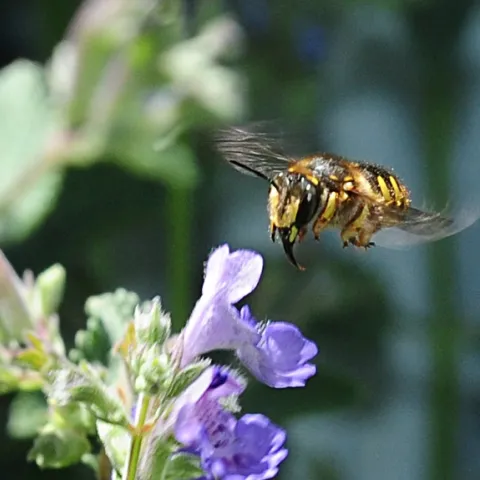
Don't ever call the European wool carder bee (Anthidium manicatum) a slow poke. It's not "as fast as a speeding bullet" (Superman), but close. The males, quite territorial, chase away other pollinators, including honey bees, sweat bees and butterflies.
Here's an article from the UCCE San Joaquin County Field Notes newsletter (May 2013.) Medusahead has been invading our rangelands for years. The Natural Resource Conservation Service (NRCS) has photo documentation from the early 1980s with large stands of medusahead on the east side of the county.
Reminder! Nickels Soil Lab Annual Field Day Wednesday, May 15, 2013 Green Bay Avenue, Arbuckle, CA 8:30am - 12:15pm Just added: After lunch a demonstration of modified airblast sprayer for better pest control in tree tops!!...
(Editor's Note: This luncheon has been postponed until October 2013. Details forthcoming) The buzz around the UC Davis campus is a June luncheon. Not just any luncheon, but "A Luncheon in the Garden.
Seeing yellow these days? As inthose brightly-blooming yellow-flowering shrubs along roads and hillsides from the Bay Area to the Sierra Nevada foothills. BroomFrench, Spanish, and Scotchis in full spring bloom, even at higher elevations.
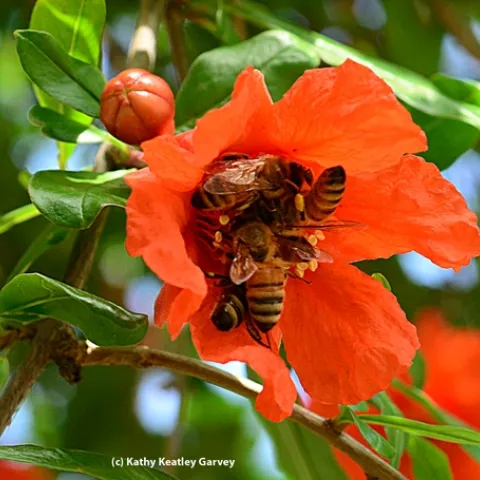
It was definitely a hot spot. Honey bees foraging last week on a pomegranate tree on Hopkins Road, west of the UC Davis main campus, competed for food on hundreds of blossoms. We counted five honey bees on one blossom alone in what amounted to a pushing/shoving match.
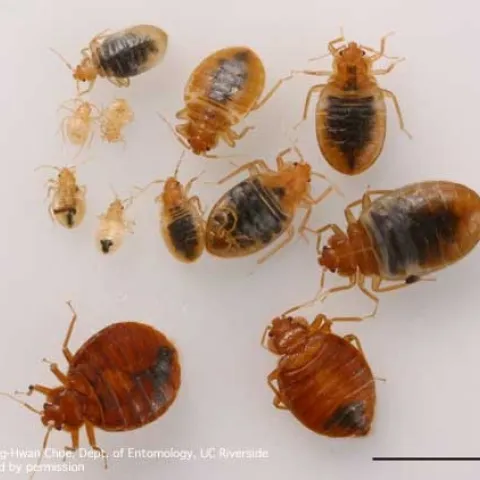
Egg, five nymphal stages, and adult bed bugs, Cimex lectularius. Photo by Dong-Hwan Choe. Bed bugs are quickly becoming major household nuisance pests.
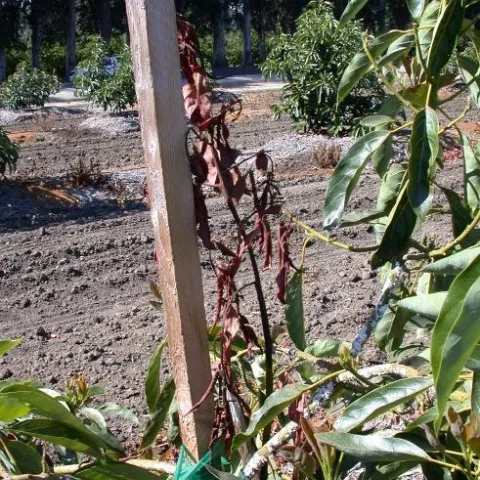
Stem and leaf blights are symptoms that appear for various reasons high rainfall or humidity, spray burn, chewing insect infestation. Here in California we can add other causes, such as drought and salinity burn.
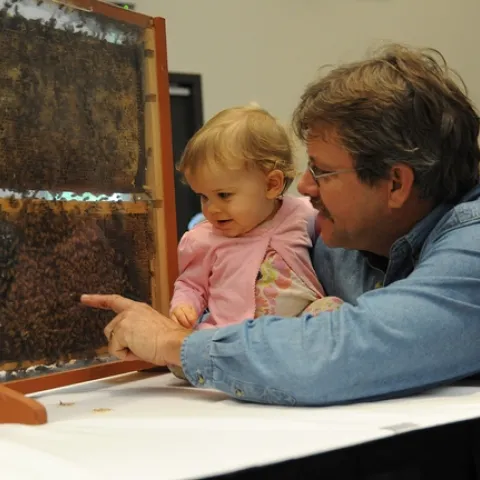
If you think that every insect on a flower is a honey bee, you should see what the UC Davis Department of Entomology is showcasing at the Dixon May Fair, May 9-12.