UC ANR is committed to providing an accessible and inclusive web experience for all users. If you encounter an accessibility barrier or need content in an alternative or remediated accessible format, please contact anraccessibility@ucanr.edu.
Battling Spurge: WSSA Offers Weed Control Tips for Nurseries and Homeowners Posted on April 26, 2013 Though the economy and housing market have begun to recover in the aftermath of the Great Recession, one unexpected impact still lingers.
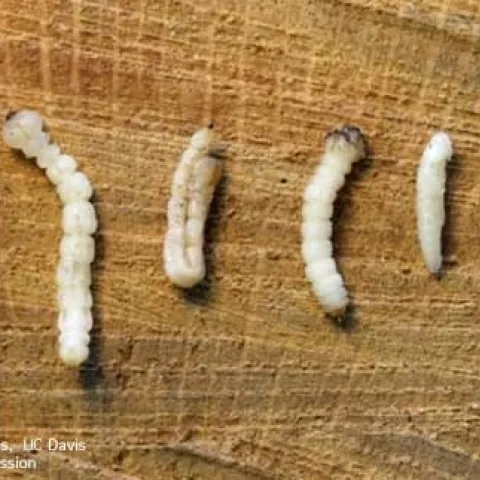
Life states of the goldspotted oak borer. From left: fourth-instar larva, fourth instar larva in a hairpin configuration and in a constricted form, pupa and adult. Photo by Mike I.
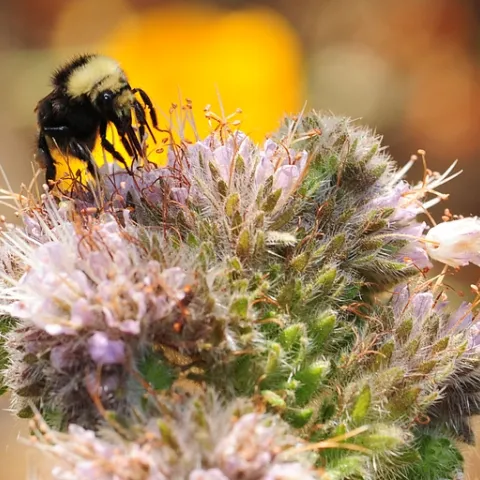
The first thing you notice when you walk up to the Harry H. Laidlaw Jr. Honey Bee Research Facility on Bee Biology Road, UC Davis, are the natives. Native plants, that is. California golden poppies and phacelia are among the plants sharing the "Pollination Habitat" bed.
Nickels Soil Lab Annual Field Day Almond Varieties Crown Rot and Pruning Wound Cankers New video: Managing Almond Pests using the the Year-around IPM program Tying Young Trees Navel Orangeworm Pressure?
A repost today from the Australian Herbicide Resistance Initiative. Int this snap shot, AHRI discusses new Monsanto technology called BioDirect (RNAi) for control of glyphosate-resistant weeds with glyphosate.
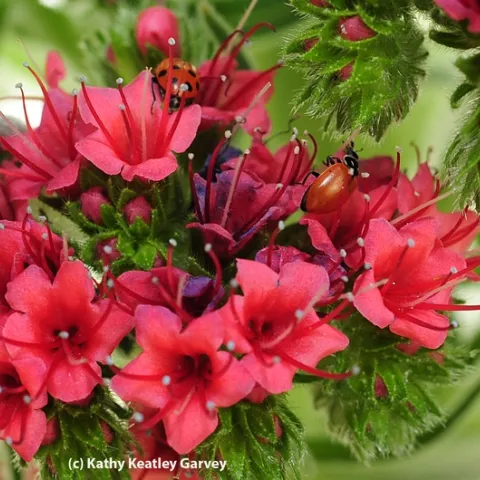
Decisions, decisions... Where's the best spot for the new residents of my garden? I acquired two ladybugs last Saturday during the 99th annual UC Davis Picnic Day.
Practices to consider in prune orchards in April/May Sutter-Yuba Spring Field Meeting Orchard Irrigation Prune Tisshe Sampling for Leaf Analysis Efficient Nitrogen Management in Prune Production How hot was it at bloom, 2013?
Field Meetings: Monitoring and Control of Walnut Husk Fly and Walnut Orchard Herbicide Research and Demonstration Field Day Final Chilling Hours Predicting Peach Harvest Sizing Peach Fruit Updated Website 36th Annual Nickels Field Day (announcement to be released soon)...
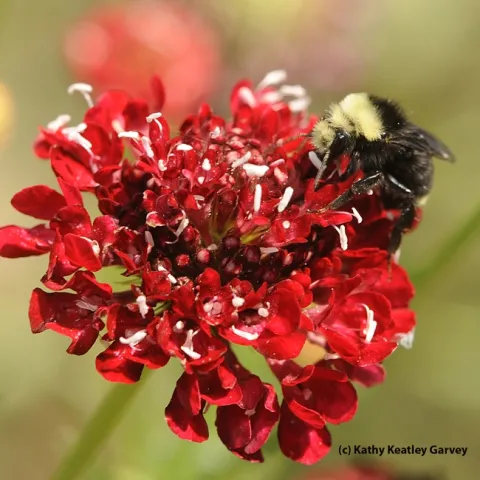
Bumble bees are major contributors to pollination of crops and wildflowers throughout the temperate northern hemisphere. Many species have declined, contributing to fears that we might face a 'pollination crisis.'" So says David Goulson, professor at the University of Stirling, U.K.