UC ANR is committed to providing an accessible and inclusive web experience for all users. If you encounter an accessibility barrier or need content in an alternative or remediated accessible format, please contact anraccessibility@ucanr.edu.
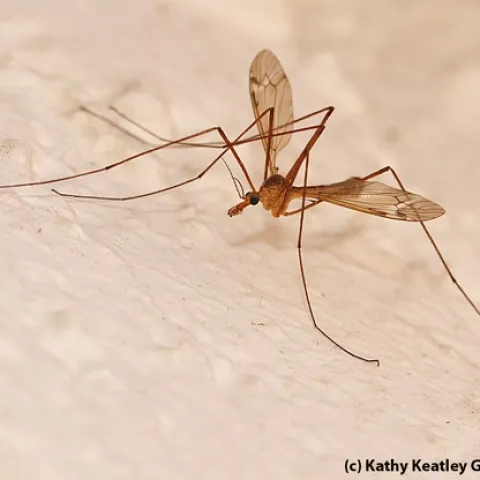
Some folks call them "mosquito hawks" or "skeeter eaters" or "blood suckers." They're not. None of the above. Crane flies, in the family Tipulidae, don't prey on mosquitoes and they don't suck blood. These slender, long-legged insects remind us of runway models. Thin. Demure. Fragile.
This is a new-to-me weed, even though it's growing all around Robbins Hall where I've been working since typewriter times. Fumitory (Fumaria spp.) is a lacy, vine-like annual native to Europe. Looks sort of like parsley, though it's not related.
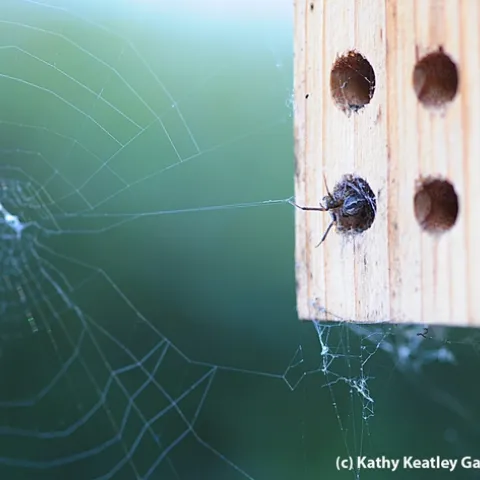
You can't always choose your tenants. Sometimes they choose you. Take the case of our two bee condos, which are blocks of wood drilled with holes for native bee occupancy. One, with the smaller holes, is for leafcutter bees (Megachile spp.
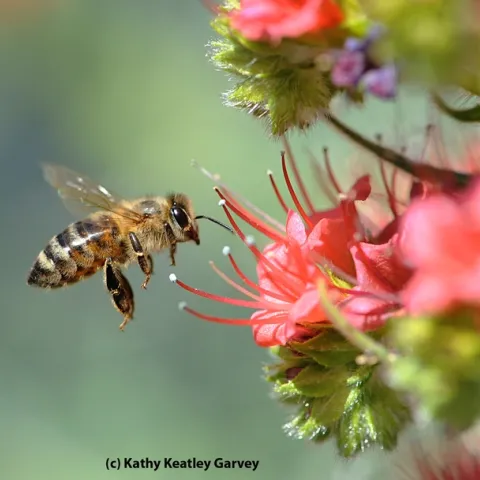
(Editor's note: This event has been postponed until the fall of 2013. Details pending.) Mark your calenders! The Honey and Pollination Center at the University of California, Davis, is planning a "Luncheon in the Garden" on Sunday, June 2 from noon to 3 p.m.
Don't ever underestimate the threat of dengue. The mosquito-borne viral disease known as breakbone fever, is three times more prevalent than originally thought, according to a research paper published today in Nature and co-authored by dengue expert Thomas Scott of UC Davis.
Cilantro was produced on 5,543 acres in Monterey and Ventura Counties in 2011. The production of cilantro has shifted to high density 80-inch wide beds and a large proportion is now mechanically harvested.