UC ANR is committed to providing an accessible and inclusive web experience for all users. If you encounter an accessibility barrier or need content in an alternative or remediated accessible format, please contact anraccessibility@ucanr.edu.
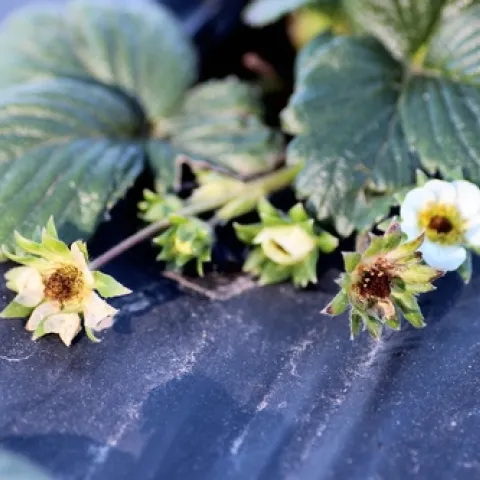
Petals, sepals, and developing fruit damaged and darkened from freezing temperatures (Photos by Surendra Dara) Fruit deformation as a result of low temperatures which affect pollination. Smaller achenes are formed and uneven development of the tissue around them results in misshapen fruit.
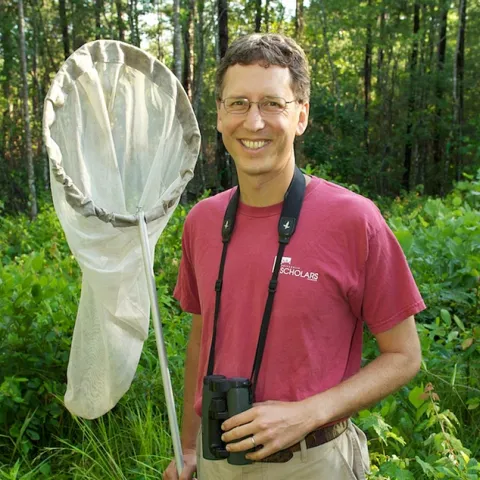
"Landscape Conservation for Rare Insects!" That's the title of a seminar to be hosted by the UC Davis Department of Entomology on Wednesday, Jan. 23. Nick Haddad, the William Neal Reynolds Professor of Biology at North Carolina State University (NCSU), Raleigh, N.C., will speak from 12:10 to 1 p.m.
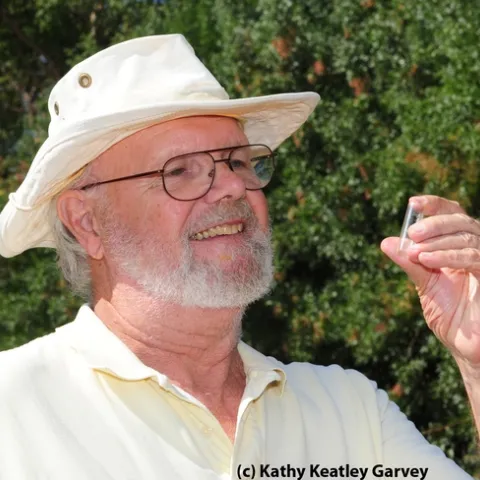
Franck Dayan will be stopping by UC Davis on Tuesday, 1/22/2013 to give a presentation entitled King Georges, Vampires and Herbicides. Below is the announcement.
We can expect some exciting research to emerge from the U. S. Department of Agriculture's Specialty Crop Research Initiative (SCRI). And UC Davis pollination ecologist Neal Williams, an assistant professor in the Department of Entomology, is a part it.
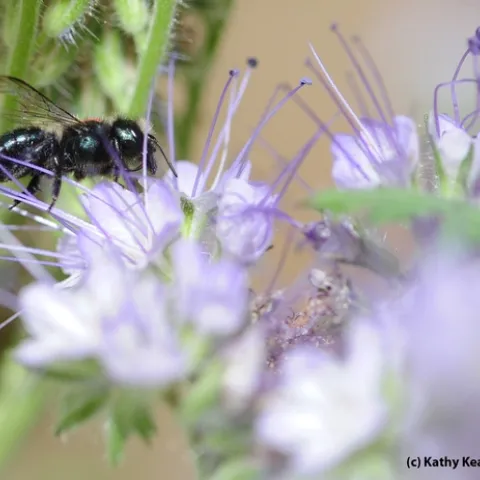
So you want to learn about native bees... Be sure to attend Robbin Thorp's presentation on "Buzzed for Bees" on Saturday afternoon, Jan. 19 at the Rush Ranch Nature Center, Suisun.
Michael Branstetter, who will present a UC Davis Department of Entomology seminar on Wednesday, Jan. 16, is passionate about ants. "Ants are the most successful group of social insects on the Earth," says Branstetter, Postdoctoral Fellow at the Smithsonian Institution, Washington, D.C.
Here's an article from the Sweetpotato Tips newsletter on hotbed cost production. Click here for a direct link to the January 2013 edition. PRODUCTION NOTESHotbeds Hotbeds begin soon.
They're on to something. Definitely. An international research team has been researching honey bee pollination of almonds in the three-county area of Yolo, Colusa and Stanislaus since 2008, and what these scientists have discovered is astounding.