UC ANR is committed to providing an accessible and inclusive web experience for all users. If you encounter an accessibility barrier or need content in an alternative or remediated accessible format, please contact anraccessibility@ucanr.edu.
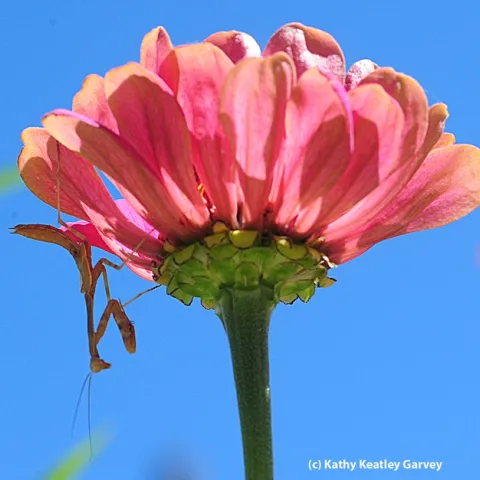
Oh, the life of a praying mantis... You can hang upside down like an acrobat, shading yourself from the sun while waiting for prey and avoiding predators. You can crawl beneath dense leaves, the better to ambush, snatch and eat an unsuspecting bee.
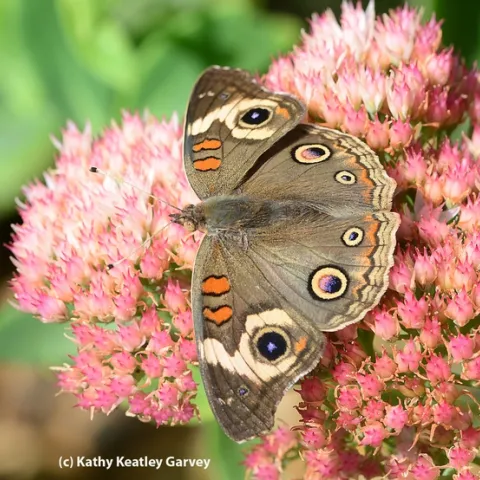
The buck stops here. The buckeye butterfly (Junonia coenia), that is. Whether it's doing the fandago on the plantago, the can-can on the lantana or the waltz on the sedum, it's easy to spot. That's because of its large eyelike circles on its wings.
Several field experiments were conducted to evaluate the performance of pre-emergence herbicides, herbicide rates, and tankmix combinations at different locations in the Central Valley of California and to compare the efficacy of burndown herbicides in mixture with different pre-emergence herbicides...
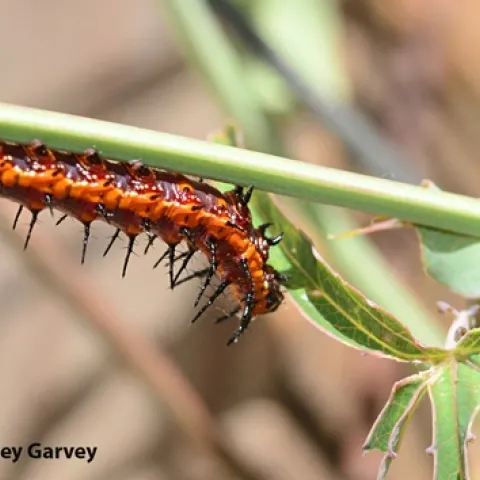
When Eric Carle designed, illustrated and wrote the children's picture book, The Very Hungry Caterpillar, it's a wonder that all his young readers didn't become lepidopterists. No doubt many of them did.
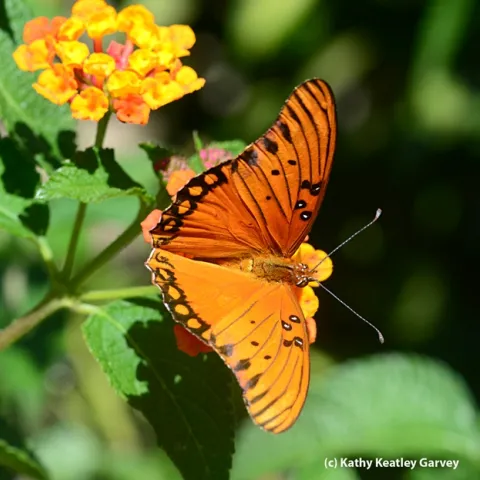
Ah, the Gulf Fritillary... We spotted this orange-reddish butterfly nectaring lantana last Saturday near downtown Vacaville. In fact, the patch of lantana (family Verbenaceae) drew assorted butterflies, including buckeyes, alfalfa, monarchs, and painted ladies.
Some folks enjoy a doughnut, bagel, muffin or fruit for breakfast--and maybe some cream cheese on the bagel and honey on the muffin. Not so the praying mantis. If he were in a restaurant, he'd tell the waiter "I'd like a bee for breakfast, please.
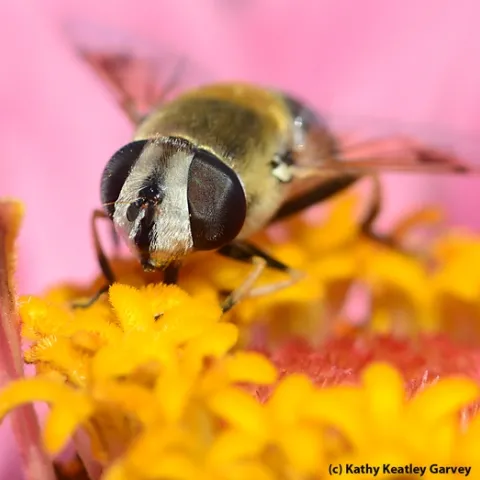
You may have noticed this little floral visitor in your garden. It might appear to be a bee, a common mistake to the untrained eye or those who think that all floral visitors are bees.
In 2011, the Natural Resources Conservation Service (NRCS) developed a program to assist rice producers adopt and apply conservation practices to provide and maintain shallow water wetlands, mudflats, nesting islands, and other associated wildlife structures that provide for seasonal or year-round b...
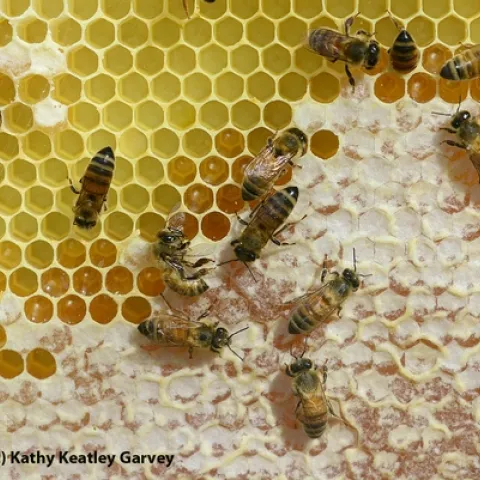
If you want to learn more about bees, honey and pollination, then you'll want to attend the debut event of the newly formed Honey and Pollination Center at the University of California, Davis. Themed "Bounty of Pollination: More Than Just Honey," the event is set from 1 to 5:30 p.m.