UC ANR is committed to providing an accessible and inclusive web experience for all users. If you encounter an accessibility barrier or need content in an alternative or remediated accessible format, please contact anraccessibility@ucanr.edu.
This issue contains the following articles: Simazine Degradation in CA Citrus Orchards Lime-induced Iron Chlorosis Avocado Trunk Cankers Asphyxiation Tree Wraps Stem and Leaf Blight...
Let it be, let it be, let it be, let it be Whisper words of wisdom, let it be --Paul McCartney When Paul McCartney of The Beatles wrote "Let It Be," released in 1970, he wasn't writing about honey bees. No, he was actually recounting what his mother (who died when he was 14) told him in a dream.
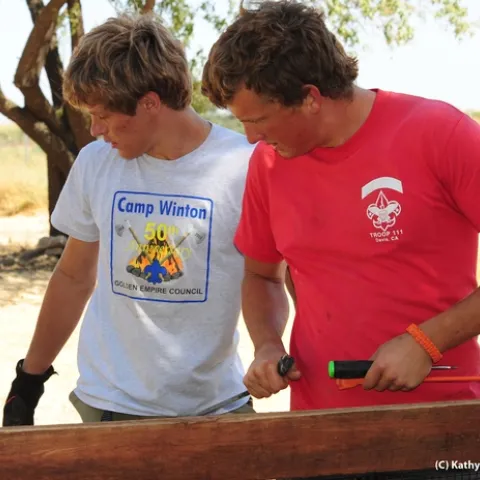
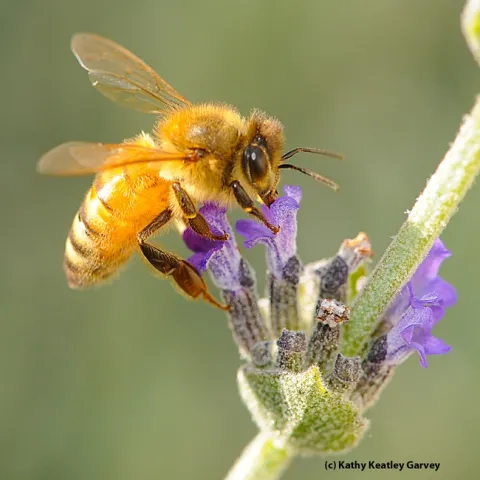
It's a honey of a garden and a honey of a fence. So agreed the visitors attending the open house and recognition ceremony last Saturday, Sept. 15 at the Hagen-Dazs Honey Bee Haven, a half-acre pollinator garden next to the UC Davis Department of Entomology's Harry H. Laidlaw Jr.
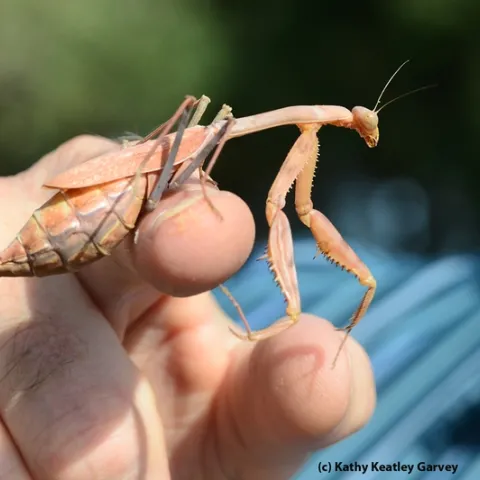
Ever seen a pregnant praying mantis? Someone on wikianswers.com asked the question: "What does a pregnant praying mantis look like?" The question drew only one response: "Big and fat.
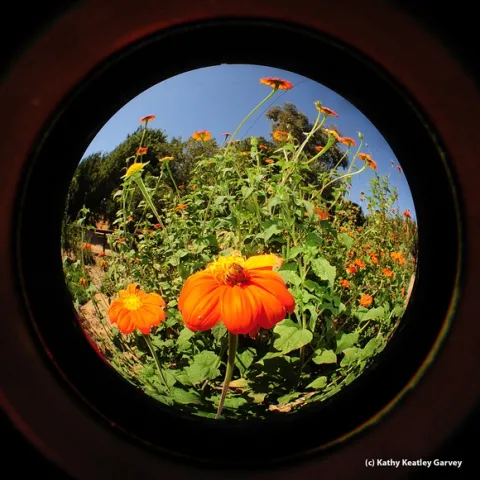
When I was teaching photography, I encouraged my students to go for the angles--from a bug's eye view to a bird's eye view. Holding a camera chest-high or at eye level renders the "same-o, same o" photos. Yet another creative way to see the world is through a fisheye lens.
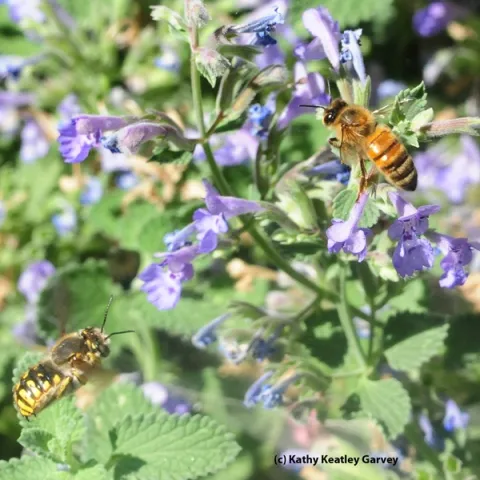
What do you know about bees, and what would you like to learn about them? Visit the University of California, Davis campus on Saturday, Sept. 15, and you will see (1) bee specimens from all over the world and (2) bees and other pollinators in their natural habitat.
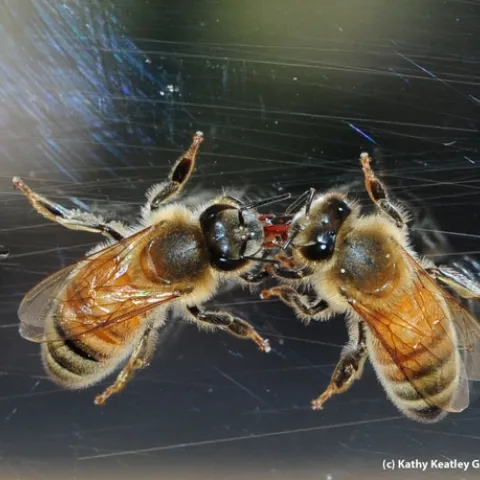
We can all learn from the honey bees. Worker bees--sisters--are like feeding machines. They not only feed each other, but feed the queen and their brothers, the drones. It's a marvelous sight to see, nectar being passed from one bee to another.