UC ANR is committed to providing an accessible and inclusive web experience for all users. If you encounter an accessibility barrier or need content in an alternative or remediated accessible format, please contact anraccessibility@ucanr.edu.
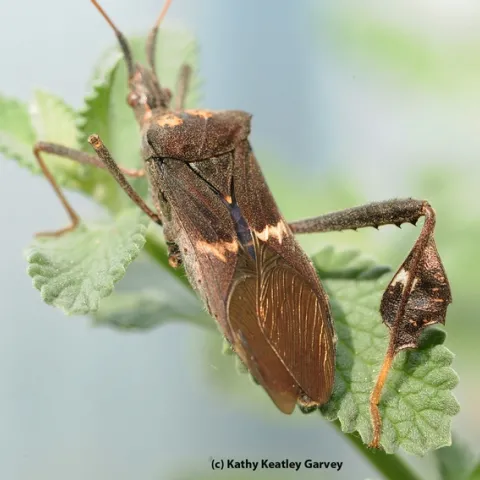
When you first see the leaffooted bug, you know immediately how it got its name. The appendages on its feet look like leaves! This morning we saw one in our catmint (Nepeta) patch.
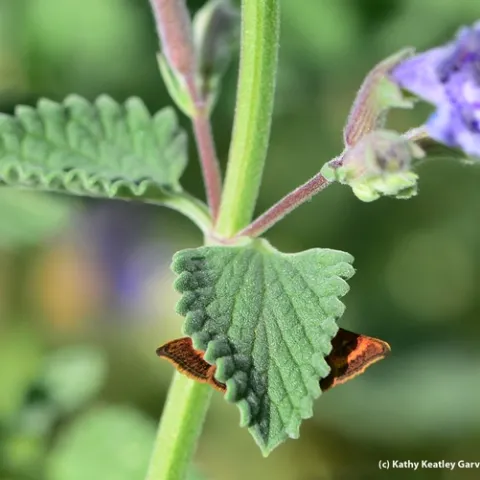
if you're growing plants in the mint family, Lamiaceae--you know, the plants with the square stalks and opposite leaves--you may see a very tiny reddish-orange visitor. It's so tiny that it's smaller than the leaf of a catmint (Nepeta). Its wing span is probably about 10 to 15 millimeters.
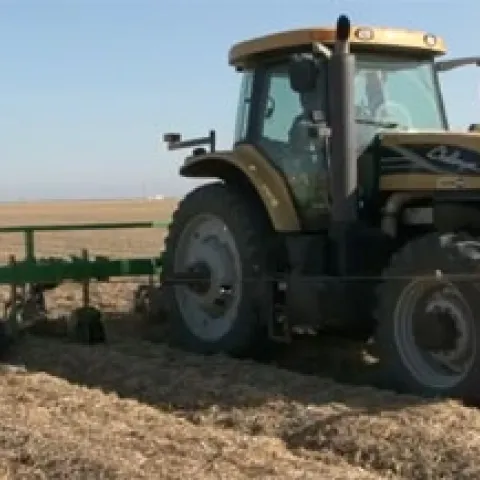
Farming in California has traditionally involved a series of preplant tillage operations, including disking, subsoiling, land planing, bed formation and dry mulching.
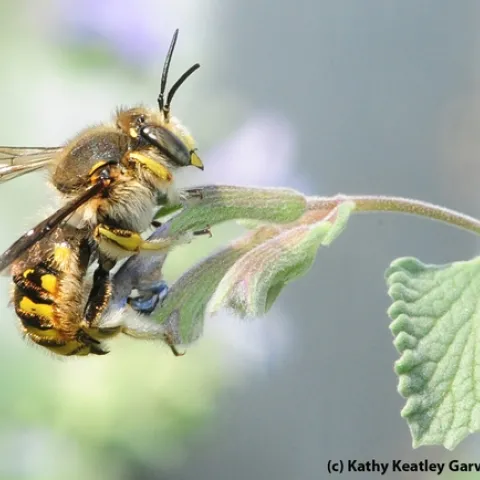
If you've ever glimpsed a European wool carder bee foraging in your yard, chances are that's all you saw--a glimpse. The wool carder bees (Anthidium manicatum), so named because the females collect or "card" plant fuzz for their nests, move quickly.
A quick post today to share a few links and reposts that I found interesting recently. The first is a link to a video on the television program, CBS Sunday Morning. In this program from a week ago, weeds were the focus. Click here for a link to the video.
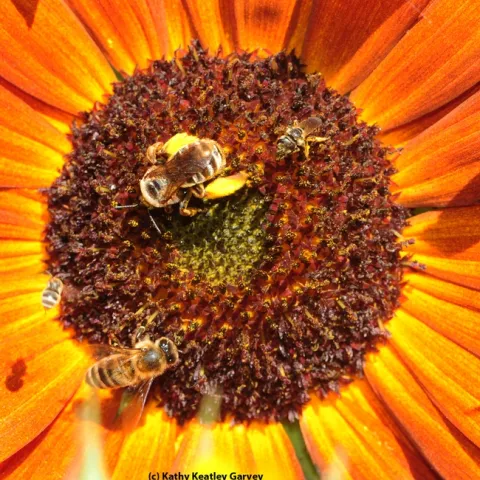
You often see a single solitary bee on a sunflower. Perhaps it's a sunflower bee (Svastra) or a honey bee (Apis mellifera). But four on one? Sharing a sunflower? Yes.
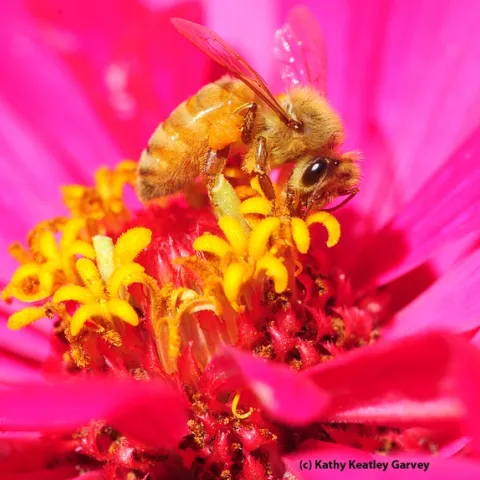
Now that's Italian! The Italian honey bee (below) nectaring on a zinnia at the University of California, Davis, is striking for two reasons: she's as gold as starthistle honey in the sunlight and she's a very young forager.
Seattle will be the place to "bee" on Oct. 4-7. That's where the Western Apicultural Society (WAS) will hold its annual meeting--and this year it's in conjunction with the Washington State Beekeepers' Association.