UC ANR is committed to providing an accessible and inclusive web experience for all users. If you encounter an accessibility barrier or need content in an alternative or remediated accessible format, please contact anraccessibility@ucanr.edu.
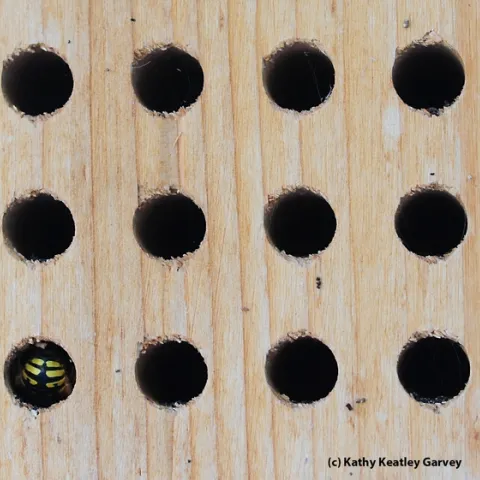
During the day, European wool carder bees (so named because the females collect or "card" plant fuzz for their nests) forage on our catmint and lamb's ear. These bees, Anthidium manicatum, are about the size of a honey bee, but with striking yellow and black markings.
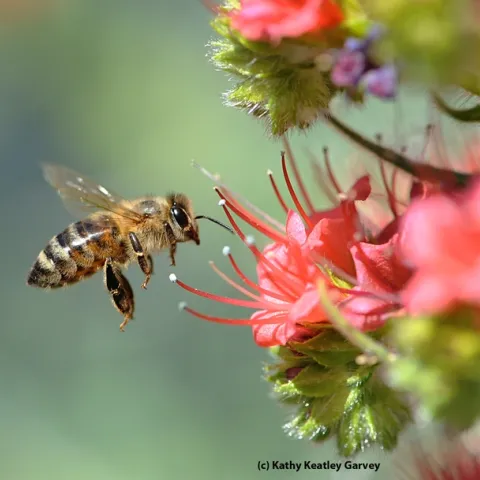
To commemorate National Honey Bee Day, Jefferson Exchange host Geoffrey Riley of Jefferson Public Radio, Southern Oregon University, recently booked a trio of experts to talk about honey bees. The broadcast, aired Aug.
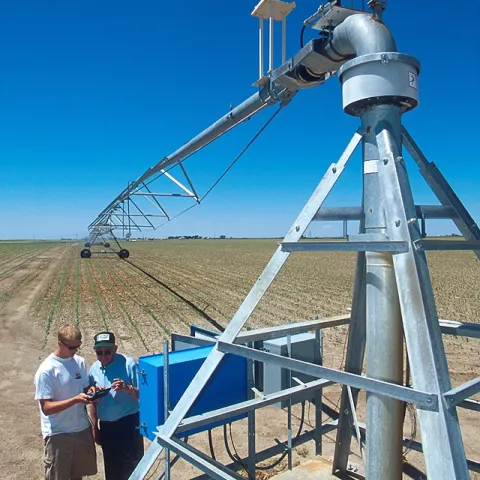
In a clear sign of changing times in California agriculture, the University of California dedicates its first full-sized center pivot overhead irrigation system at the UC West Side Research and Extension Center during the Twilight Conservation Agriculture field day at 4 p.m. Sept. 13.
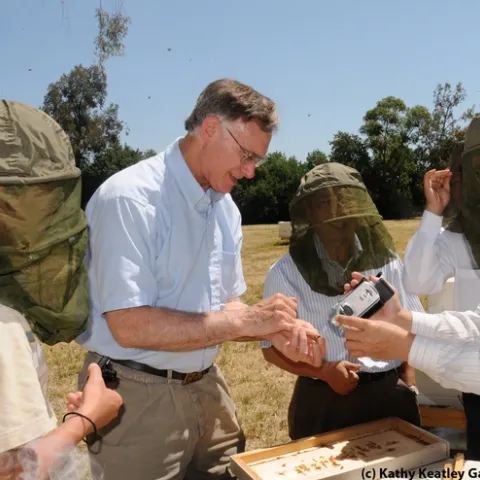
If you want to learn more about honey bees and other pollinators, then The Bounty of Pollination: More Than Just Honey is the place to bee on Saturday, Oct 27 at the Robert Mondavi Institute for Wine and Food Science (RMI), University of California, Davis.
Lime-induced Iron Chlorosis: a nutritional challenge in the culture of several subtropical perennial crops in California Elizabeth Fichtner, UCCE Tulare County and Rachel Elkins, UCCE Lake and Mendocino Counties Spring, and new leaves are coming out, but this could, but yellow could be a sign of iro...
In June we visited a first-leaf almond orchard that had started the season growing normally, but as the root system expanded, the trees growth became rapidly stunted (Fig. 1). The newly expanding shoot tips showed little leaf symptoms (Fig.
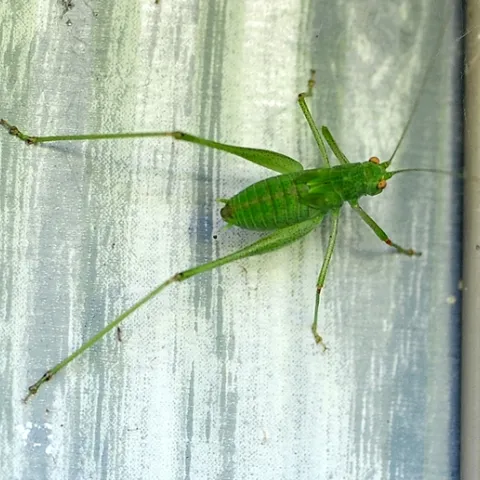
Ever heard the sound of katydids? The meadow katydids, the true katydids, the round-headed katydids, the bush katydids and the shiedback katydids? They're all there, in all their glory. Entomologist/educator/author/lecturer/photographer/broadcaster Art Evans of Richmond, Va.
In the past few days we've seen some unusual high temperatures in the Sacramento Valley, and looks like the hot weather is going to continue for a few more days.
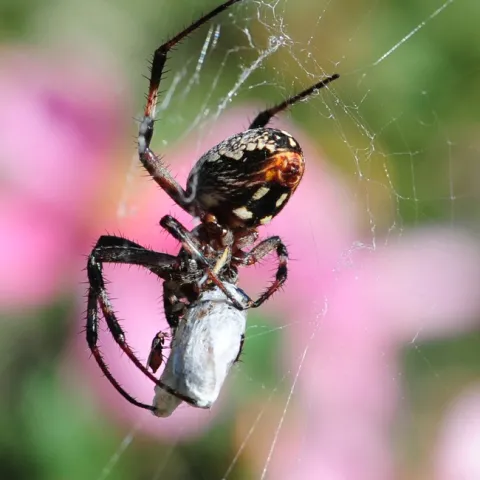
The next time you see a spider eating a bee snared in its web, look closely. The spider may not be alone. It may have a dinner companion. A freeloader fly. The common name, "freeloader fly," refers to the Milichiidae family.
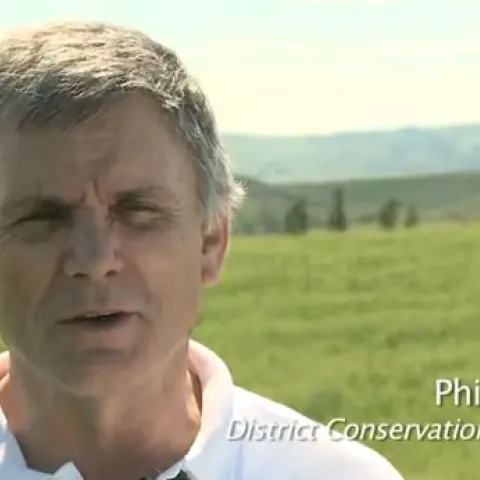
Episode 2 of CASI's six-part documentary series, "The Value of Residues in Conservation Agriculture Systems," has been released on the CASI webpage, http://CASI.ucanr.edu. (The video has also been posted below.