UC ANR is committed to providing an accessible and inclusive web experience for all users. If you encounter an accessibility barrier or need content in an alternative or remediated accessible format, please contact anraccessibility@ucanr.edu.
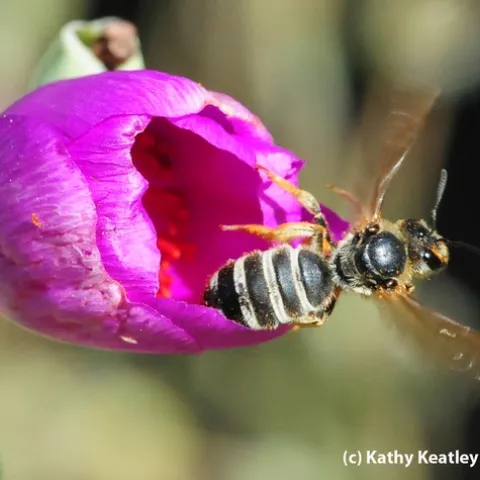
In the blink of an eye, they visit the rockpurslane (Calandrinia grandiflora). Now you see them, now you don't. They're a sweat bee, a little larger than most sweat bees, but a little smaller than a honey bee.
The yellow nutsedge (Cyperus esculentus) took over the tall fescue turf during the night. I am sure of it. One day it wasnt there and the next day it was.
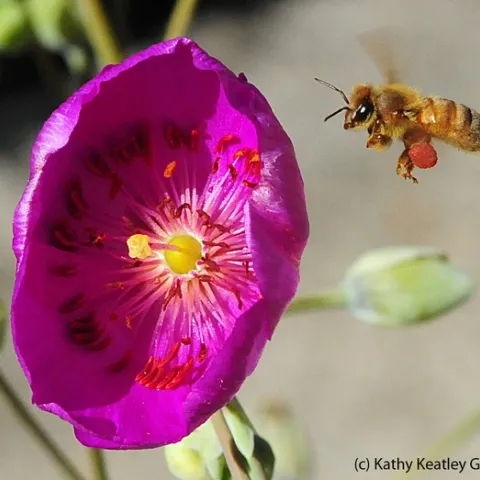
"Where do bees get red pollen?" we were asked. "We've seen bees packing blood-red pollen at the entrance to a hive." Well, one flower that yields red pollen is rock purslane (Calandrinia grandiflora). It's a drought-tolerant perennial, a succulent.
To fill their need for year-round, inexpensive forages, California dairy producers typically plant and harvest a series of forage crops small grains, corn for silage, milo and sorghum sudan.
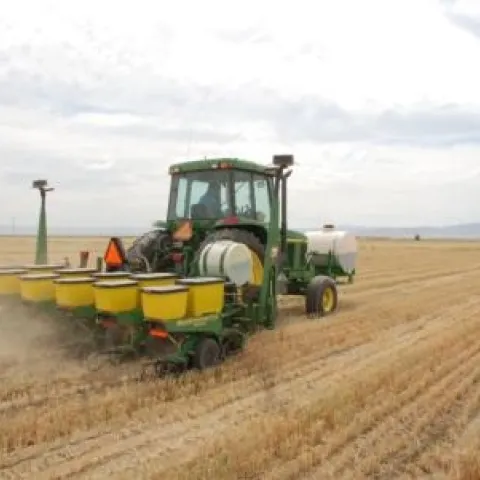
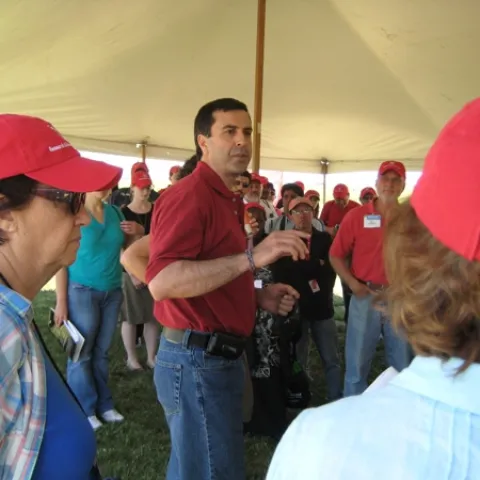
The University of Nebraska, Lincoln, hosted a group of Water for Food Conference participants on a tour of the UNL South Central Ag Laboratory in Clay Center, Neb., June 2. At the 640-acre facility, research aims to develop and refine irrigated crop production practices for Nebraska agriculture.
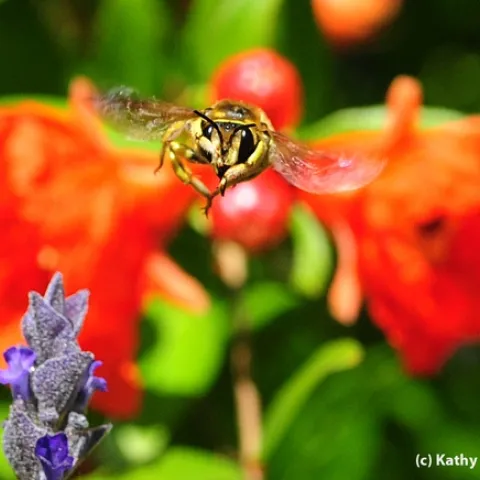
Whether it's coming or going, you notice this pollinator's presence. The European wool carder bee (Anthidium manicatum), so named because the female collects or cards "plant hairs" or "plant fuzz" to line her nest, is strikingly beautiful. The bee is mostly black and yellow.
A recent find in Oregon has weed scientists, botanists, land managers, and plant conservationists throughout the Pacific Northwest and California really excited over a tiny insect.
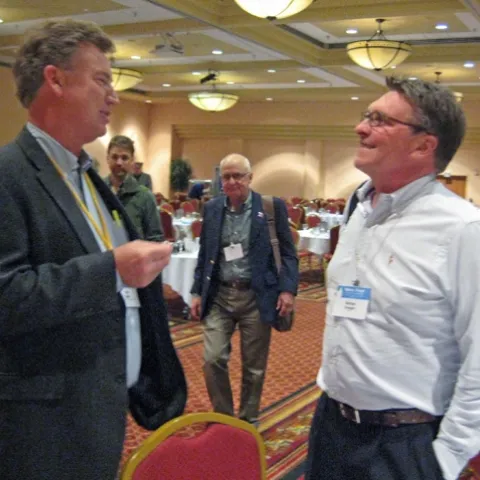
Farmers, researchers, consumers and policy makers are making progress toward addressing the challenge of producing food to feed a world population of 9 billion in 2050. The optimistic signs were everywhere on the closing day of the fourth annual Water for Food Conference in Lincoln, Neb., June 1.