UC ANR is committed to providing an accessible and inclusive web experience for all users. If you encounter an accessibility barrier or need content in an alternative or remediated accessible format, please contact anraccessibility@ucanr.edu.
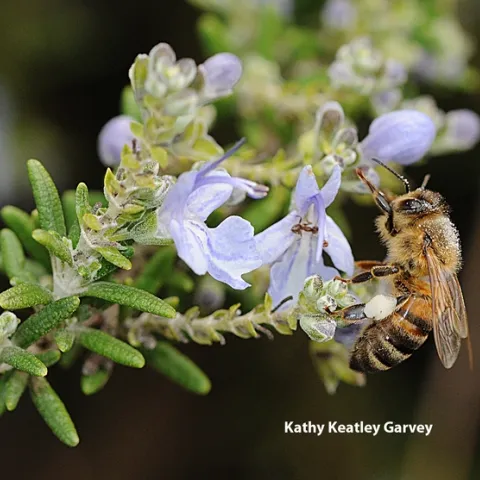
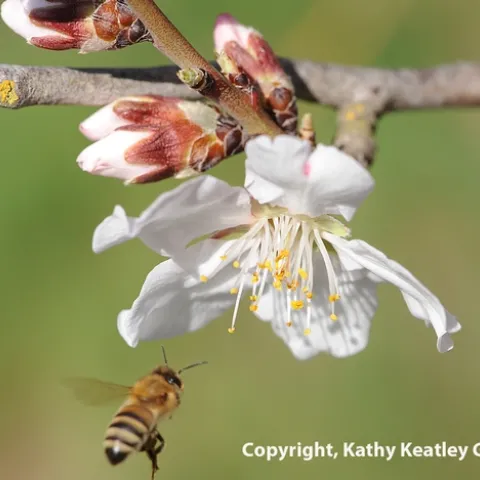
If you've ever watched honey bees work the blossoms, you'll probably see them packing pollen in their pollen baskets and cleaning their tongue as they buzz from flower to flower. Pollen is protein, and nectar, carbohydrates.
Not everybody loves honey bees. Indeed, about one percent of the population will go into anaphylactic shock if they're stung by a bee. That's a very small percentage--one percent--but it's huge if you're allergic to bees. Other folks just don't want to be around them.
I recently received a copy of a paper published by CropLife Foundation entitled "The Importance of Herbicides for Natural Resource Conservation in the U.S.". Publication date: January 2012.
Collaboration between Partners May Be an Effective Way to Fund Wildland Weed Control Projects Many funding sources for weed eradication have been reduced or completely eliminated.
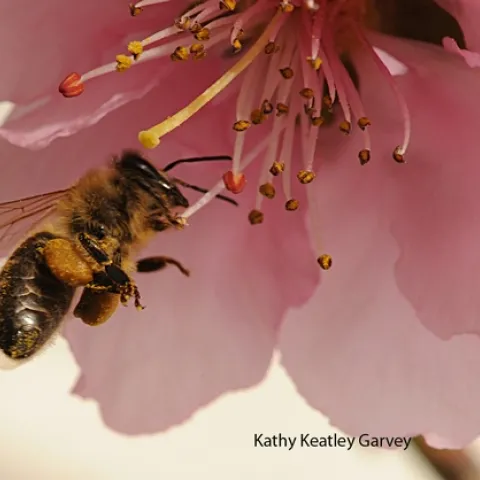
It was a golden moment. The honey bees that collected pollen from our nectarine trees today looked as if they were lugging gold nuggets left over from the California Gold Rush. Struggling with the heavy pollen loads, some of the bees crashed to the ground.
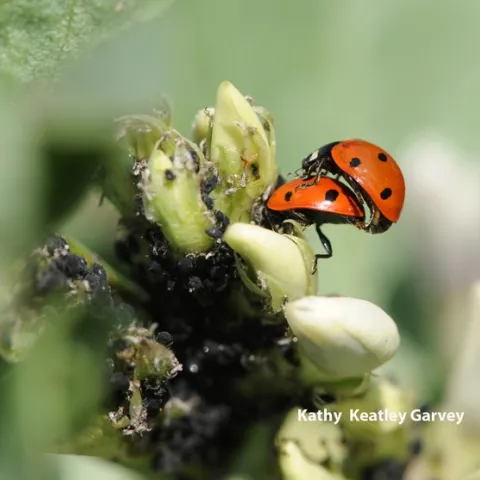
The tender shoots of fava bean blossoms are attracting scores of aphids, which suits the ladybugs just fine. Nothing like an all-you-can-eat aphid buffet. The site: the Hagen-Dazs Honey Bee Haven, a half-acre bee friendly garden located next to the Harry H. Laidlaw Jr.
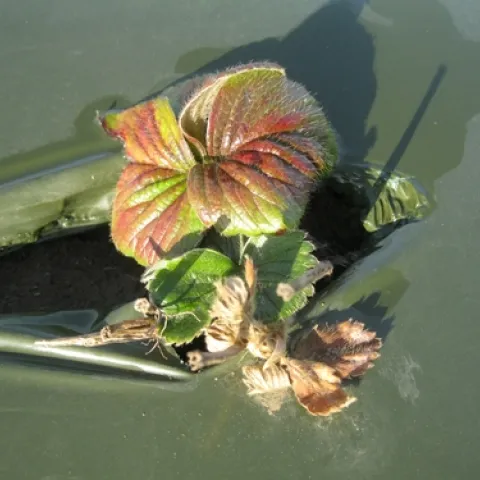
The combination of 1,3 dichloropropene (1,3-D)and cholorpicrin is a popular choice for fumigating strawberry fields after methyl bromide. It is very effective and convenient to administer through the drip irrigation system.
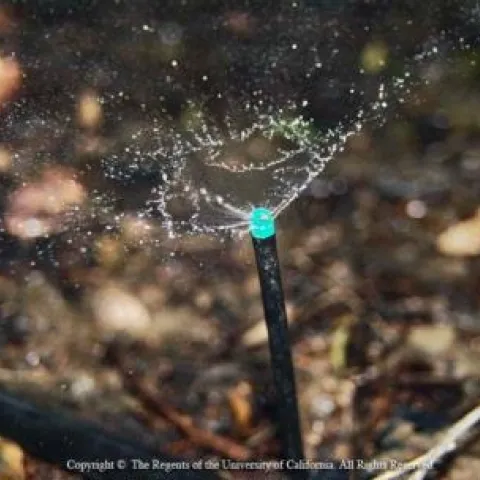
Irrigation efficiency requires not only uniform irrigation, but also the proper timing and amount of applied water. It is important that the irrigator know the system water application rate, either in inches per day, inches per hour, or gallons per hour.
Abstract: Weed control in blackberries (Rubus spp.) is a serious problem for organic producers and those who wish to reduce their reliance on herbicides.
"When we try to pick out anything by itself, we find it hitched to everything else in the Universe."--John Muir, My First Summer in the Sierra Ecologist Louie Yang of the UC Davis Department of Entomology, tags that quote at the end of each email. So true. On that note, did you catch the Feb.