UC ANR is committed to providing an accessible and inclusive web experience for all users. If you encounter an accessibility barrier or need content in an alternative or remediated accessible format, please contact anraccessibility@ucanr.edu.
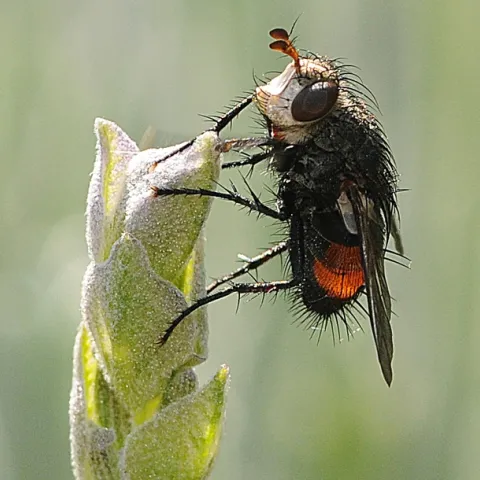
You want to know why flies are fantastic? They are, you know. Just ask Martin Hauser of the Plant Pest Diagnostics Branch, California Department of Food and Agriculture (CDFA). He'll discuss "Why Flies Are Fantastic" at the Northern California Entomology Society meeting, set from 9:15 to 3 p.m.
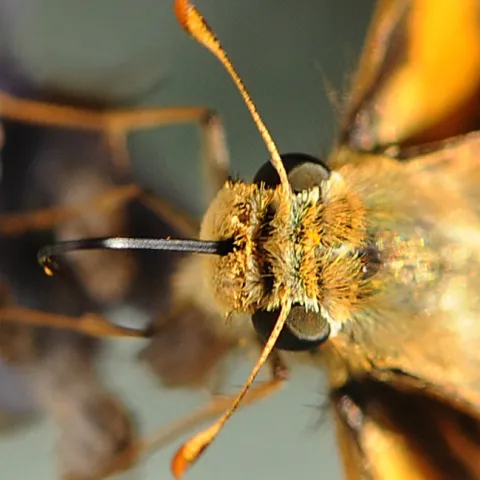
Have you ever looked closely at a fiery skipper (Hylephila phyleus) and seen its proboscis, aka tongue or feeding tube? If you stay still and don't shadow it while it's nectaring, you'll see the proboscis darting in an out of a blossom.
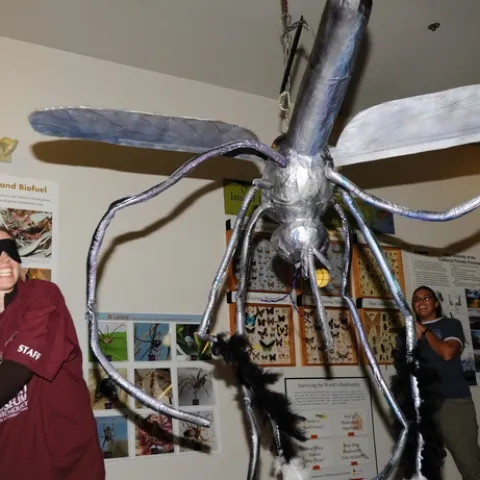
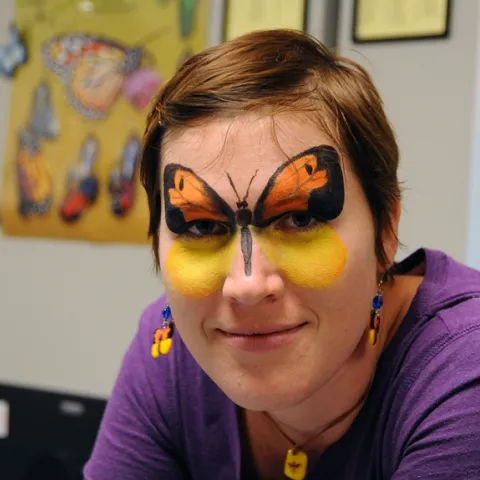
Wear your favorite insect costume. Show off your insect tattoo. When the Bohart Museum of Entomology at UC Davis hosts its pre-Halloween open house from 1 to 4 p.m., Sunday, Oct. 30, it promises to be a "blood-suckin' good time." And it's free and open to the public.
Producing 85 percent of the nations strawberries, California growers urgently need alternatives to methyl bromide fumigation if they are to maintain yields. Methyl bromide has been phased out for all but critical uses because it depletes ozone in the upper atmosphere.
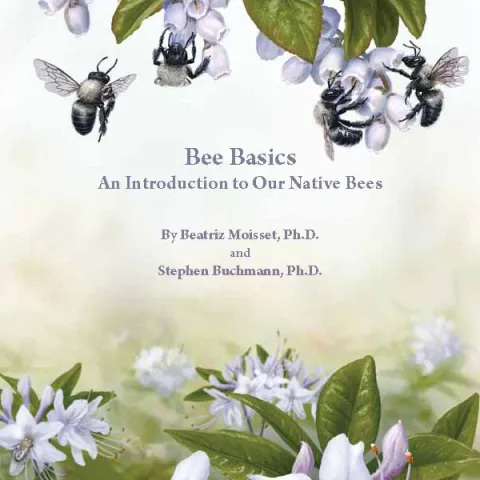
Not all bees are honey bees. Not all floral visitors are bees. That's why we're glad to see the publication of Bee Basics: An Introduction to Our Native Bees. It will introduce folks to such native bees as leafcutter bees, sweat bees and bumble bees.
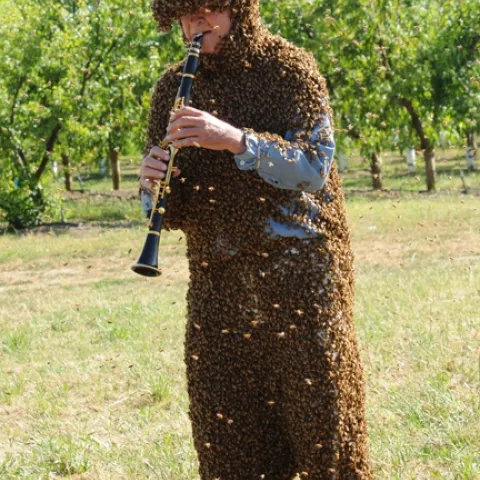
The bees have it, The Beez Kneez, that is. The Beez Kneez, a Sacramento-based band led by Norm Gary, emeritus professor of entomology at UC Davis, will reunite for one last performance on Wednesday, Oct. 26 at the Straw Hat Pizza, 2929 Mather Field Road, Rancho Cordova.
Picture this. Staff at the UC Davis School of Veterinary Medicine's Center for Equine Health encountered "a strange little bug" that they'd never seen before outside their office Friday on Old Davis Road.
Weeds can be introduced to new areas from a variety of natural and human-influenced sources. Seed transport on vehicles or equipment can be a very important mechanism of spread.