UC ANR is committed to providing an accessible and inclusive web experience for all users. If you encounter an accessibility barrier or need content in an alternative or remediated accessible format, please contact anraccessibility@ucanr.edu.
You don't have to travel to Africa to go on safari. You can go on a "bug" safari in your own backyard. And you can stay as little or as long as you like without incurring such costs as air travel, hotel stays, and food expenses.
The locusts are coming! The locusts are coming! No, not the one below, a banded-winged grasshopper (family Acrididae and subfamily Oedipodinae) that we spotted west of the UC Davis campus--and identified by Steve Heydon, senior museum scientist at the Bohart Museum of Entomology.
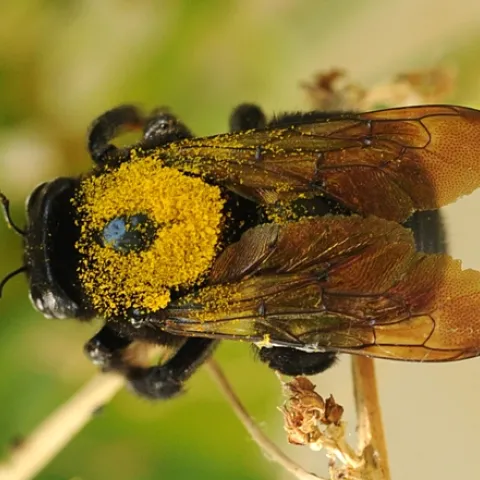
A gold rush of sorts. When the female Valley carpenter bees forage among the passion flowers (Passiflora), they turn from solid black to a mixture of gold and black. The pollen on their head, thorax and abdomen stands out like magical gold dust, as if sprinkled by the Good Fairy.
The California Buckeye (Junonia coenia), with its bold eyespots and white bars, is an easily recognizable butterfly. The problem: getting close enough for a photo and then patiently waiting for it to open its wings. At the first indication of danger, it flutters away.
The Weed Science Society of America (WSSA) recently released a series of free online training modules on understanding and managing herbicide resistance. The target audience for the five modules is consultants/field advisors/agronomists but I think any weed managers could benefit from them.
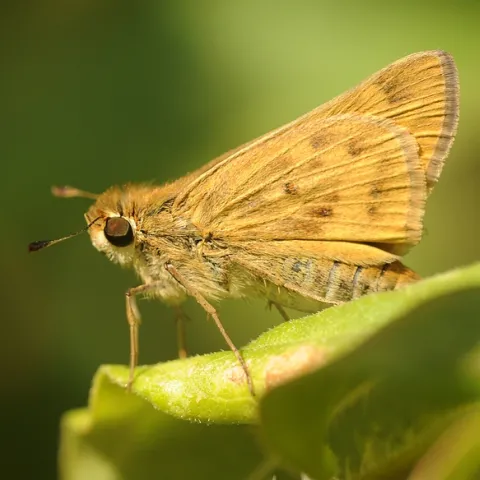
In the big, beautiful butterfly world, the Fiery Skipper stands out as the most common urban butterfly in California. It may not be as showy as the Monarch, the Gulf Fritilliary and the Painted Lady, but the Fiery Skipper (Hylephila phyleus) holds its own.