UC ANR is committed to providing an accessible and inclusive web experience for all users. If you encounter an accessibility barrier or need content in an alternative or remediated accessible format, please contact anraccessibility@ucanr.edu.
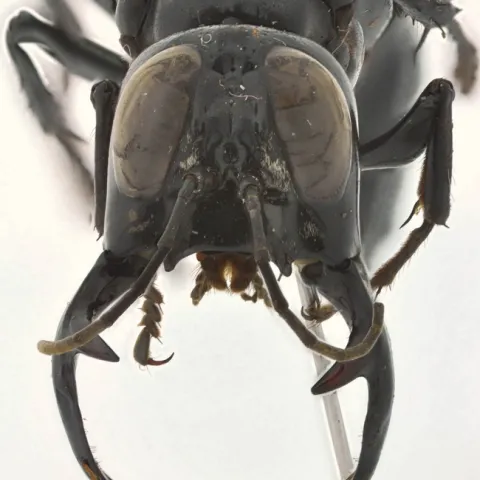
"Just how long is that newly discovered species of wasp?" the reporter asked. "Are you sure the male is not 2-1/2 centimeters instead of 2-1/2 inches?" News media, the scientific world, and the general public can't believe it. Yes, the male "warrior wasp" is 2-1/2 inches, not centimeters.
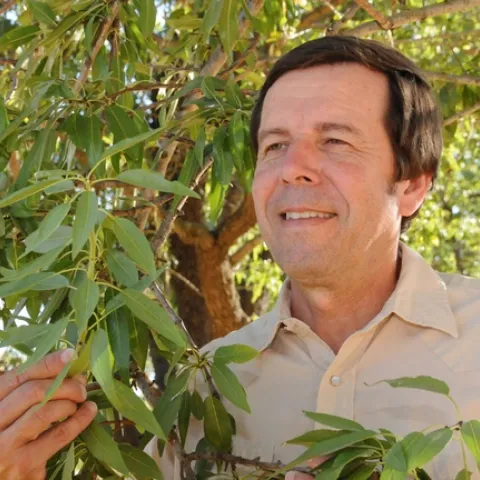
Frank Zalom is an entomologist's entomologist. He's right at home whether he's in the strawberry fields, almond orchards, vineyards, classroom, lab, or "leading the troops"--whether they be students, graduate students, researchers, fellow colleagues or the general public.
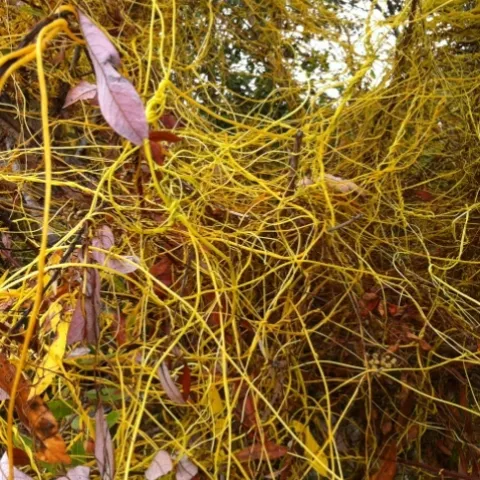
Japanese dodder, Cuscuta japonica recently found in Lompoc, Santa Barbara Co. (Photo by: Matt Victoria, Santa Barbara Ag Commissioner's Office) Japanese dodder is an exotic parasitic weed which is a high priority noxious weed in California.
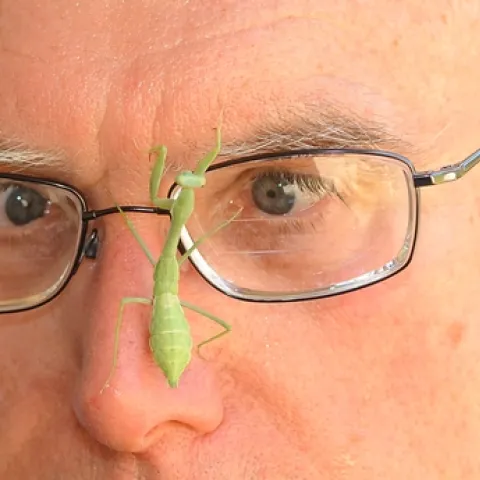
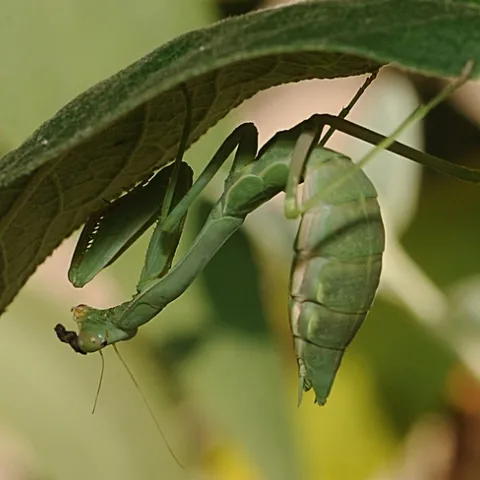
The last time we encountered a praying mantis it was waiting for prey on a plant by the Harry H. Laidlaw Jr. Honey Bee Research Facility at UC Davis. Then we saw two more that day in front of the Laidlaw facility. They jumped on us while we were watching the first one.
Well, hello there! A praying mantis, perfectly camouflaged in bushes outside the Harry H. Laidlaw Jr. Honey Bee Research Facility at the University of California, Davis, was searching for prey when we spotted it.
Released August 29, 2011, by the National Agricultural Statistics Service (NASS), Agricultural Statistics Board, United States Department of Agriculture (USDA).
Forage Production This was again an exceptional year with rainfall above normal and extended into the spring. It was very nice to see some areas of green grass still in late May as we finished up our spring production clipping.
It's all about the bees. And the other pollinators. And the plants. We were glad to see that Melissa "Missy" Borel, program manager of the California Center for Urban Horticulture at UC Davis, recently received a much deserved honor for her work in making the Hagen-Dazs Honey Bee Haven a reality.

![ppt53.pptm [Recovered]](/sites/default/files/styles/large_square/public/2011-08/blog8403.jpg.webp?h=050417d1&itok=f_e7ep4k)