UC ANR is committed to providing an accessible and inclusive web experience for all users. If you encounter an accessibility barrier or need content in an alternative or remediated accessible format, please contact anraccessibility@ucanr.edu.
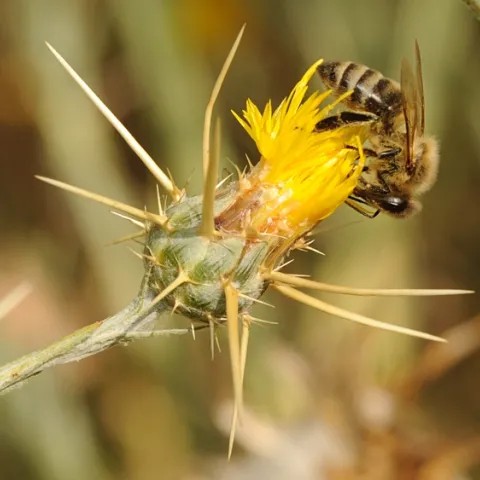
It's a perfect example of "the bad, the ugly and the good." In that order. Not "the good, the bad and the ugly." The yellow starthistle (Centaurea solstitialis) is the kind of obnoxious weed you wish would go away forever.
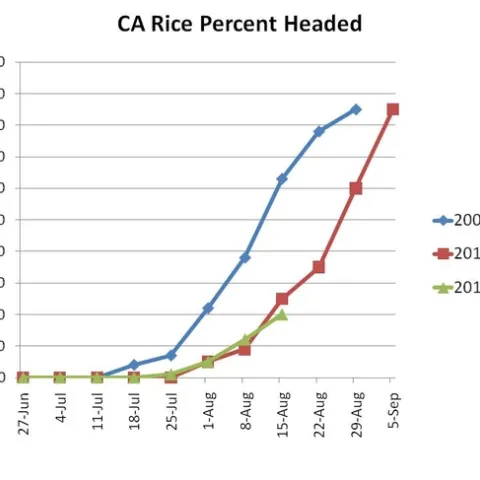
Released August 15, 2011, by the National Agricultural Statistics Service (NASS), Agricultural Statistics Board, United States Department of Agriculture (USDA).
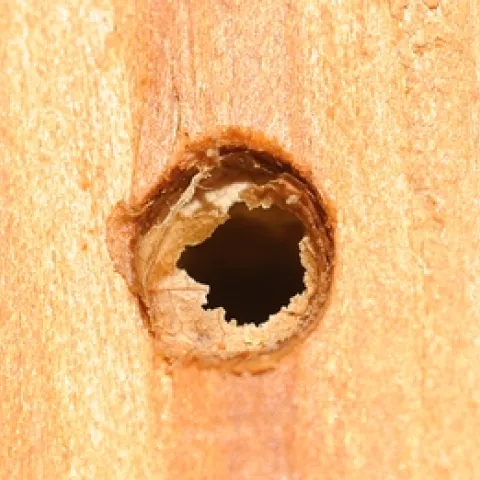
First you give them roots, then you give them wings. That's what's happening in our bee condo, a wooden block (nest) with drilled holes for leafcutting bees (Megachile). They flew in, laid their eggs, provisioned the nests with pollen and leaf fragments, and capped the holes. We had 11 tenants.
I've been receiving reports of high armyworm populations this summer. You can always find some armyworms in rice fields, but I have rarely seen fields that needed a treatment due to armyworm injury. Defoliation caused by armyworms is not uncommon.
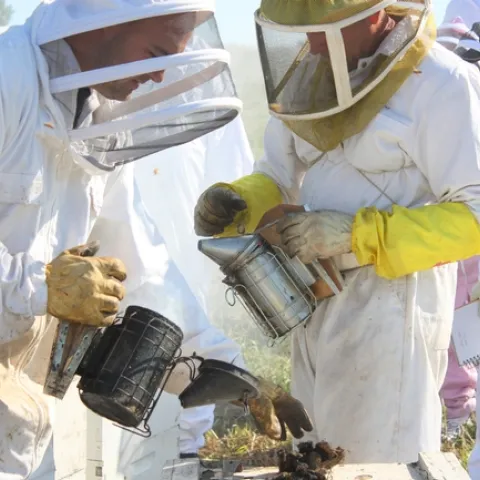
The places to "bee" for beekeepers in September and November are the Big Island of Hawaii and the not-so-little-city of Rohnert Park, Calif. The Western Apicultural Society, founded by UC Davis scientists in 1978, has scheduled its annual conference for Sept.
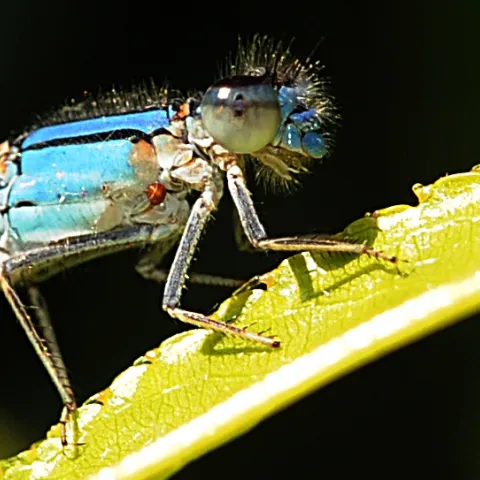
Up close and personal, those blue damselflies (suborder Zygoptera, order Odonata) look prehistoric. Fact is, they were here before the dinosaurs. These needlelike insects add an iridescent presence as they fly awkwardy over our fish pond, catching prey.
The Beekeeper's Lament: How One Man and Half a Billion Honey Bees Help Feed America should be required reading for anyone interested in honey bees, crop pollination and migratory beekeepers. Award-winning journalist Hannah Nordhaus tells the story of migratory beekeeper John Miller of Gackle, N.D.
The nursery industry has introduced thousands of ornamental plants, but only a small percentage (~1%) has escaped to become invasive and cause economic or ecological damage. Thus, the removal of these known invasives should not present a major economic hardship on the industry.