UC ANR is committed to providing an accessible and inclusive web experience for all users. If you encounter an accessibility barrier or need content in an alternative or remediated accessible format, please contact anraccessibility@ucanr.edu.
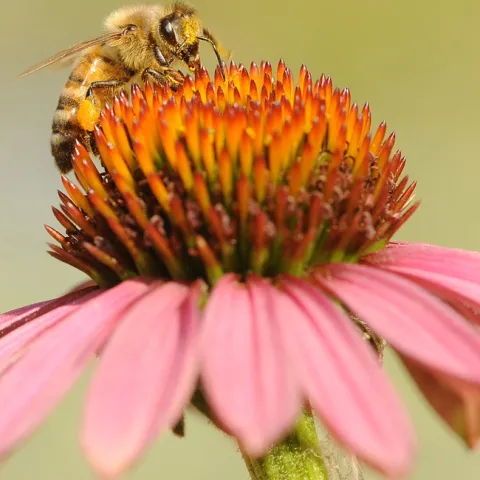
There's nothing quite like a cone--no, not an ice cream cone. A purple coneflower. The purple coneflower (Echinacea purpurea, family Asteraceae), looks like royalty in the Hagen-Dazs Honey Bee Haven at the University of California, Davis.
Released August 8, 2011, by the National Agricultural Statistics Service (NASS), Agricultural Statistics Board, United States Department of Agriculture (USDA).
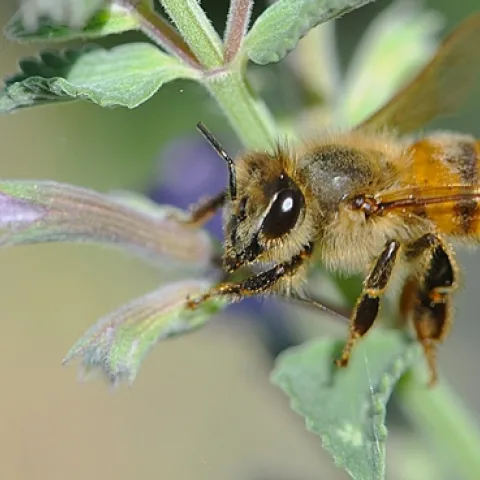
If you want to attract honey bees in your garden, you can't go wrong by planting catmint (genus Nepeta). Honey bees like the mints. So do cabbage white butterflies, wool carder bees, carpenter bees and hover flies, among other insects. Nepeta is easy to grow.
Lower limit 55 F, upper limit 100 F May 1 to August 1 Nicolaus 2009 1513 2010 1335 2011 1278 Durham 2009 1469 2010 1350 2011 1236 Colusa 2009 1600 2010 1413 2011 1344 To date 2011 is about 4-6 days behind 2010 and about 10-12 days behind 2009, depending the average number of degree units accumulated...
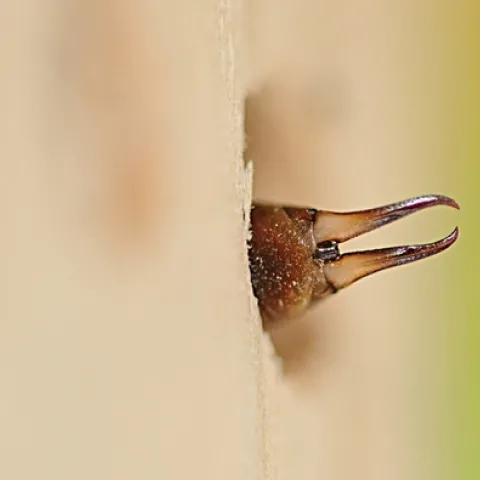
When you install bee condos--those wooden blocks with holes drilled in them to attract nesting native bees--sometimes you get the unexpected. Like earwigs! Home invasion! Home invasion! We installed two bee condos, each about the size of a brick, in our yard.
Field Bindweed (Convolvulus arvensis) The late spring rains that fell in Northern California seemed to benefit some plants more than others. One weed that appears to be doing very well this year is Field bindweed.
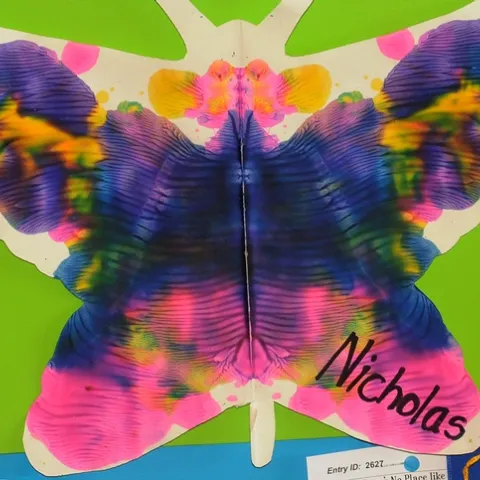
What's a picnic without bugs? What's a county fair without bugs? If you meander through McCormack Hall at the Solano County Fair, Vallejo, you'll see plenty of insects.
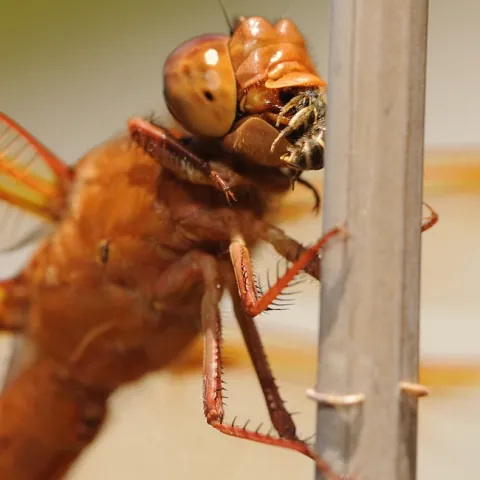
Gotta love those dragonflies in the family Libellulidae. The Thunderbirds of the insect world, they perform amazing aerial maneuvers as they skim over water, catching mosquitoes, knats, flies and other undesirables on the wing. But oh--occasionally they nail a pollinator.