UC ANR is committed to providing an accessible and inclusive web experience for all users. If you encounter an accessibility barrier or need content in an alternative or remediated accessible format, please contact anraccessibility@ucanr.edu.
Cooperative Extension Specialist Brad Hanson, who chaired the 55th annual Weed Day at UC Davis July 14, was interviewed by Jeffrey Callison, host of Insight on Capital Public Radio on July 19. Click here to listen to the interview. Hansons interview begins at about 23:30 min.
Most of us learn best by doing, which is why Weed Science School 2011 promises to be better than ever this year. Were offering more hands-on training, says Cooperative Extension Specialist Joe DiTomaso, chairperson of Weed Science School 2011 to be held at UC Davis Aug. 30-Sept. 1.
We received several calls yesterday from a news organization in San Francisco about a CDFA biocontrol program for an invasive aquatic weed, water hyacinth. I'm a terrestrial weed guy who works mostly in orchards and vineyards, not aquatics so I kept a low profile.
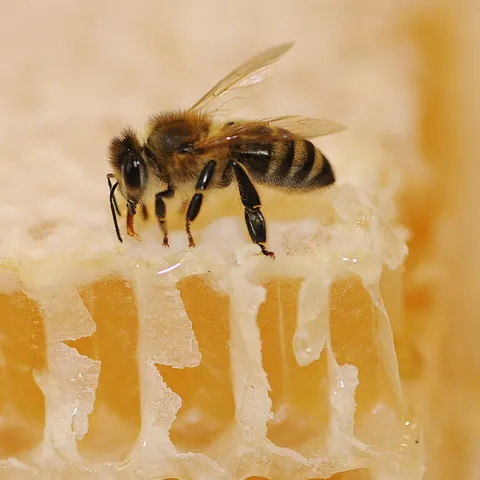
Honey! That very word summons a smile. A public celebration--appropriately titled Honey!--will take place Friday, Oct. 21 in the UC Davis Conference Center. Save the date! The event, sponsored by the Robert Mondavi Institute for Wine and Food Science, will include tastings and a honey-focused lunch.
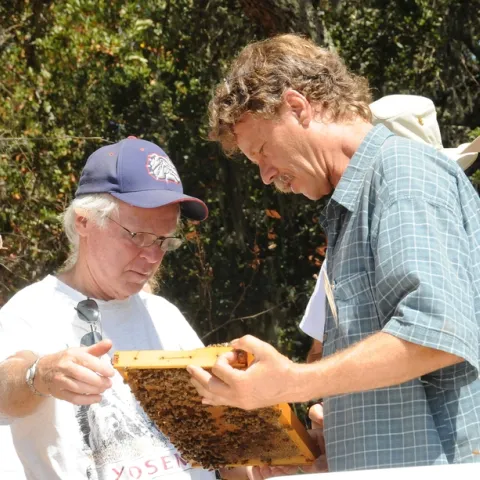
Honey bees are still in trouble. University of California scientists hammered home that point tonight during the PBS NewsHour program on the colony collapse disorder (CCD) and the declining bee population.
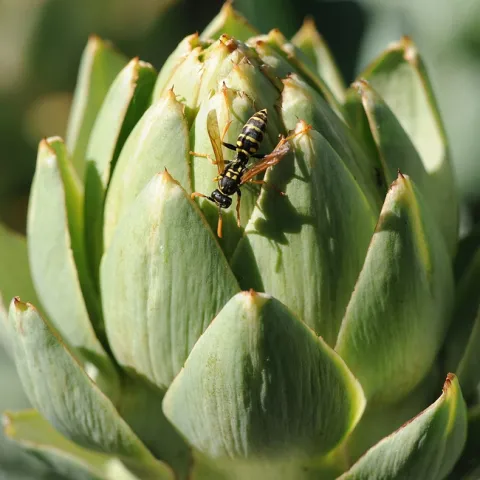
Be careful when you're harvesting an artichoke. You might find a European paper wasp (Polistes dominula) hunting for a little protein, such as ants, flies and tiny bees to carry back to its nest.
What the ?? Wheres this coming from and what does that have to do with weeds? A few years ago, I noticed that when I was wearing my cool polarized sunglasses it was like I had a superpower for spotting smooth crabgrass in turf.
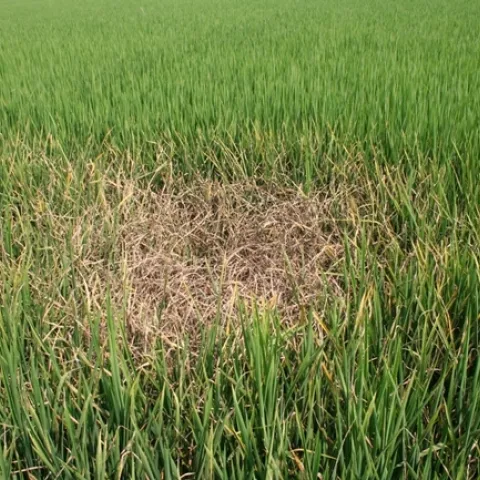
Last year we had a bad blast year - several fields that had never experienced blast got the disease and some reported yield losses. This year growers and PCAs are paying more attention to try to prevent the disease from causing damage.
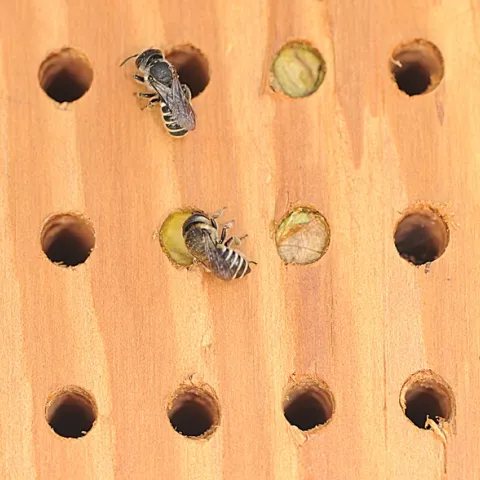
Ten tenants. That's how many tenants are occupying our wooden bee block, aka "bee condo." It's "home, sweet home" for leafcutting bees (Megachile spp.).