UC ANR is committed to providing an accessible and inclusive web experience for all users. If you encounter an accessibility barrier or need content in an alternative or remediated accessible format, please contact anraccessibility@ucanr.edu.
It's been dubbed "The Manhattan Project of Entomology." And it may have "the potential to revolutionize the way we think about insects," says Richard Levine, communications program manager of the Entomological Society of America (ESA). Call it "The Manhattan Project of Entomology.
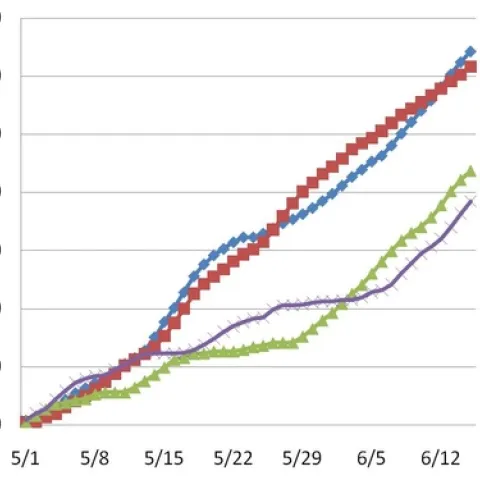
Here's the beginning of the 2011 rice season in three graphs*: Degree day (DD) accumulation over the developmental threshold of 55 oF (starting May 1st) during early May in 2011 was similar to 2008 and 2009.
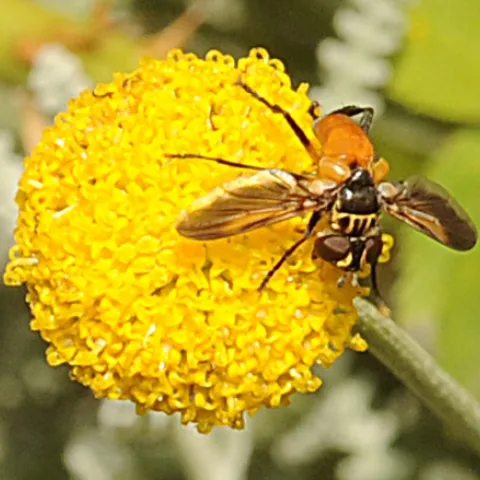
The feather-legged fly looks as if it were formed by a committee. It's about the size of a house fly, but there the similarity ends. Black head and thorax, hind legs fringed with a "comb" of short black hairs, and an abdomen that's the color of honey--bright orange honey.
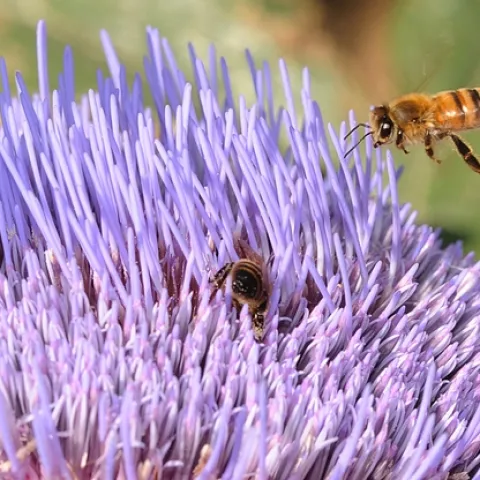
To attract honey bees to your garden, it's a good idea to let the artichokes flower. Sure, you could pick them for your dinner, but you'd be depriving honey bees of theirs. At the Hagen-Dazs Honey Bee Haven at UC Davis, the artichokes are beginning to flower.
Article reposted from the Weed Science Society of America (WSSA) website. The pdf version of the article is attached at the bottom of the post. Take care, Brad http://www.wssa.net/index.htm http://www.wssa.net/WSSA/PressRoom/WSSA_Compost_WeedFree.
The Bohart Museum of Entomology has five. Nature has none. Zip. Zero. Zilch. The Xerces Blue Butterfly, which once thrived on the San Francisco Peninsula before urbanization chased it away, is extinct. There are no more.
There is a lot of information out there! While looking for something else, I ran across a Western Farm Press article from last fall about Roundup Ready canola growing on roadsides etc. I've heard Doug Munier talk about this issue and I'm sure many of you have too.
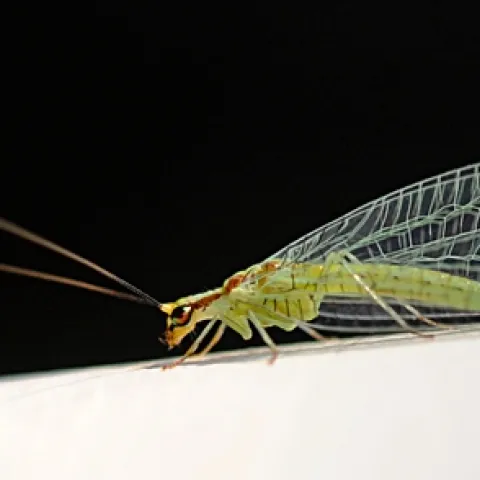
"Chantilly lace, have a pretty face..." When Jerry Lee Lewis belted out those lyrics in his No. 1 hit, "Chantilly Lace," back in 1972, he wasn't thinking of a green lacewing. Perhaps he should have been.