UC ANR is committed to providing an accessible and inclusive web experience for all users. If you encounter an accessibility barrier or need content in an alternative or remediated accessible format, please contact anraccessibility@ucanr.edu.
I gave an overview presentation on my research program today as part of the Plant Science Departmental Seminar series at UC Davis. I thought I'd post it here for several reasons: 1. There might be someone out there who is just dying to know what I do - here you go! 2.
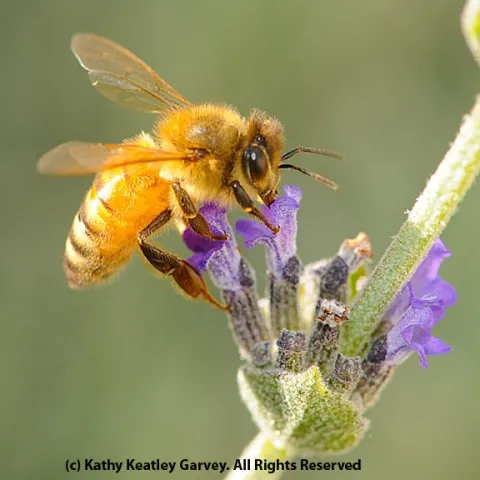
When you encounter a "Golden Girl" in your backyard, there's one thing to do: grab the camera. The "Golden Girl," in this case, is an Italian honey bee (Apis mellifera liguistica), the most common honey bee in the United States. Make that the world.
I recently ran across an article from Western Farm Press (written last November) that I thought was interesting and worth reposting here. The article, which was entitled "Weed Control: Communication with Farmers Essential", provided a synopsis of a journal article on the subject.
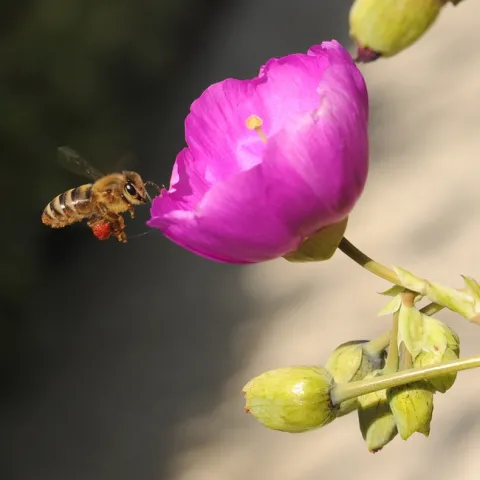
Unlike airplane pilots, honey bees don't file a flight plan. They know where they're going because their sisters tell them with their waggle dances. Pollen. Nectar. Propolis. All good. Bees seem to really like the pollen on rock purslane (Calandrinia grandiflora).
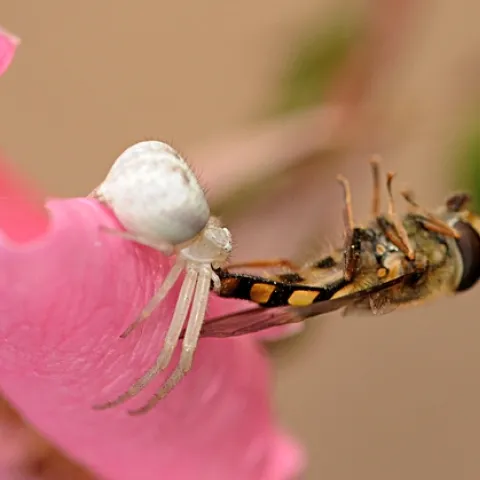
It was not a good day for a flower fly. A flower fly, aka syrphid fly, dropped down in a patch of pink roses at the Hagen-Dazs Honey Bee Haven at UC Davis today to sip nectar. It was a pink-rose kind of day. Not for the flower fly, though. A crab spider, lying in wait, pounced.
When we think about honey bees, we ought to think about the immune system. Understanding the honey bees immune system is crucial to battling the declining honey bee population, says University of California insect virus researcher Michelle Flenniken.
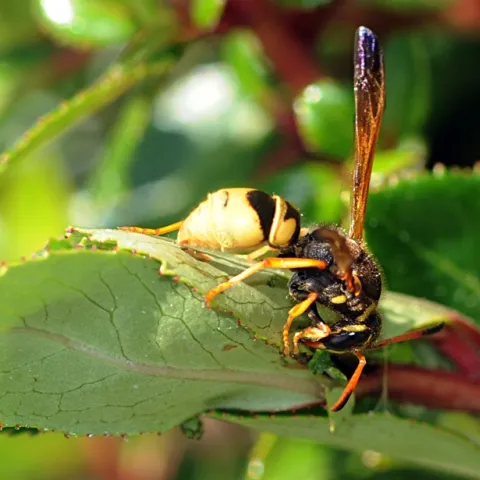
Do you brake for wasps? We spotted a bumper sticker on the UC Davis campus the other day that read: "I brake for wasps." It was parked in the Briggs Hall loading zone--Briggs is the home of the UC Davis Department of Entomology--so I imagine it was braking for wasps right then and there.
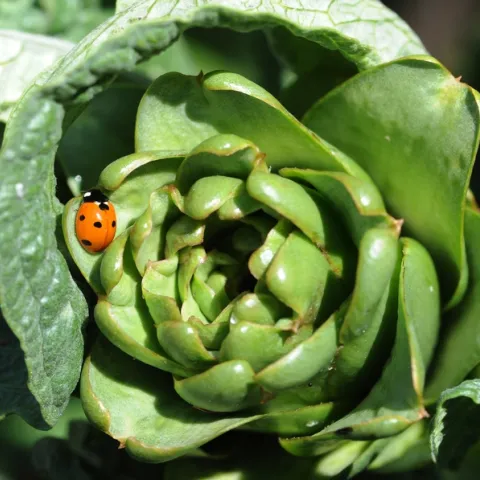
Ladybugs, aka ladybird beetles, are out there. Walk through the garden and they're easy to find. Last weekend we spotted one tucked in the heart of an artichoke, another climbing a nectarine tree, and still another perched on an artichoke leaf.