UC ANR is committed to providing an accessible and inclusive web experience for all users. If you encounter an accessibility barrier or need content in an alternative or remediated accessible format, please contact anraccessibility@ucanr.edu.
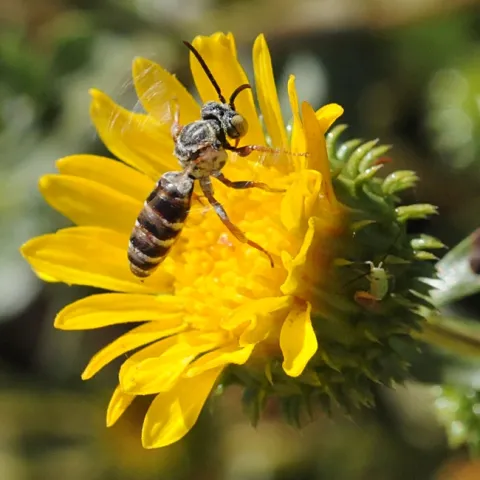
Let's hear it for the hedgerows. Picture native plants, shrub and ground cover bordering agricultural fields and providing habitat for native bees and other pollinators. Not just bed and breakfast, but bed, breakfast, lunch and dinner. And snacks in between.
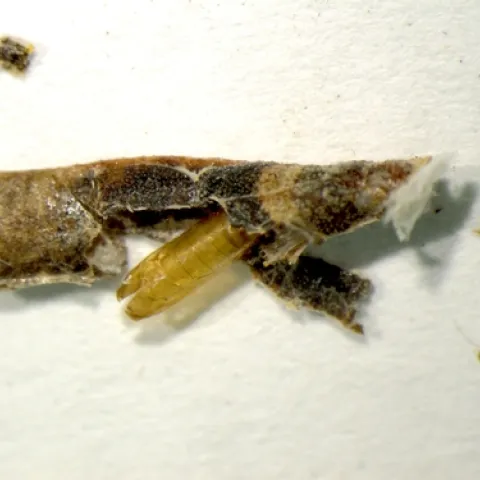
Manzanita leaves showing blotch mines and cases made by Coleophora sp. (Photo by: Surendra Dara) Manzanita (Arctostaphylos sp.) leaf samples that were recently brought from the San Luis Obispo area appear to have casebearer infestation.
Today I thought I'd share a few photos of a weed that is becoming more common in orchards in some areas of the Central Valley. I've gotten a few calls and ran across a few infestations of cutleaf eveningprimrose (Oenothera laciniata).
Honey bees and daisies are made for each other. The white petals and the golden centers seem incomplete without the presence of buzzing bees. Today we watched a pollen-packin' honey bee, with a pollen load the color of autumn pumpkins, work a daisy.
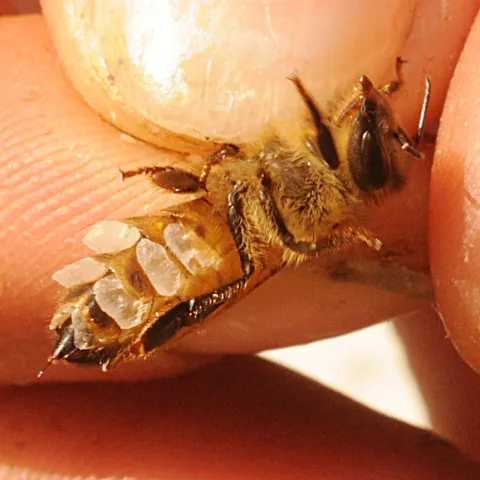
Ever seen a wax builder? A "real" wax builder? Bee breeder-geneticist Susan Cobey and beekeeper-research associate Elizabeth Frost of the Harry H. Laidlaw Jr. Honey Bee Research Facility at the University of California, Davis, showed us a wax builder last week. No, two wax builders.
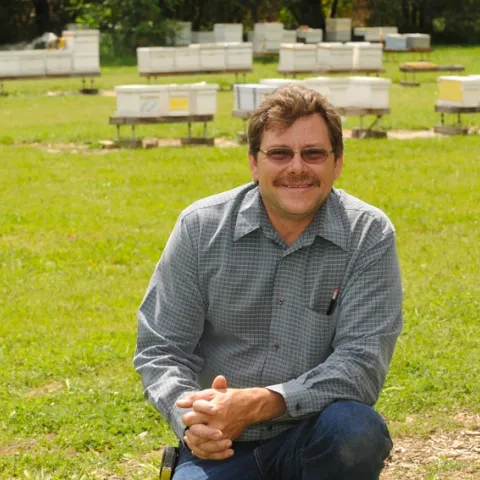
Beekeeping comes naturally for Brian Fishback of Wilton, a past president of the Sacramento Area Beekeepers Association and a volunteer at the Harry H. Laidlaw Jr. Honey Bee Research Facility at the University of California, Davis.
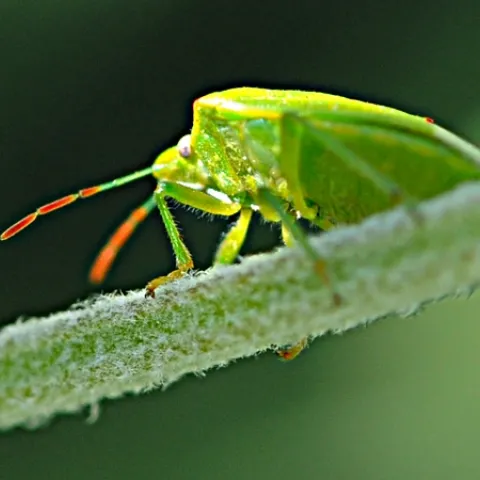
If you've ever been shoulder to shoulder with a redshouldered stink bug--or nose to antennae--you know this is a bug to boot out of your garden. It's a pest. Behind that shield-shaped body is a pest.
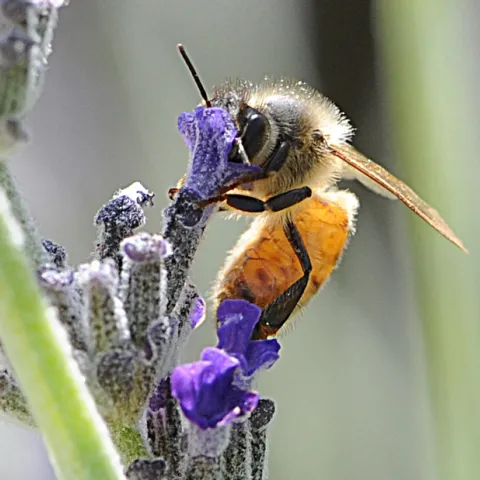
Mother's Day, insect-style, dawned like any other day. In our back yard, golden honey bees foraged in the lavender and those ever-so-tiny sweat bees visited the rock purslane. The honey bees? Those gorgeous Italians.