UC ANR is committed to providing an accessible and inclusive web experience for all users. If you encounter an accessibility barrier or need content in an alternative or remediated accessible format, please contact anraccessibility@ucanr.edu.
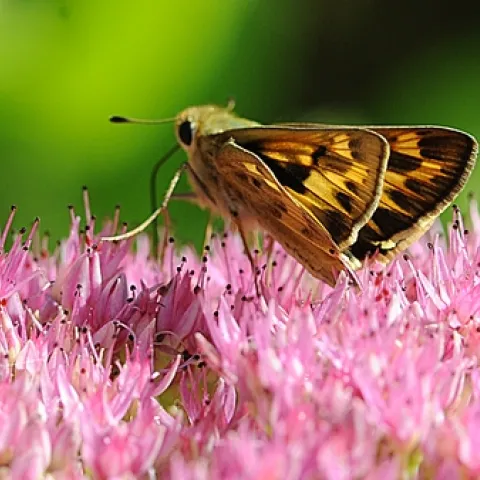
Skippers and sedum. Sedum and skippers. A perfect match. The flower, sedum (family Crassulaceae), and the fiery skipper butterfly (Hylephila phyleus, family Hesperlidae) make a stunning autumn photo. When late afternoon sun strikes its fighter-jet wings, it glows brilliantly.
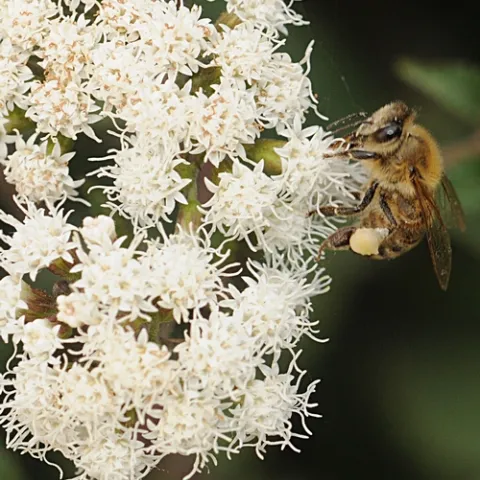
You gotta love the Joe-Pye Weed. It's a shady character and a late bloomer. That is, it loves the shade and blooms in the late summer and early fall. Better yet, bees and butterflies love it. Once you hear the distinctive name, Joe-Pye Weed (Eupatorium purpureum) you'll never forget it.
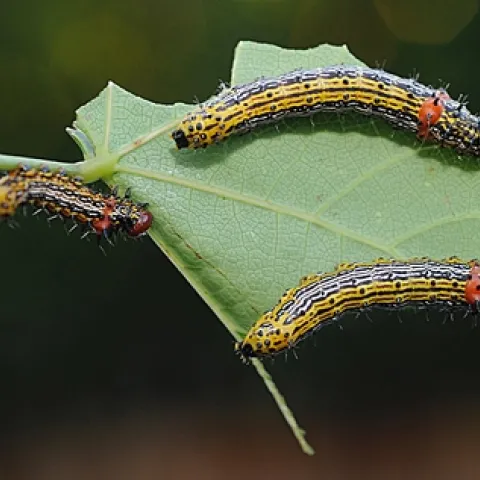
There's a whole lot of crunchin' going on. The redhumped caterpillar has discovered our redbud tree, which it considers an "all-you-can" buffet. Now this is a voracious eater on the same scale of a fellow named Joey "Jaws" Chestnut. Seconds? Yes, please. Thirds? Of course. Fourths? Definitely.
What a year for rice blast - How long does it take for rice to ripen? - Measuring grain moisture content before harvest - Insects of farm stored rice - Using a desiccant to accelerate dry down.
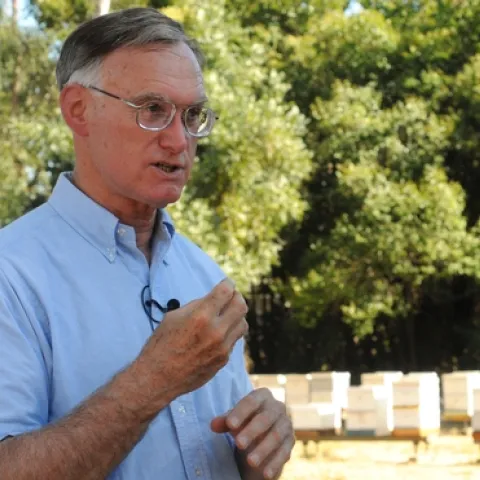
Colony collapse disorder--what's the status? Beekeepers in California are cautiously optimistic that their colonies are going to survive the winter in better shape that they have in the past few years, says Extension apiculturist Eric Mussen, member of the UC Davis Department of Entomology faculty.
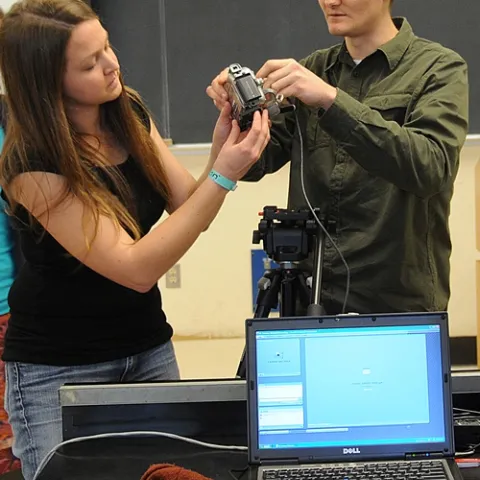
When you were first asked/requested/urged/required to make an insect collection, where did you go for information? How did you learn how to collect, display and preserve insects?