UC ANR is committed to providing an accessible and inclusive web experience for all users. If you encounter an accessibility barrier or need content in an alternative or remediated accessible format, please contact anraccessibility@ucanr.edu.
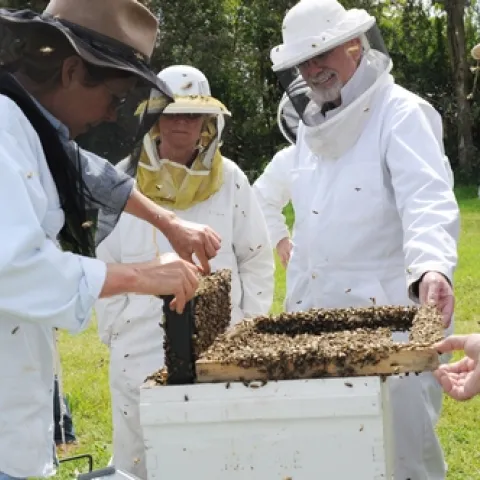
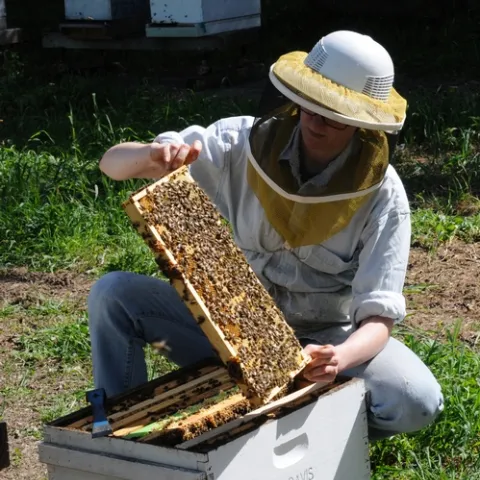
It wouldn't dare rain on Susan Cobey's queen bee-rearing classes. And it didn't today. Well, a little sprinkle, but that was it. Bee breeder-geneticist Susan Cobey, manager of the Harry H. Laidlaw Jr.
If spring has sprung--and it has--it's also time to spring forward the next batch of noonhour seminars at the UC Davis Department of Entomology. The spring lectures are held every Wednesday, March 31 through May 26, from 12:10 to 1 p.m., in 122 Briggs Hall, Kleiber Drive.
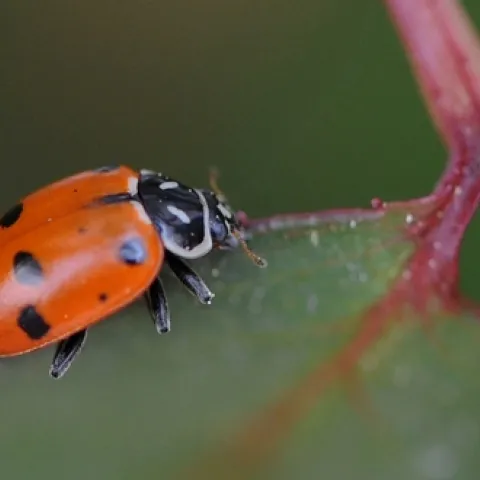
"I'm a ladybug. Please, take me home. I want to live in your garden. I like to eat aphids. Aphids are tiny green insects that are harmful to plants." "Just like the Grange, I'm a friend to the farmer and you.
The news is not good. The honey bee crisis is worsening. Back in November of 2006, commercial beekeeper David Hackenberg of Pennsylvania sounded the alarm. Fifty 50 percent of his bees had collapsed in Florida.
When the annual California Agriculture Day took place yesterday on the state capitol grounds, thousands of visitors buzzed the booths learning more about the food they eat and the agriculturists that provide it. But that wasn't the only buzz.
To a beekeeper, it's a four-letter word. Mite. Specifically, the varroa mite, also known as Varroa destructor. It's a small (think flea-sized) crab-shaped parasite that feeds on bees, either in the brood (immature bees) or on adult bees.
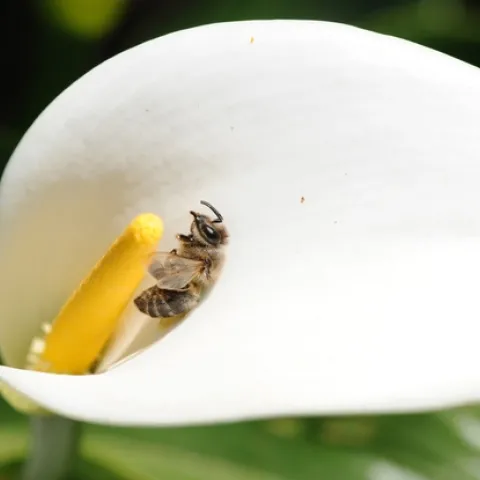
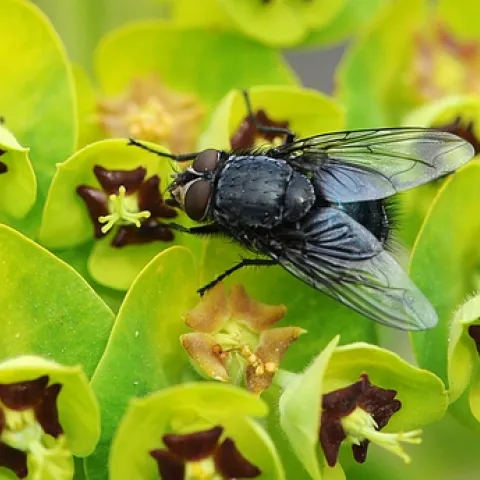
Honey bees sip nectar from the Mediterranean spurge (Euphorbia characias wulfenii) planted in our bee friendly garden. So do flies. Last weekend several flies flashing colors as brilliant as those blue morpho butterflies landed on the evergreen shrub. It wasn't your basic green bottle fly.
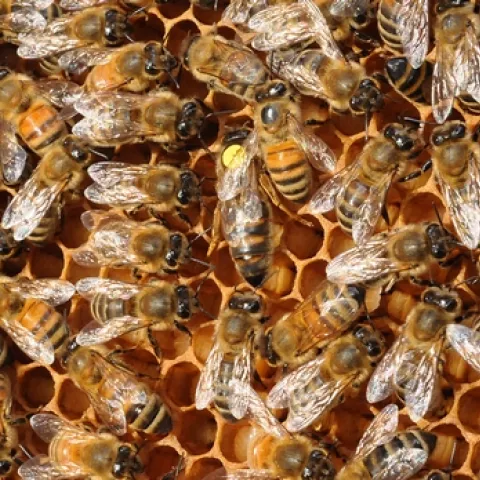
The number of new housing developments throughout the country continues to shrink as we struggle with the throes of a deep recession. That's with human housing, not in a healthy honey bee hive. The bees are busy building up their colonies, just as they do every spring.