UC ANR is committed to providing an accessible and inclusive web experience for all users. If you encounter an accessibility barrier or need content in an alternative or remediated accessible format, please contact anraccessibility@ucanr.edu.
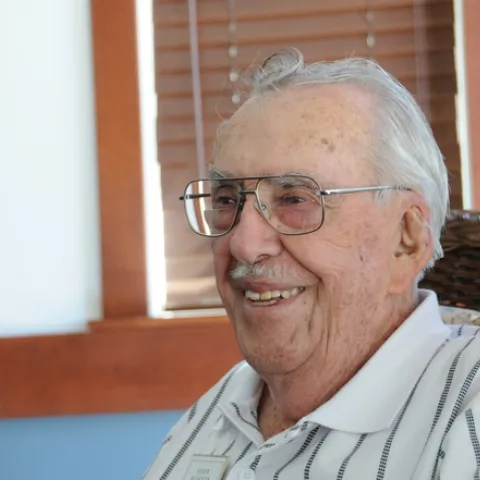
Vern Burton didnt set out to become an entomologist. Home from the World War II battlefields, he enrolled in Compton Community College and then the University of California, Berkeley. A family friend promised him a job in his termite control business once he finished his studies.
If you've ever wondered about the relationship between predator biodiversity and herbivore suppression, that subject is on tap Wednesday, Jan. 27 at UC Davis.
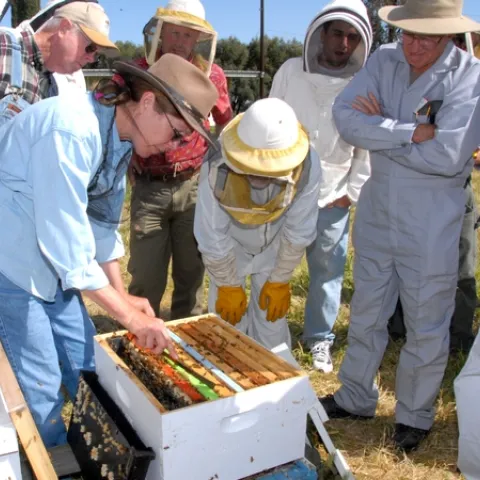
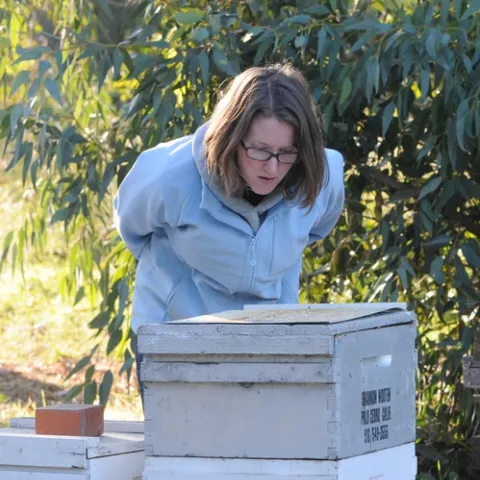
What makes a beekeeper? A research team from the Department of Psychology, Bradley University, Peoria, Ill., wants to know. Led by Wendy Schweigert, Ph.D.
Human blood--it drives mosquitoes wild. Today Marlene Cimmons of the National Science Foundation (NSF) spotlights chemical ecologist Walter Leal, professor of entomology, University of California, Davis, on the LiveScience Web site.
Pull out the bottom tray (floor) of a beehive and you're likely to see lots of bee droppings, a little pollen, a few mites, a few dead bees and...a few scurrying ants. Ants find a bee hive nice and cozy, especially in the winter as temperatures drop. Beekeeper Elizabeth "Liz" Frost of the Harry H.
Dragonflies, damselflies, dermestids and native bees. Does an entomological life get any better than this? Those are some of the topics to be discussed at the next meeting of the Northern California Entomological Society, set for Thursday, Feb.