UC ANR is committed to providing an accessible and inclusive web experience for all users. If you encounter an accessibility barrier or need content in an alternative or remediated accessible format, please contact anraccessibility@ucanr.edu.
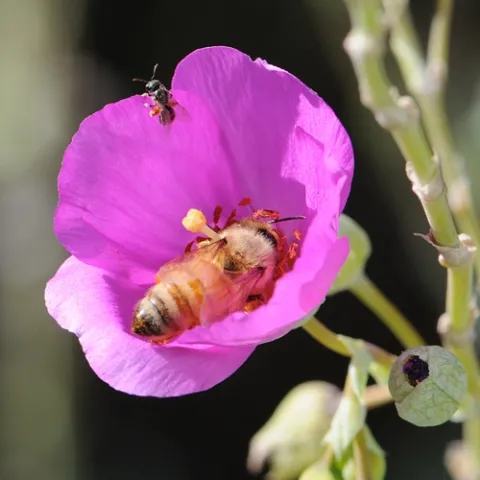
When a sweat bee and a honey bee share the same flower, the size difference is quite distinct. We took this photo of a honey bee on a rock purslane (Calandrinia grandiflora) blossom.
Bees buzz. People "Tweet." Well, many people do. It's generous of the Hagen-Dazs brand to donate $1 per Tweet (up to $500 per day) from Nov. 5 through Nov. 11 to support honey bee research at the University of California, Davis.
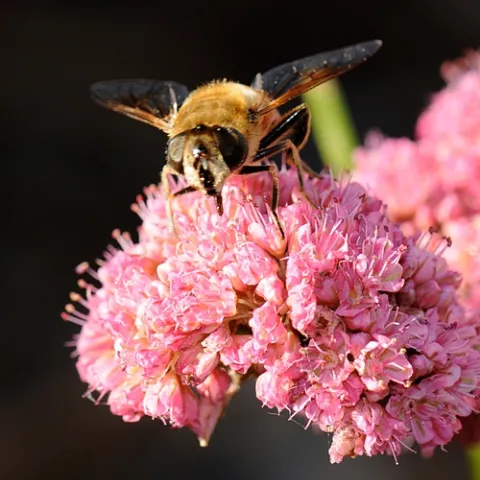
Butterflies, honey bees and hover flies can't get enough of red buckwheat. Tight clusters of pink blossoms, coupled with gray-green foliage, grace red buckwheat (Eriogonum grande rubescens), a California native. It's good for the insects and good for the gardener. It's drought-tolerant.
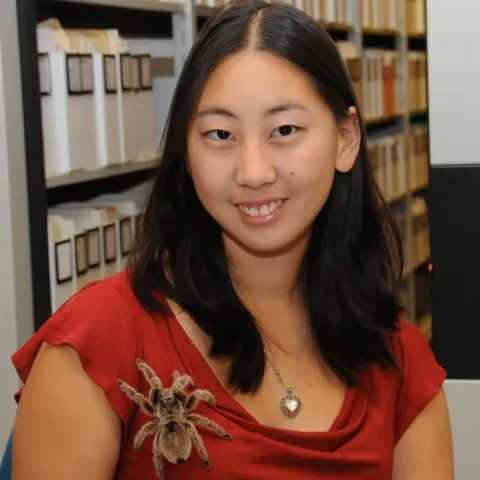
Everything's coming up roses at the Bohart Museum of Entomology on the UC Davis campus. Roses? Make that rose-haired tarantulas. See, the Bohart not only houses some seven million insect specimens in its quarters in 1124 Academic Surge, but they have a few live ones, too.
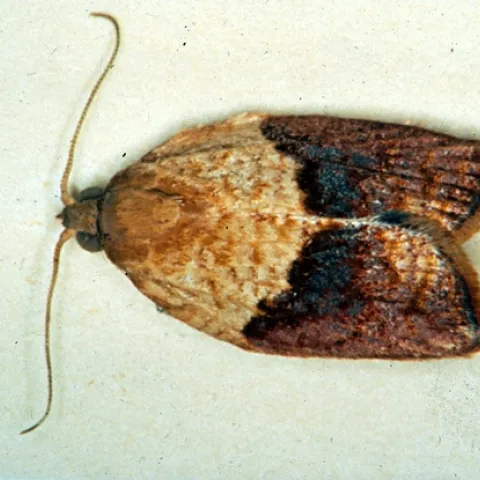
Remember the ravenous light brown apple moth (LBAM) and all the controversy? The invasive agricultural pest, from Down Under, soars high on the agenda at the Northern California Entomology Societys meeting on Thursday, Nov. 5 in Concord. Also on the agenda: honey bee regulatory research.
The "honey bee reproductive ground plan" hypothesis that originated two decades ago at the University of California, Davis with bee geneticist Robert E Page Jr. (right) is drawing international attention.
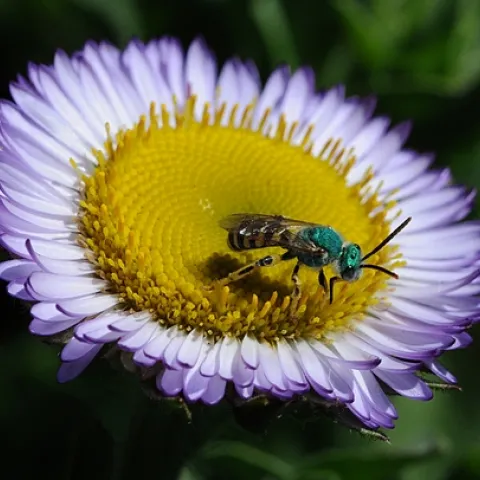
There's something so magical and captivating about the metallic green sweat bee. Shouldn't it be yellow? No. Is it a bee? Yes. Does it attract attention? Definitely.
Chemical ecologist Walter Leal, professor and former chair of the UC Davis Department of Entomology, and his postdoctoral researcher Zain Syed have done it again. In August of 2008, they discovered the secret mode of the insect repellent, DEET.