Archive Nut, Prune and Olive Programs

Primary Image
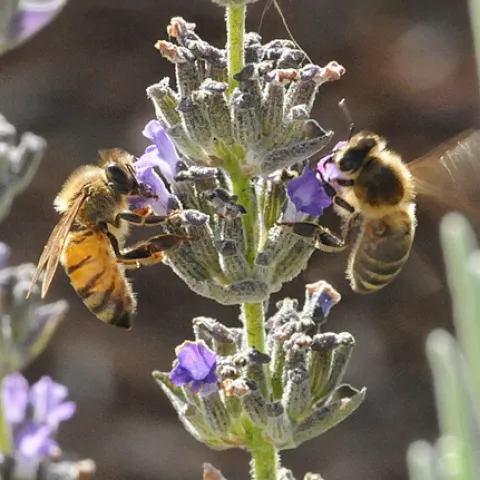
SHARING A LAVENDER are an Italian bee (left) and a Carniolan bee, two races of the species Apis mellifera. (Photo by Kathy Keatley Garvey)
Bug Squad: Article

Racing for the Lavender

October 26, 2009
By Kathy Keatley Garvey
A bee is a bee is a bee? Poet Gertrude Stein ("a rose is a rose is a rose") could have said that. True, there's only one species of honey bee in the United States--Apis mellifera, the Western or European honey bee--but there are several races.
View Article
Primary Image
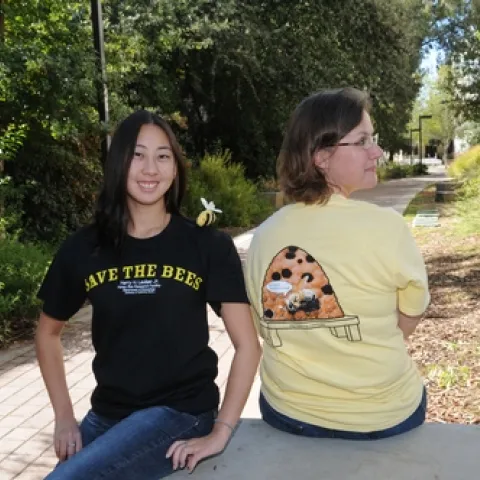
SPORTING the new honey bee t-shirts they created to raise funds for honey bee research at UC Davis are Nanase Nakanishi (left), an animal science major and a student employee at the Bohart Museum of Entomology, and Fran Keller, a doctoral student in entomology. Nanase models the front, and Fran, the back. (Photo by Kathy Keatley Garvey)
Bug Squad: Article

Saving the Bees, One Shirt at a Time

October 23, 2009
By Kathy Keatley Garvey
Officials at the UC Davis Department of Entomology and the Bohart Museum of Entomology are saving the bees--one T-shirt at a time.
View Article
Primary Image
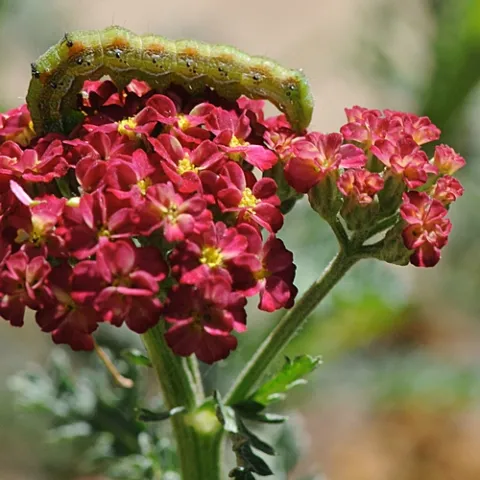
NOCTUID CUTWORM, soon to be a dull brown moth, crawls on a yarrow at the Storer Garden, UC Davis. (Photo by Kathy Keatley Garvey)
Bug Squad: Article

Cutting It

October 22, 2009
By Kathy Keatley Garvey
The dull brown moth may be dull-looking but as noctuid cutworms they're not. We spotted this noctuid cutworm, soon to be a dull brown moth, last week on a yarrow in the Storer Gardens at the University of California, Davis.
View Article
Primary Image
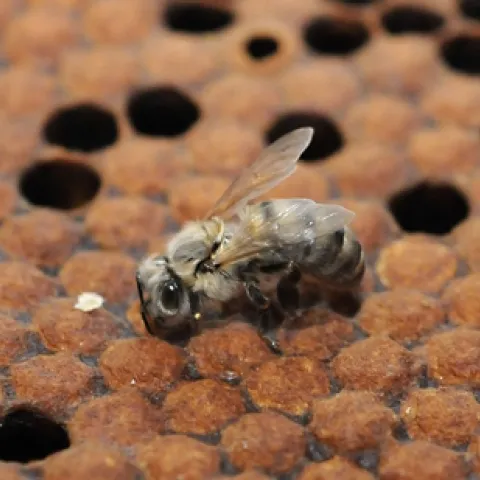
NEWLY EMERGED BEE at the Harry H. Laidlaw Jr. Honey Bee Research Facility, UC Davis. Bees like this are now welcome in Allendale, N.J., thanks to the successful efforts of beekeeper Dianne DiBlasi to lift a ban on backyard beekeeping. (Photo by Kathy Keatley Garvey)
Bug Squad: Article

Bee-lieve!

October 21, 2009
By Kathy Keatley Garvey
Dianne DiBlasi did it. Back in January, we wrote a Bug Squad blog about Dianne DiBlasis three-year effort to overturn an Allendale, N.J. ban on backyard beekeeping. DiBlasi, who leads a group of teen environmentalists known as Team B.E.E.S.
View Article
Primary Image
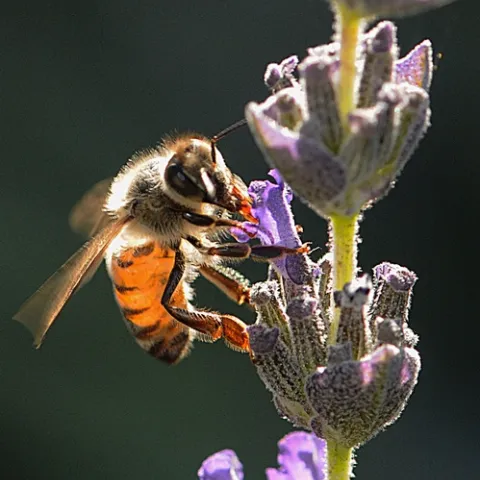
HONEY BEE nectaring lavender. Los Alamos National Laboratory has developed a method for training the common honey bee to detect the explosives used in bombs. The method involves the tongue or proboscis. (Photo by Kathy Keatley Garvey)
Bug Squad: Article

A Tongue for Explosives, Narcotics

October 20, 2009
By Kathy Keatley Garvey
Honey bees are involved in a unique "sting operation" utilizing their sense of keen smell to detect explosives and narcotics. And now a scientist from the Los Alamos National Laboratory, New Mexico, will talk about the project on Wednesday, Oct. 21 on the UC Davis campus.
View Article
Colusa County: Article

October 2009

October 19, 2009
Guidelines for stripe rust management in wheat, Western Alfalfa & Forage Conference information and registration form...
View Article
Primary Image
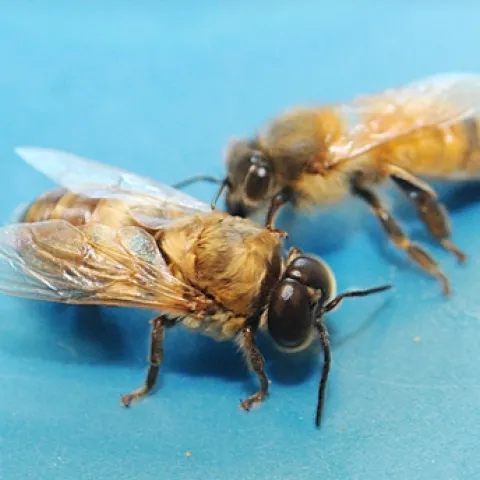
NEWLY EMERGED: a drone (male bee) is the foreground. In the background is a worker bee (infertile female). They're one day old in this photo. (Photo by Kathy Keatley Garvey)
Bug Squad: Article

The Drone: Target of Attacks

October 19, 2009
By Kathy Keatley Garvey
Drones--remotely piloted aircraft used in reconnaissance and target attacks--are in the news, but so are the other drones--male bees. This time of year drones are as scarce as the proverbial hen's teeth.
View Article
Primary Image
UC DAVIS ENTOMOLOGIST James R. Carey, director of a federally funded program on aging and lifespan, will speak on "Demography of the Finitude: Insights into Lifespan, Aging and Death from Insect Studies" from 12:10 to 1 p.m. on Wednesday, Oct. 21 in 122 Briggs Hall, UC Davis. It can be accessed live. (See above for link.) (Photo by Kathy Keatley Garvey)
Bug Squad: Article

What We Can Learn from Insects

October 16, 2009
By Kathy Keatley Garvey
What can we learn from insects? Lots. But first, let's talk about the UC Seminar Network. It's a pilot program that involves Webcasting scientific seminars on University of California campuses.
View Article
Primary Image
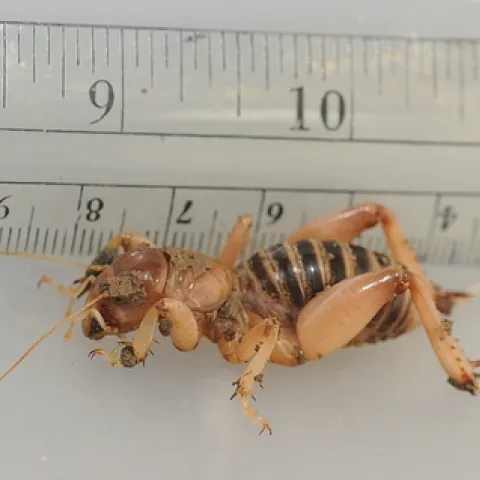
JERUSALEM CRICKET is not really a true cricket or a true bug. It's an insect that burrows beneath the soil to feed on decaying organic matter. During a heavy rainfall, you'll see them emerge from the soaked ground. (Photo by Kathy Keatley Garvey)
Bug Squad: Article

Not Jiminy

October 15, 2009
By Kathy Keatley Garvey
It was an unexpected visit. UC Davis bee breeder-geneticist Susan Cobey noticed the critter in one of the restrooms at the Harry H. Laidlaw Jr. Honey Bee Research Facility at UC Davis. She found it several days after the massive Oct. 12 storm raced through Northern California.
View Article
Primary Image
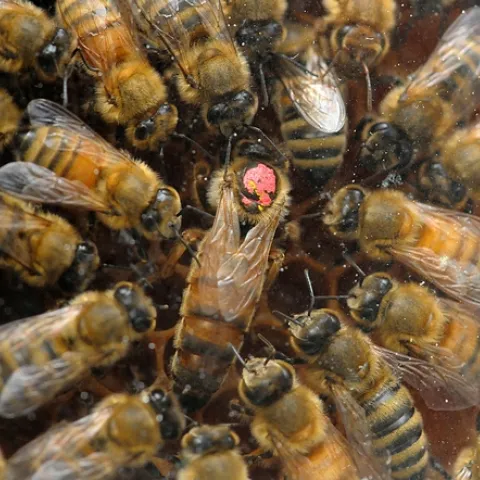
QUEEN BEE, marked with the dot, is circled by her royal attendants in a retinue. This was taken through the glass of an observation hive. (Photo by Kathy Keatley Garvey)
Bug Squad: Article

Life and Death in the Hive

October 14, 2009
By Kathy Keatley Garvey
Life and death in the bee observation hive... If you ever have the opportunity to check out a bee observation hive--a glassed-in hive showing the colony at work--you can easily spot the three castes: the queen bee, worker bees and drones.
View Article