UC ANR is committed to providing an accessible and inclusive web experience for all users. If you encounter an accessibility barrier or need content in an alternative or remediated accessible format, please contact anraccessibility@ucanr.edu.
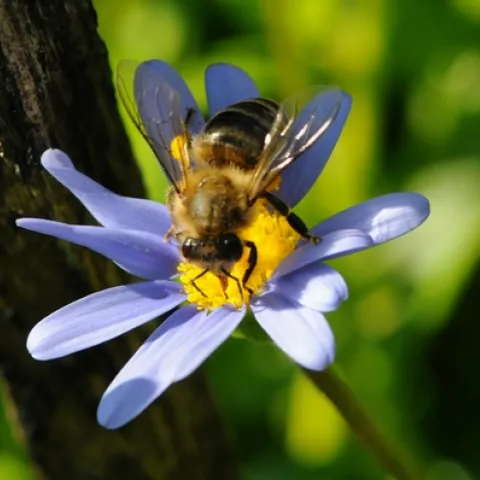
It's a blue day for the honey bees. The massive Northern California storm--one of our worst-ever storms and marked by heavy rains and equally strong winds--means that bees are clustering inside their hives. No foraging today.
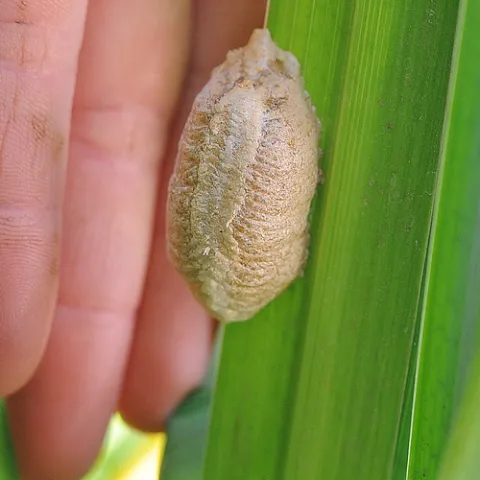
Here's a "cold case" to investigate. Check your backyard or neighborhood park and see if a praying mantis has deposited an egg case on a tree limb, plant or fence. Case in point: Over at the Harry H. Laidlaw Jr.
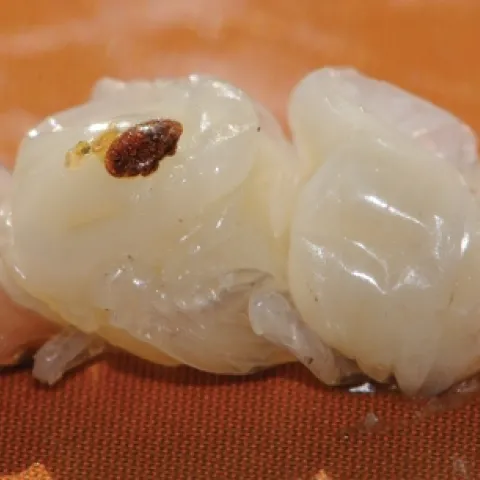
It's not a pretty sight--the Varroa mite attacking a honey bee. Beekeepers are accustomed to seeing the reddish-brown, eight-legged parasite (aka "blood sucker") in their hives. UC Davis bee breeder-geneticist Susan Cobey, manager of the Harry H. Laidlaw Jr.
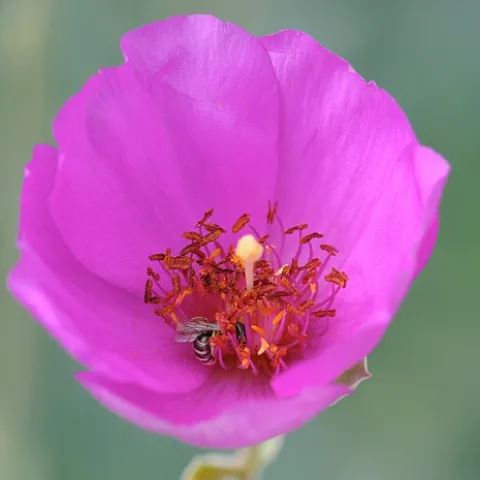
Caught between a rock and a...soft place... You'll often see tiny sweat bees nectaring rock purslane (Calandrinia grandiflora) in urban gardens. This plant, a native of Chile, brightens landscapes with its pinkish magenta blossoms.
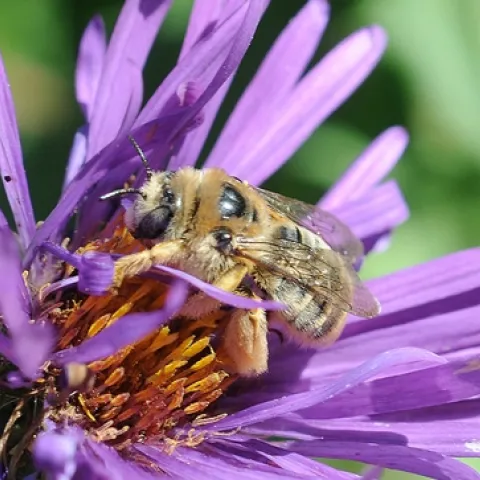
The UC Davis Aboretum--particularly the Storer Garden--is full of color--and sunflower bees. A recent trip to see the New England Asters (Aster novae-angliae from the Asteraceae or sunflower family) yielded a Nikon moment: fuzzy-wuzzy sunflower bees foraging on the striking purple flowers.
Like to know more about the biocontrol of tea pests? Aging of insects? What honey bee research is under way? If you can't physically attend the UC Davis Department of Entomology's fall seminars, starting Wednesday noon, Oct.
It's not just the honey bees that will be foraging in the half-acre Hagen-Dazs Honey Bee Haven on Bee Biology Road, UC Davis. Scores of native bees and other insects will be there, too. They already are. A weekend visit to the haven, a bee friendly garden being developed next to the Harry H.
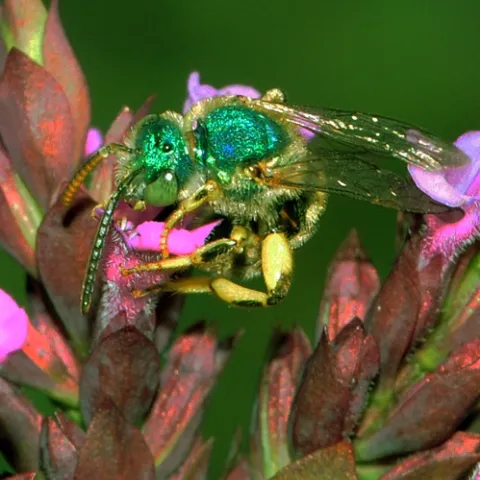
The green metallic sweat bee looks as if someone splashed green fluorescent paint on it. This uniquely colored bee is just one of some 1600 native bee species in California. It's about one-fourth the size of a honey bee and it's difficult to photograph because (1) it's tiny and (2) it moves fast.