UC ANR is committed to providing an accessible and inclusive web experience for all users. If you encounter an accessibility barrier or need content in an alternative or remediated accessible format, please contact anraccessibility@ucanr.edu.
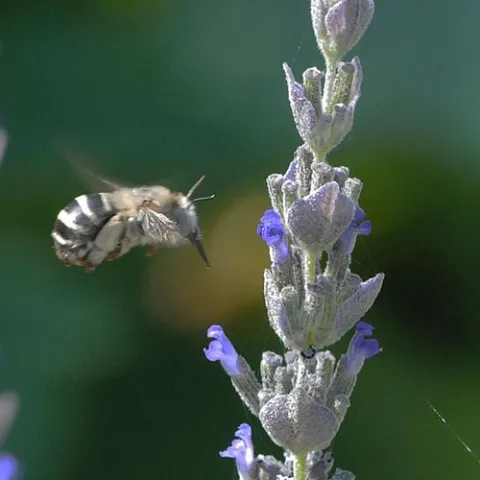
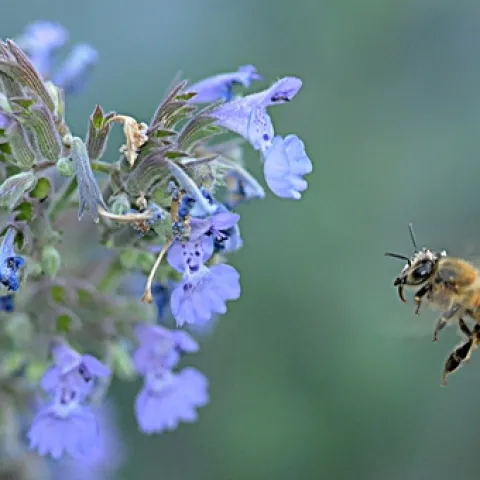
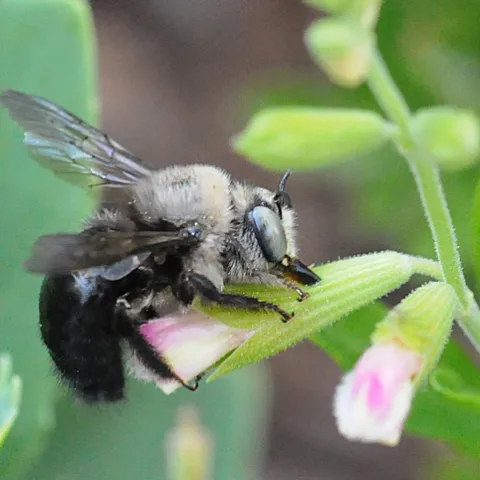
It's smaller than a honey bee. And faster and louder. Anthophora urbana, a solitary, ground-nesting bee, frequents our garden to nectar the catmint, lavender and sage. Sometimes the forager's buzz is so loud that it's startling.
Entomologists, geneticists and virologists are still searching for the cause of colony collapse disorder (CCD). Yes, they're still searching, and no, there' s no known cause yet. CCD is a mysterious phenomonen characterized by adult bees abandoning the hive.
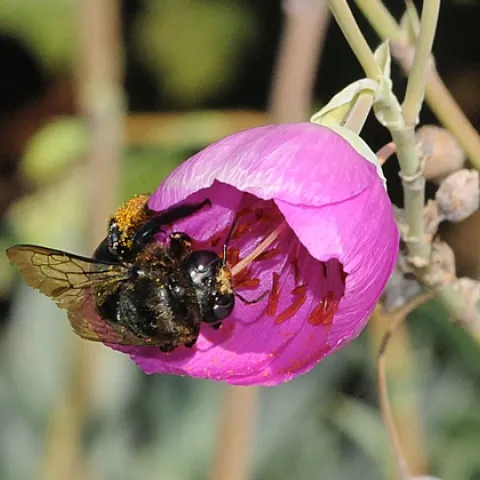
Thunder boomed across the garden. The carpenter bee (Xylocopata tabaniformis orpifex) meant business. She headed straight for the slowly opening rock purslane (Calandrinia grandiflora). Never mind that the petals hadn't quite unfolded.
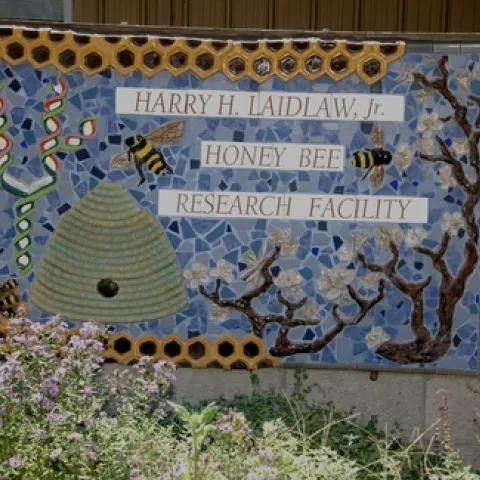
Honey bees love catmint as much as cats love catnip. Fact is, catmint and catnip belong to the same family: the mint family or Lamiaceae. The family also includes such aromatic celebrities as peppermint, sage, thyme, lavender, basil and oregano. So, when the Hagen-Dazs Honey Bee Haven opens Oct.
It's a crazy world out there. Now our beleaguered honey bee has a new foe: the Rasberry crazy ant, Paratrechina sp. nr. pubens. The Rasberry crazy ant is driving Texans crazy.
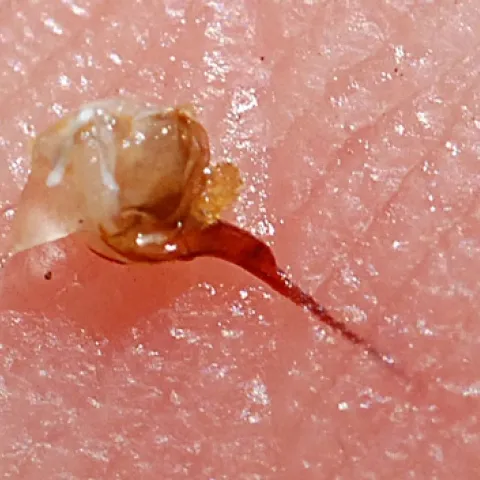
Beekeepers consider stings just a part of their job. However, say the word "bee" and John Q. and Jane Q. Public may not think about the pollination of fruits, vegetables and nuts. Or the end product: honey. The bee conjures up the "S" word: sting.
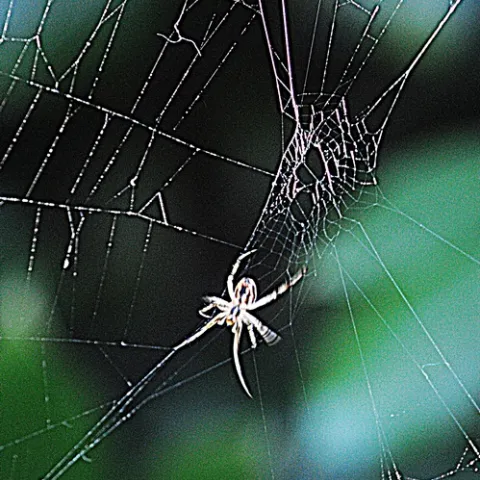
A spider web is nature's lace, a symmetrical work of wonder. Well, a sticky, deadly trap if you're an insect. Then you become just another tasty morsel for the predacious, albeit artistic, spider.
Catching up with the carpenters is not always easy. Not the construction workers--the carpenter bees. They move fast as they buzz from flower to flower. California is home to three carpenter bee species, says native pollinator specialist Robbin Thorp, emeritus professor of entomology at UC Davis.