Archive Nut, Prune and Olive Programs

Primary Image
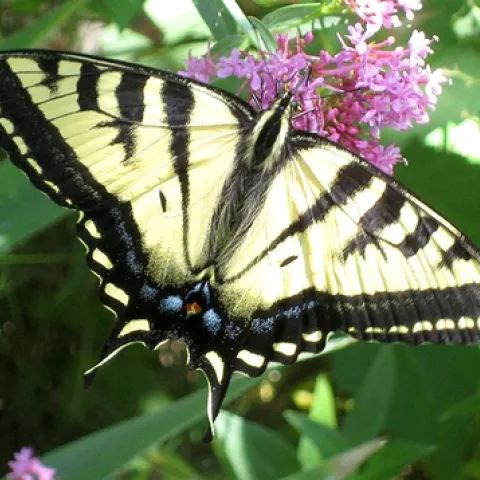
THIS IMAGE of the Western Tiger Swallowtail is by naturalist/photographer Greg Kareofelas, who took this in east Davis last week. Butterfly experts hadn't seen this butterfly in the Davis area for 15 years until this year.

Tiger by the Tail

August 14, 2009
By Kathy Keatley Garvey
Talk about a tiger by the tail. That would be the Western Tiger Swallowtail (Papilio rutulus). It's returned to the Davis area after a 15-year hiatus.
View Article
Primary Image
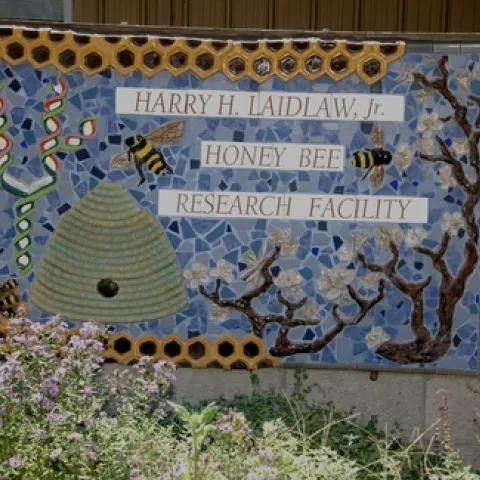
SIGN in front of the Harry H. Laidlaw Jr. Honey Bee Research Facility at UC Davis honors the legendary geneticist. The ceramic sculpture at the site (sign and walls) is the work of Davis artist Donna Billick and entomologist-artist Diane Ullman. (Photo by Kathy Keatley Garvey)

The Bees Have It

August 13, 2009
By Kathy Keatley Garvey
The bees have it. That would be honey bees and native bees. The UC Davis Department of Entomology has just launched its new bee biology Web site.
View Article
Primary Image
EXTENSION APICULTURIST Eric Mussen (left) of the UC Davis Department of Entomology faculty shares information with Pennsylvania State Uniersity entomologist Dennis van Engelsdorp at the 2007 meeting of the Entomological Society of America. UC Davis and Penn State receive research funds in a project launched by Haagen-Dazs. (Photo by Kathy Keatley Garvey)

The Buzz About CCD

August 12, 2009
By Kathy Keatley Garvey
Entomologists, geneticists and virologists are still searching for the cause of colony collapse disorder (CCD). Yes, they're still searching, and no, there' s no known cause yet. CCD is a mysterious phenomonen characterized by adult bees abandoning the hive.
View Article
Primary Image
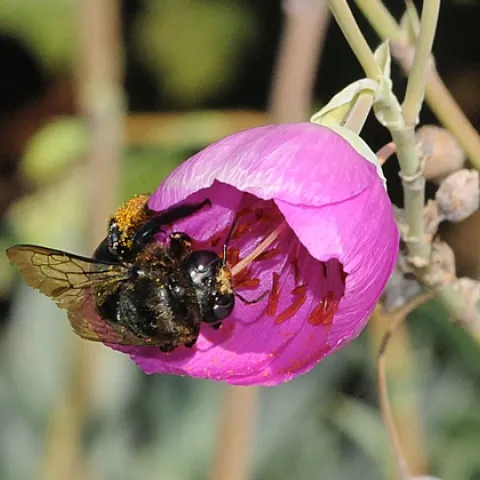
CARPENTER BEE nectars a rock purslane. (Photo by Kathy Keatley Garvey)

In the Pink

August 11, 2009
By Kathy Keatley Garvey
Thunder boomed across the garden. The carpenter bee (Xylocopata tabaniformis orpifex) meant business. She headed straight for the slowly opening rock purslane (Calandrinia grandiflora). Never mind that the petals hadn't quite unfolded.
View Article
Primary Image
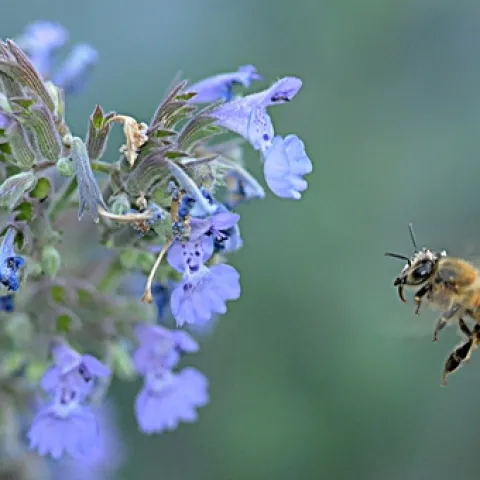
HONEY BEE, with tongue extended, heads for catmint (Nepeta faassenii). This will be among the plants in the half-acre Häagen-Dazs Honey Bee Haven, to be open to the public Oct. 16 on Bee Biology Road, UC Davis. (Photo by Kathy Keatley Garvey)

'Mint' Condition

August 10, 2009
By Kathy Keatley Garvey
Honey bees love catmint as much as cats love catnip. Fact is, catmint and catnip belong to the same family: the mint family or Lamiaceae. The family also includes such aromatic celebrities as peppermint, sage, thyme, lavender, basil and oregano. So, when the Hagen-Dazs Honey Bee Haven opens Oct.
View Article
Primary Image
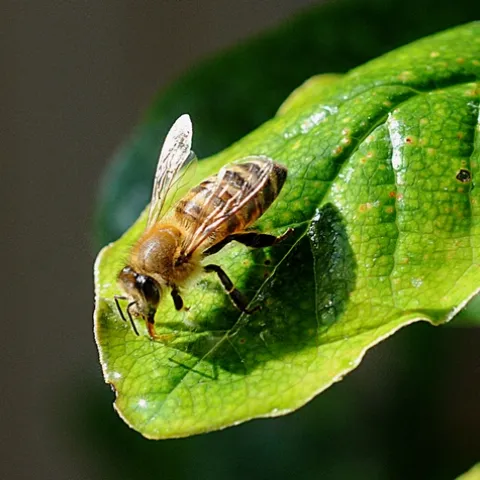
THIS HONEY BEE, sipping water from a leaf, is safe and secure--but not if hordes of Rasberry crazy ants find her. (Photo by Kathy Keatley Garvey)

Beleaguered Bee, Crazy Ant

August 7, 2009
By Kathy Keatley Garvey
It's a crazy world out there. Now our beleaguered honey bee has a new foe: the Rasberry crazy ant, Paratrechina sp. nr. pubens. The Rasberry crazy ant is driving Texans crazy.
View Article
Primary Image
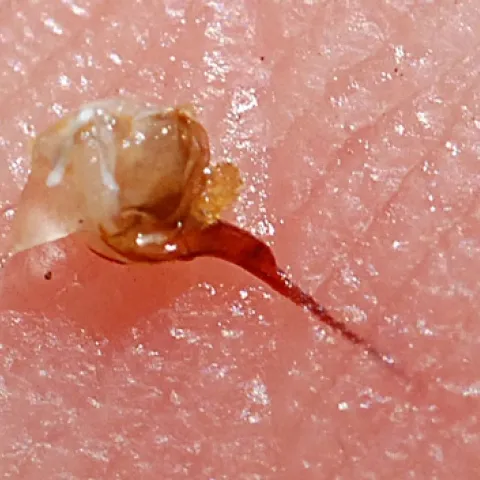
CLOSE-UP of a bee sting. (Photo by Kathy Keatley Garvey)

The Sting

August 6, 2009
By Kathy Keatley Garvey
Beekeepers consider stings just a part of their job. However, say the word "bee" and John Q. and Jane Q. Public may not think about the pollination of fruits, vegetables and nuts. Or the end product: honey. The bee conjures up the "S" word: sting.
View Article
Primary Image
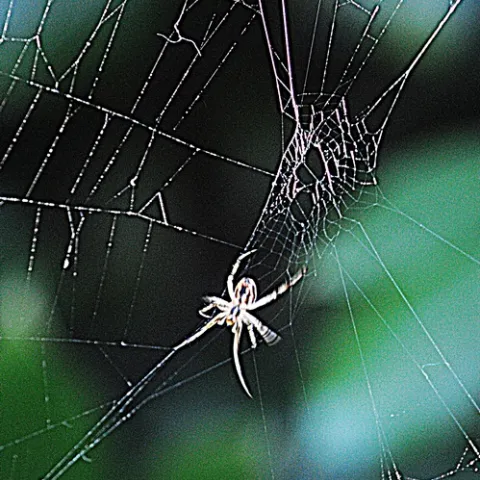
ORB WEAVER at work. The end product is nature's lace and an engineering feat, and, if she's lucky, a feast tonight. (Photo by Kathy Keatley Garvey)

Nature's Lace

August 5, 2009
By Kathy Keatley Garvey
A spider web is nature's lace, a symmetrical work of wonder. Well, a sticky, deadly trap if you're an insect. Then you become just another tasty morsel for the predacious, albeit artistic, spider.
View Article
Primary Image
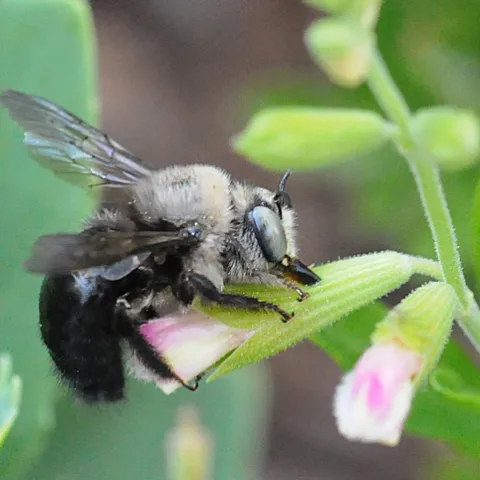
MALE CARPENTER BEE, Xylocopata tabaniformis orpifex, robbing nectar from sage. (Photo by Kathy Keatley Garvey)
Bug Squad: Article

Catching up with the Carpenters

August 4, 2009
By Kathy Keatley Garvey
Catching up with the carpenters is not always easy. Not the construction workers--the carpenter bees. They move fast as they buzz from flower to flower. California is home to three carpenter bee species, says native pollinator specialist Robbin Thorp, emeritus professor of entomology at UC Davis.
View Article
Primary Image
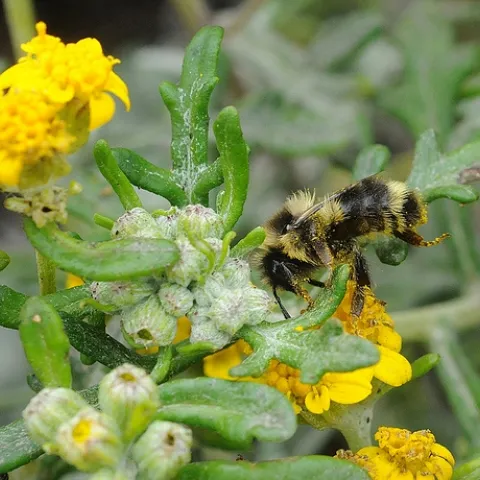
BUMBLE BEE (Bombus bifarious) nectaring coastal goldfields at Bodega Bay. This species is the second most common bumble bee species at Bodega Bay. This is a worker or female. (Photo by Kathy Keatley Garvey)

Bumble Bees at Bodega Bay

August 3, 2009
By Kathy Keatley Garvey
Thars gold in them thar hills. And also bumble bees. If you visit the Sonoma County coastal town of Bodega Bay, and drive up to Bodega Head overlooking the ocean, youll see a carpet of gold flowers known as coastal goldfields or Lasthenia minor.
View Article