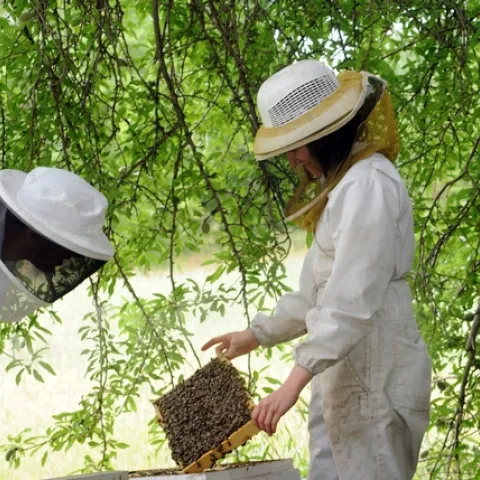
A honey bee newsletter, "From the UC Apiaries" newsletter, written by Cooperative Extension Apiculturist Eric Mussen of the UC Davis Department of Entomology Faculty, provides linformative and educational information for beekeepers and those interested in the plight of the honey bee.
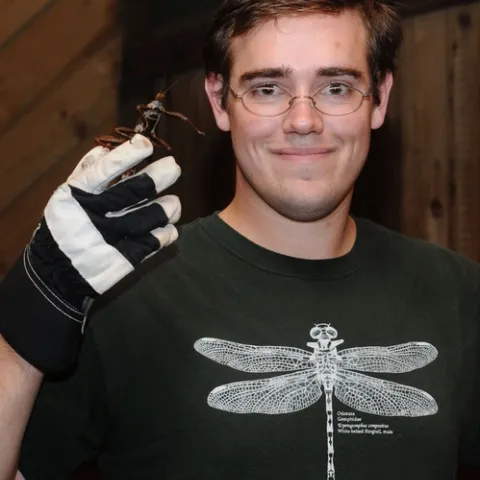
Brian Turner, outreach coordinator at the Bohart Museum of Entomology, UC Davis campus, is used to walking around with a walking stick. Not just any walking stick. The Giant New Guinea Walking Stick and the Vietnamese Walking Stick.
"Insects are the most successful animals that have ever existed on Earth and have been around for just over 400 million years," writes George Gavin in Insects, an American Nature Guide published by Smithmark Publishers, N.Y.
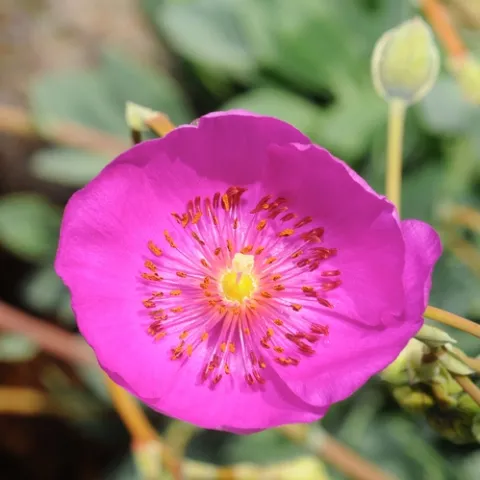
The rock purslane (Calandrinia grandiflora) attracts its share of insects. This morning the brilliant magenta blossoms drew honey bees, carpenter bees and hover flies.
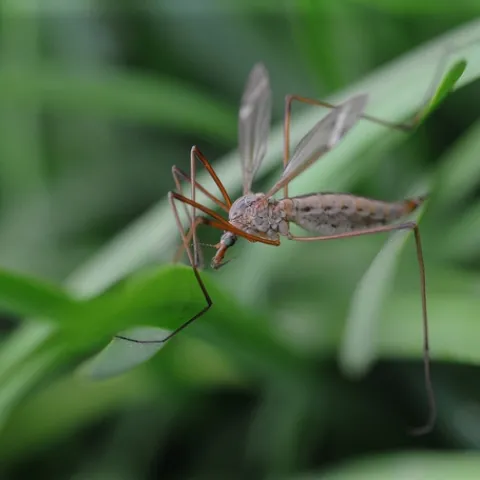
It looks like a giant mosquito. But it isn't. It's a crane fly (family Tipulidae), also known as a "mosquito hawk." It's a slender, long-legged insect that cats like to target. Our cat, Xena the Warrior Princess, loves to bat them out of the air--and then look around for more.
What's happening with the honey bees? Those following the mysterious phenomonen known as colony collapse disorder (CCD)--characterized by bees abandoning their hives--are eagerly waiting the latest developments.
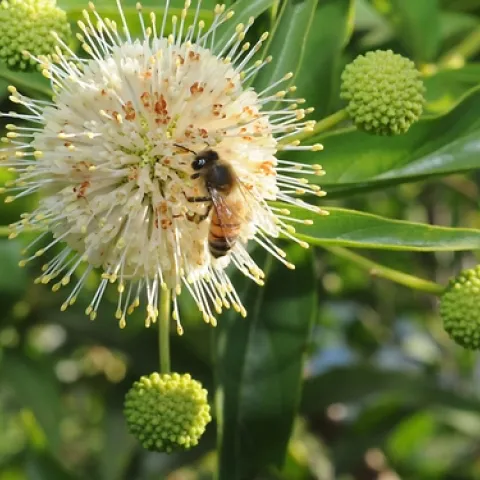
Great article in the Tuesday, April 28 edition of The New York Times on "Let's Hear It for the Bees." And did I mention that the photo accompanying the article is one I shot last year on a Yolo County farm tour? The bee is nectaring a button willow (Cephalanthus occidentalis).
If you see a caterpillar near a cluster of aphids, don't squash it. It could very well be the larva of a syrphid or hover fly (family Syrphidae) and it's eating aphids.