UC ANR is committed to providing an accessible and inclusive web experience for all users. If you encounter an accessibility barrier on this or need content in an alternative or remediated accessible format, please contact anraccessibility@ucanr.edu.
Biodiversity creates biodiversity. That point comes through loud and clear when you read the scientific paper on the apple maggot/parasitic wasp research led by UC Davis evolutionary ecologist Andrew Forbes. The news embargo lifted at 11 a.m. today and the research will be published Friday, Feb.
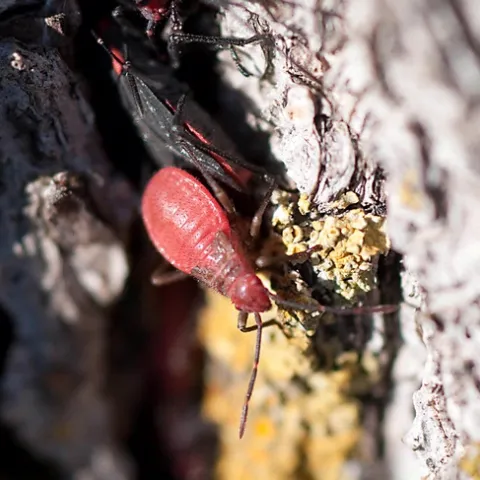
Vacaville resident James Moehrke was out geocaching last weekend in the Vaca Valley Parkway-East Monte Vista Avenue area of the city when he spotted some red-shouldered black bugs. "There were many clusters, probably thousands of individuals, in the trees and a few on the ground," he recalled.
Honey bee insurance buzzed into the news Feb. 1 when Sen. Mitch McConnell, R-Ky., appeared on the CBS Show, "Face the Nation" and blasted the state of the economy and President Obama's economic stimulus plan.
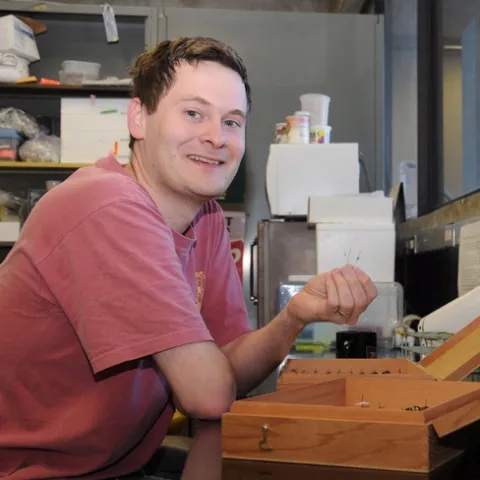
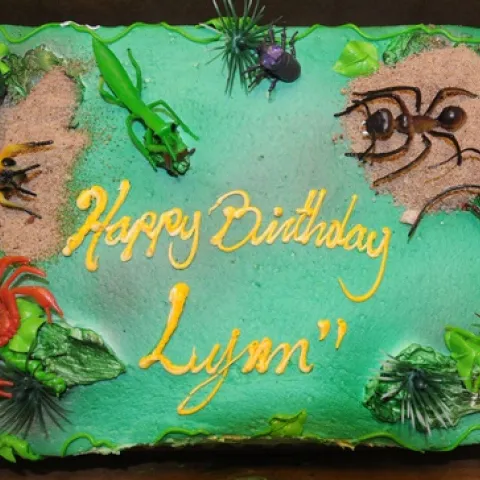
Its Friday, so it must be Friday lite When youre hosting a birthday party for an entomologist, you have to think bugs. Thats the rule. Its written right there in the Entomological Society of Americas official guidebook, Chapter 10, Page 387, Line 38. (OK, I made that up.
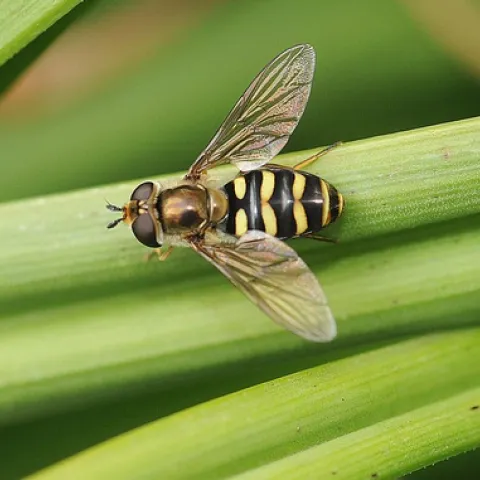
It's often mistaken for a honey bee. It's not a honey bee. It's a hover fly or flower fly. And this one, hovering around the plants last Saturday in the Storer Gardens at the University of California, Davis, looked like a Syrphus opinator to me.
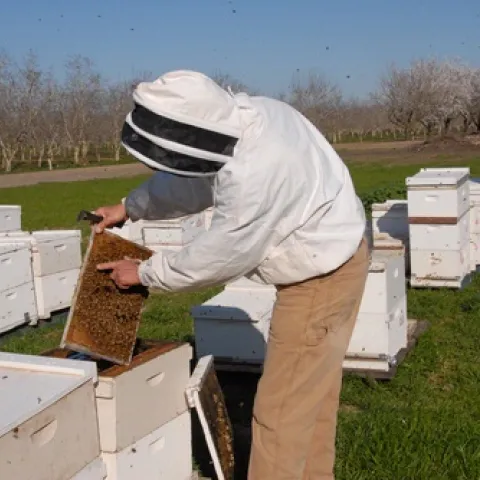
UC Davis bee specialists were well represented in a recent edition of The IPM Practitioner, which landed on our desk last week. The edition, devoted to Pesticides and Honey Bee Colony Collapse Disorder, includes four photos from the UC Davis Department of Entomology.
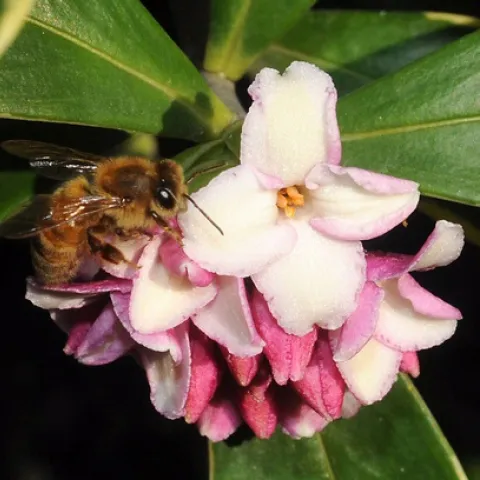
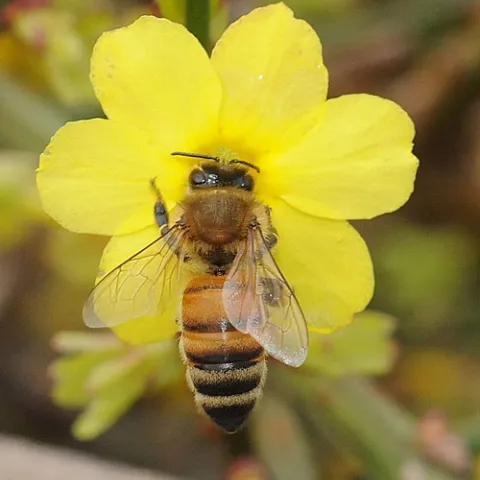
It blooms in winter and the bees love it. Winter jasmine (Jasminum nudiflorum), a rambling vine with trumpetlike yellow flowers, is charming visitors in the Storer Gardens at the University of California, Davis. The plant originates from western China.
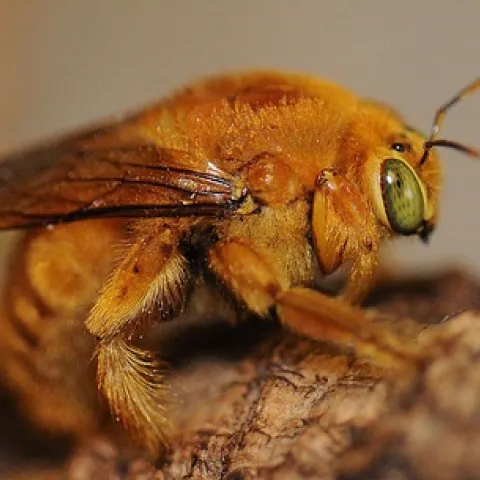
When you think of a teddy bear, you think of a huggable stuffed animal. Not so entomologists. When they think of a teddy bear, they think of the male Valley carpenter bee. It's a green-eyed, fluffy golden insect that's nicknamed "teddy bear." You can hug it, too.
If you like to combine art with science, here you go. In keeping with the theme, The Consilience of Art And Science," the Pence Gallery and the UC Davis Art/Science Fusion Program are sponsoring a juried exhibition, open to all artists and scientists.