UC ANR is committed to providing an accessible and inclusive web experience for all users. If you encounter an accessibility barrier on this or need content in an alternative or remediated accessible format, please contact anraccessibility@ucanr.edu.
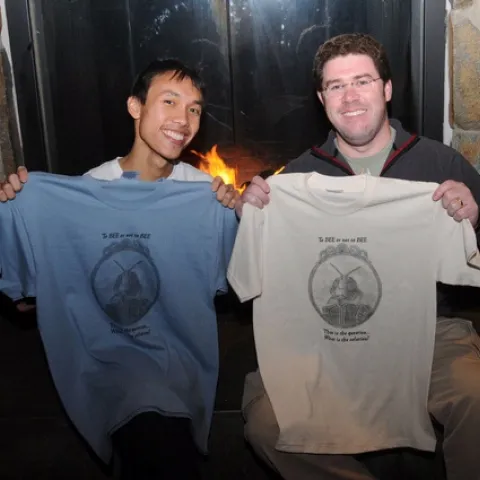
"To bee or not to bee." That is the question. What is the solution? The plight of the honey bees has not escaped the UC Davis Entomology Graduate Students' Association (EGSA).
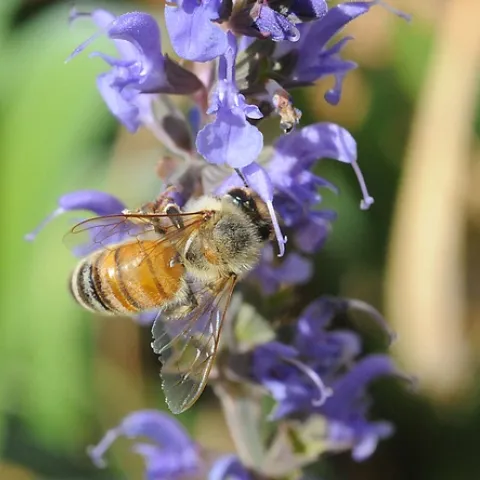
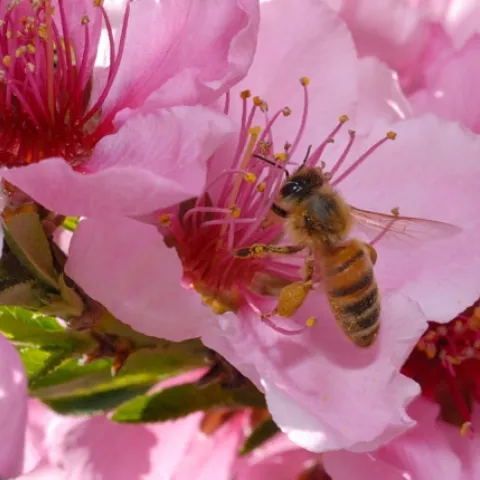
There's been trouble in paradise far too long. Now, thanks to a generous donation from Hagen-Dazs, there will be a pollinator paradise--in the way of a bee friendly garden--at the Harry H. Laidlaw Jr. Honey Bee Research Facility at UC Davis.
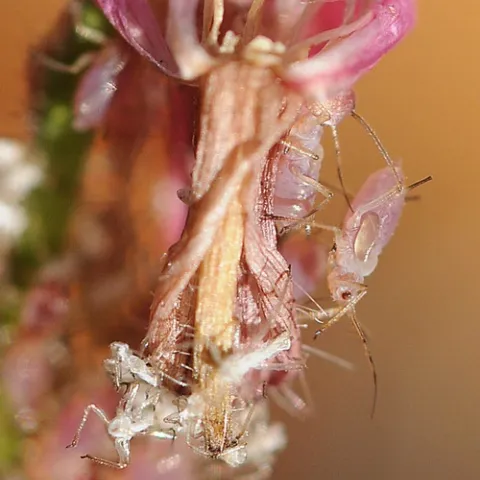
Call them plant lice. Call them plant suckers. Call them aphids. The tiny, soft-bodied insects with pear-shaped bodies form denses colonies on plants. They suck. Literally. Their destructive feeding habits do not endear them to gardeners and farmers. No love lost. No lost love.
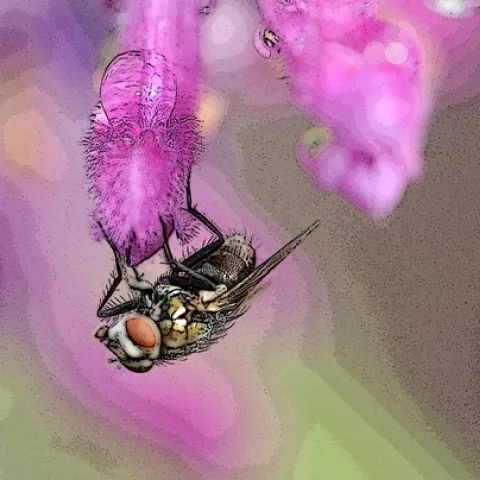
God in His wisdom made the fly And then forgot to tell us why. --Ogden Nash, "The Fly" Every time I see a fly I think of the Ogden Nash poem. Our bee-friendly garden is attracting a few flies. I captured this one visiting sage and then preserved it for posterity: I posterized it in Photoshop.
I ran into two members of the U.S. Customs and Border Protection Patrol this afternoon. No, I wasn't at a border. I was merely walking the halls of the UC Davis Department of Entomology. The border patrol agents were there to meet with entomology department officials in Briggs Hall.
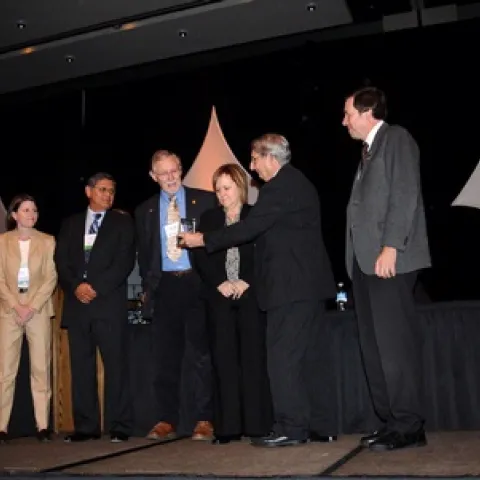
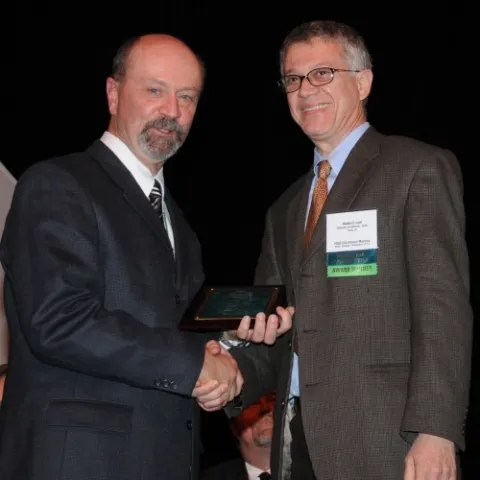
When UC Davis chemical ecologist Walter Leal received a major award from the Entomological Society of America at its 56th annual meeting, held in Reno, DEET has something to do with it.
Happy Turkey Day! The last Thursday of November is Thanksgiving Day, but it really should be Honey Bee Day. Without the bees, wed have no Thanksgiving, or Thanksgiving as we know it. They are our unstung heroes. They pollinate more than 90 agricultural crops in California.