UC ANR is committed to providing an accessible and inclusive web experience for all users. If you encounter an accessibility barrier on this or need content in an alternative or remediated accessible format, please contact anraccessibility@ucanr.edu.
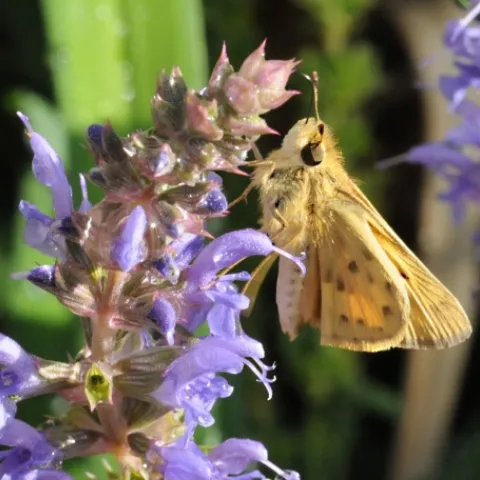
Well, it's not really a Halloween butterfly, but it is orange. The Fiery Skipper (Hylephila phyleus) visits us more than the politicians do at Election Time. Last Sunday we spotted four Skippers in our backyard. Only two politicians skipped to our front door.
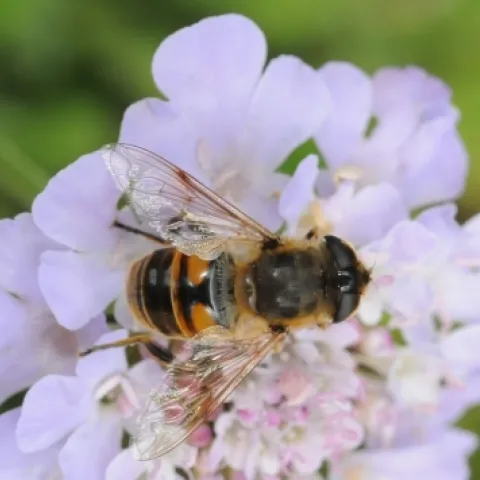
Remember the 1998 U.S. vice presidential debate when Sen. Lloyd Bentsen told Sen Dan Quayle: "I knew Jack Kennedy, and you're no Jack Kennedy!" Well, in the insect world, there's a fly that looks a lot like a honey bee, but it's no honey bee.
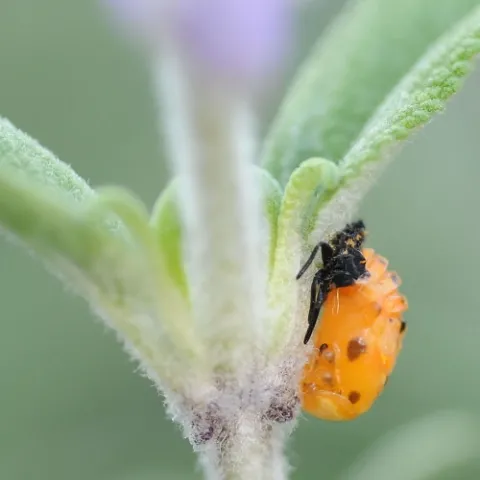
Ladybugs love our Russian sage. Ladybugs, aka ladybird beetles, eat aphids, which are pests in the garden. The ladybugs are welcome. The aphids are not. Belonging to the family Coccinellidae, ladybugs look resplendent in their bright red or orange wing covers, dotted with spots.
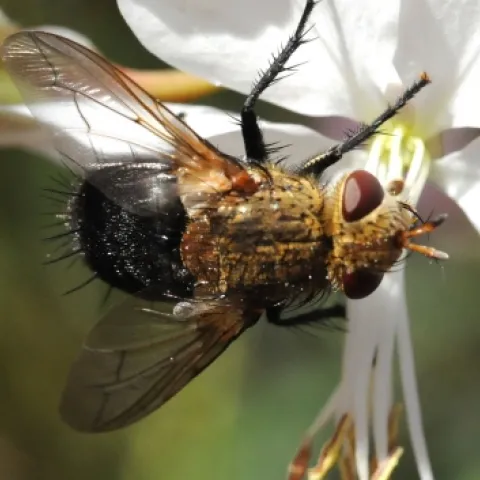
Pity the poor caterpillar. Here you are, minding your own business, and this tachinid fly comes along and lays eggs in your head. Good day for the tachinid fly. Bad day for the caterpillar.
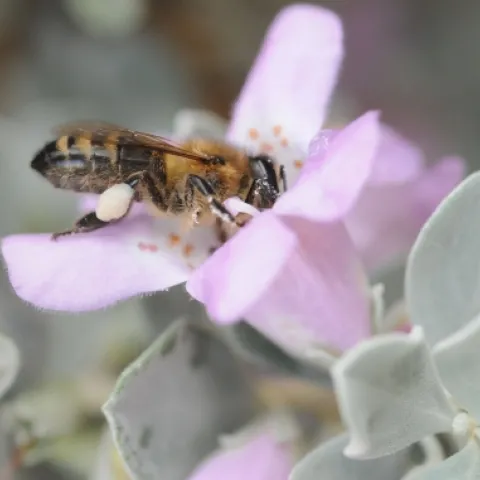
If you've ever visited the Storer Gardens, UC Davis Aboretum, you've probably noticed the honey bees enjoying the cenizo(Leucophyllum frutescens), an evergreen shrub with silvery foliage and bell-shaped pinkish-lavender flowers.
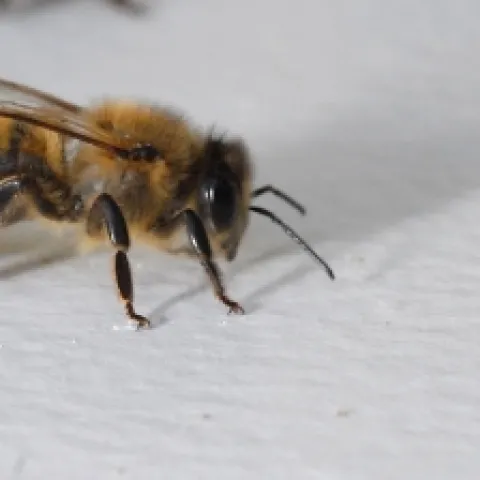
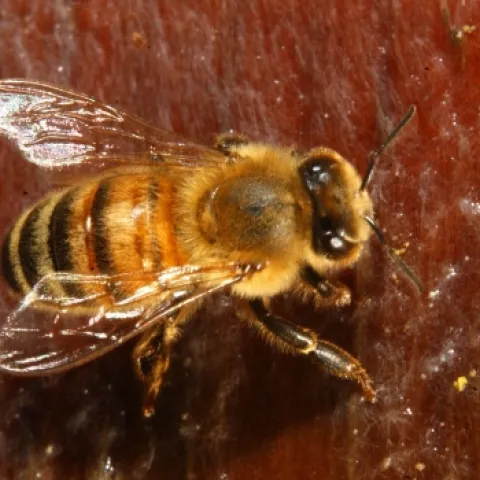
We often hear of "cream of the crop," but the honey bee is the "queen of the crops." Honey bees are crucial to Californias $32 billion agriculture industry.
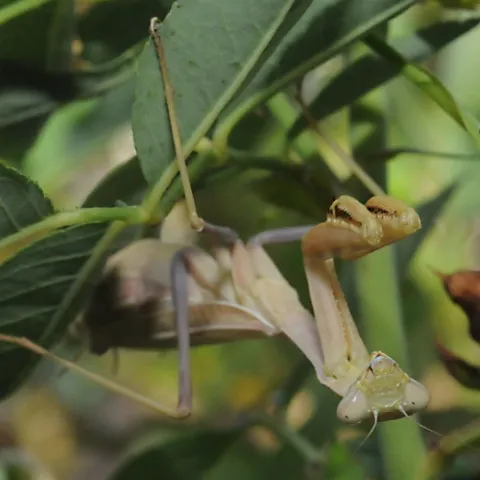
The praying mantis isn't at all concerned about culinary choices. It doesn't worry about who's coming to dinner, only that dinner will come. This aggressive, predatory insect will eat just about anything it can get its claws on, entomologists agree.
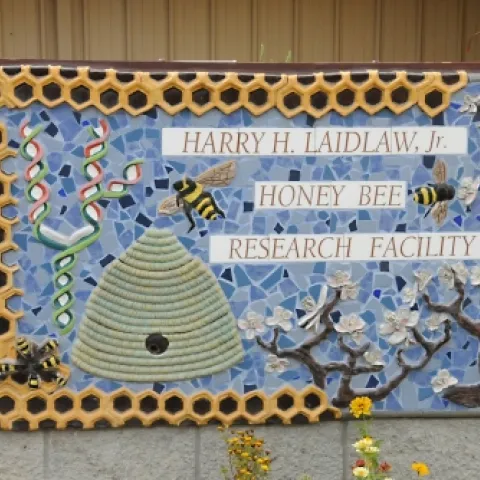
The secret's out. Or, rather, the secret's in. Inside. A number of years ago, UC Davis entomologist Diane Ullman created a ceramic sign outside the Harry H. Laidlaw Jr. Honey Bee Research Facility, located on Bee Biology Road, west of the UC Davis campus.
UC Davis forensic entomologist Robert Kimsey is a genius, to be sure. Show him a fly and he'll tell you exactly what it is and what it's all about. I shot this photo at the Harry H. Laidlaw Jr. Honey Bee Research Facility at UC Davis. The honey bee looked huge and the fly, tiny.
What are insect pollinators worth to the global economy? Well, it's a lot less than the Wall Street bailout...er...rescue plan. Recent research published in the journal Ecological Economics reveals just how important insect pollinators are.