UC ANR is committed to providing an accessible and inclusive web experience for all users. If you encounter an accessibility barrier or need content in an alternative or remediated accessible format, please contact anraccessibility@ucanr.edu.
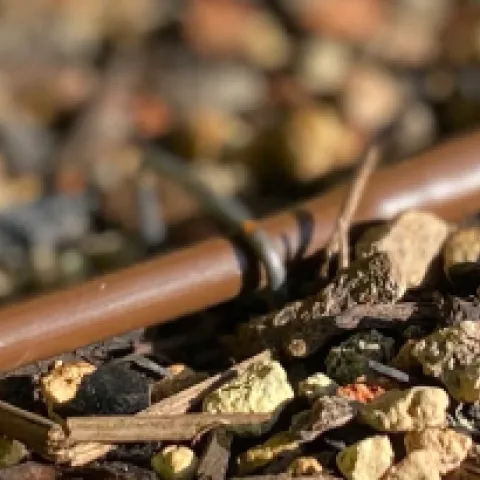
Maintaining healthy plants through the summer is a fire-smart strategy. Well-hydrated plants have been found to be more resistant to embers and ignitions. Use these important fire-smart & water-wise landscaping strategies:Help your soil maintain moisture by using compost and appropriate…
As we get deeper into fire season, now is a good time to assess your landscape for immediate fire risk and take action. When evaluating fire risk, think lean, clean, and green, and start at the house and work out. With these principles in mind, we’ll focus on Zone 0, the first 5 feet surrounding…
Onions, Allium cepa. There are two types of onions: strong-flavored that store well and mild and sweet that don’t last long in storage. There are yellow, white, and red varieties in both categories. Divided into long day, intermediate day, and short day varieties, determined by latitude. Intermediate and…
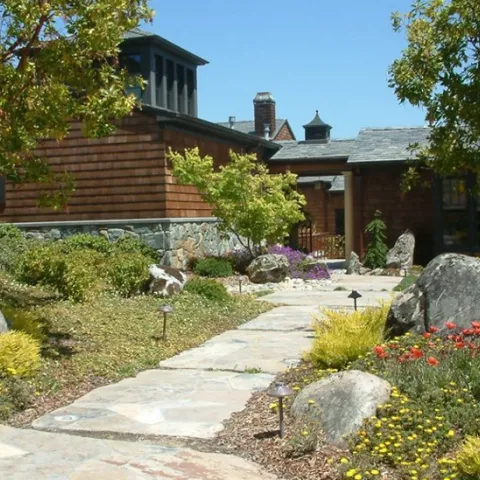
After cleaning Zone 0 (0-5 feet from home) of any combustible materials (see August’s Fire-Smart tips), this month we’ll focus on applying the Fire-Smart Landscaping principles of “think lean, clean, and green”, and “start at the house and work out” to Zone 1 (5-30 feet from home). A Clean Zone…
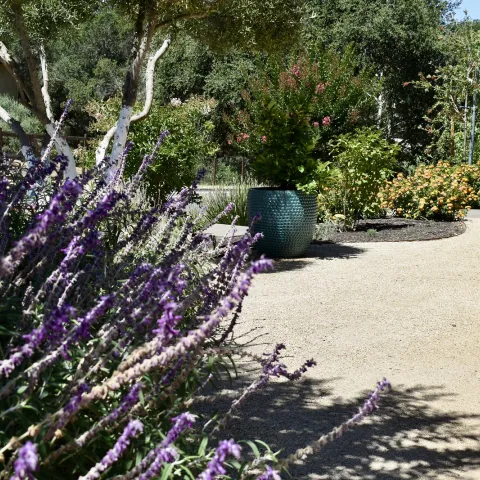
There are no fire-resistant plants since all plants can burn. But there are aspects to consider when selecting plants to include in your fire-smart landscape. Plant spacing, size, and maintenance are important considerations.Consider:Plants that have a higher moisture content, lower resin or sap…
When considering plant spacing, you need to be mindful of how close the plants are to structures, the mature size of the plants, the steepness of slopes, and the vertical and horizontal spacing of plants. Horizontal spacing:It is ideal to remove all plants within 5 feet of structures.Plant density…
As we enter the winter months, now is a great time to assess your landscape and plan for any adjustments you want to make to help protect your home from fire.Zone 0 is the area within 5 feet of your home and any attached structures such as a deck. The objective of Zone 0 is to create a fire…
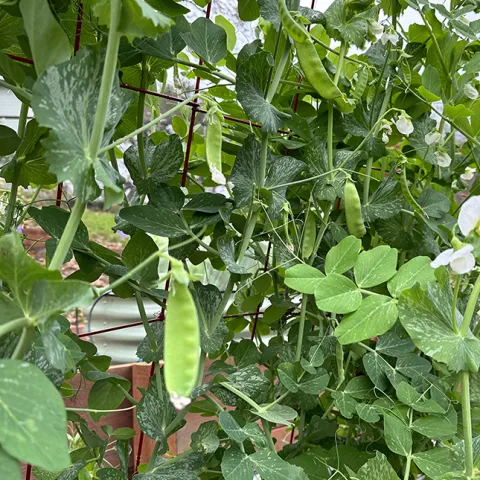
Peas, Pisum sativum, are a cool season annual legume. Vining cultivar. Originated in southwestern Asia. Includes shelling, snow, and snap peas. Snow and snap peas are among the highest value crops you can grow (highest yield per square foot). Bush and pole varieties available. Pole peas produce up to five…
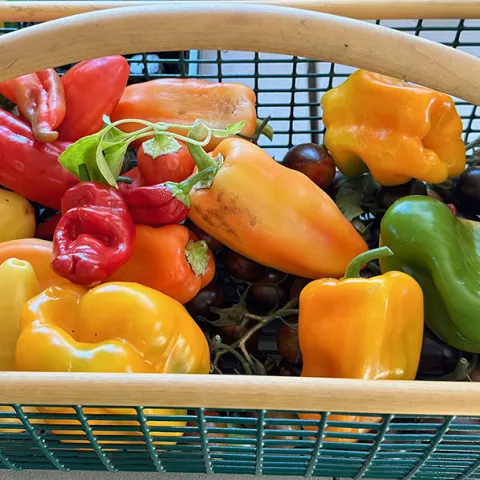
Peppers, Capsicum annum, consist of many varieties, including sweet (bell, banana) and spicy (Anaheim, cayenne, jalapeño, serrano). Chile peppers are smaller, longer, thinner, and more tapered than sweet peppers. Peppers are native perennials in Central and South America but they are grown as annuals here…
Potatoes, Solanum tuberosum, are a cool season perennial grown as an annual. They are native to the Andes region of South America. Potatoes are fun and easy to grow and thrive when air temperatures are less than 65 degrees Fahrenheit. They are a member of the Solanaceae or nightshade family.