A Natural Solution for California's Herds: African Catfish Peptides

California's cattle producers and agricultural communities are all too familiar with the rising challenge of antibiotic resistance, making common bacterial infections harder to treat in livestock. But imagine a future where we could tackle these infections with a natural, powerful alternative. Our research points to just that: antimicrobial peptides (AMPs) found in African catfish.

We're really excited about these peptides because African catfish thrive in pathogen-rich freshwater, naturally producing these robust immune compounds in their skin mucus as a defense. This natural origin makes them highly appealing alternatives to synthetic drugs.

Predicted Safety and Potent Action

One of the most compelling aspects of these AMPs is their predicted safety for mammals. Our initial computer analyses suggest that various catfish AMPs are generally recognized as safe (GRAS). We predict they'll be absorbed in the human intestine without causing liver, brain, or heart toxicity. Furthermore, lab tests on a promising peptide, NACAP-II, confirmed it was non-hemolytic, meaning it didn't damage rabbit red blood cells—a strong indicator of its potential safety for mammalian cells.

Beyond safety, these peptides demonstrate effectiveness against problematic bacteria. One study revealed NACAP-II's strong activity against Extended-Spectrum Beta-Lactamase (ESBL)-producing Escherichia coli—a critical concern for both animal and human health due to its resistance to many common antibiotics. Another peptide, ACAP-IV, also showed antibacterial activity against E. coli and Staphylococcus aureus. We believe these AMPs work by directly disrupting bacterial cell membranes, a mechanism that makes it harder for bacteria to develop resistance compared to how they resist traditional antibiotics.

Primary Image
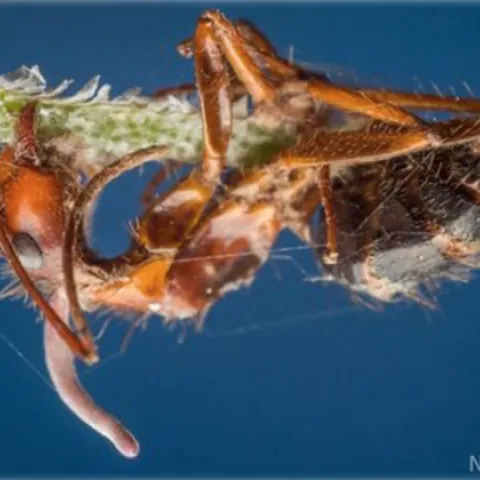
A honey bee nectars on tropical milkweed, while another bee gets ready to join her. (Photo by Kathy Keatley Garvey)

Honey Bees Do Love That Milkweed

November 16, 2020
By Kathy Keatley Garvey
Don't tell the honey bees. They will forage where they want to--whether it's on bee balm, a dandelion or that controversial tropical milkweed, Asclepias curassavica.
View Article
Primary Image
BiCountyCanva
Placer/Nevada 4-H Blog: Article

Virtual Bi-County 4-H Club Officer Training

November 16, 2020
When you picture an elephant in your mind do you see a cartoon elephant, a real elephant, or do you picture a stuffed animal elephant? On Saturday November 7th, Placer County and Nevada County 4-H held a virtual Bi-County Club Officer Training.
View Article
Primary Image
Freezing prepared chutney
Master Food Preserver SLO/SB Counties: Article

Cranberry Fig Chutney

November 16, 2020
Thanksgiving is upon us. This recipe has layers of flavor and texture and has become a family favorite at least among the family members who aren't die-hard canned jellied cranberry sauce fans. The recipe below is as-printed and was clipped from the Florida Today newspaper many years ago.
View Article
Nutrition Policy Institute News: Article

Fewer state regulations exist for family child care homes compared to child care centers on supporting breastfeeding and healthy beverages according to latest NPI study

November 16, 2020
By Danielle Lee
Nearly half of young children in the United States participate in licensed child care settings, where they can consume up to two-thirds of their daily dietary intake. Thus, these are important settings in which young children are provided beverages that support their health.
View Article
Primary Image
Photo 1 - Healthy plant.tif
Salinas Valley Agriculture: Article

Strategies to Control Pythium wilt of Lettuce

November 16, 2020
Strategies to Control Pythium Wilt of Lettuce Author: Richard Smith and JP Dundore-Arias Farm Advisor, UCCE Monterey; and Plant Pathology Professor, Cal State Monterey Bay In 2020 Pythium wilt of lettuce (Pythium uncinulatum) caused up to 100% yield loss in some fields in the Salinas Valley.
View Article