A Natural Solution for California's Herds: African Catfish Peptides

California's cattle producers and agricultural communities are all too familiar with the rising challenge of antibiotic resistance, making common bacterial infections harder to treat in livestock. But imagine a future where we could tackle these infections with a natural, powerful alternative. Our research points to just that: antimicrobial peptides (AMPs) found in African catfish.

We're really excited about these peptides because African catfish thrive in pathogen-rich freshwater, naturally producing these robust immune compounds in their skin mucus as a defense. This natural origin makes them highly appealing alternatives to synthetic drugs.

Predicted Safety and Potent Action

One of the most compelling aspects of these AMPs is their predicted safety for mammals. Our initial computer analyses suggest that various catfish AMPs are generally recognized as safe (GRAS). We predict they'll be absorbed in the human intestine without causing liver, brain, or heart toxicity. Furthermore, lab tests on a promising peptide, NACAP-II, confirmed it was non-hemolytic, meaning it didn't damage rabbit red blood cells—a strong indicator of its potential safety for mammalian cells.

Beyond safety, these peptides demonstrate effectiveness against problematic bacteria. One study revealed NACAP-II's strong activity against Extended-Spectrum Beta-Lactamase (ESBL)-producing Escherichia coli—a critical concern for both animal and human health due to its resistance to many common antibiotics. Another peptide, ACAP-IV, also showed antibacterial activity against E. coli and Staphylococcus aureus. We believe these AMPs work by directly disrupting bacterial cell membranes, a mechanism that makes it harder for bacteria to develop resistance compared to how they resist traditional antibiotics.
Primary Image
An area near Shaver Lake where the 2020 Creek Fire burned most of the living vegetation and old tree stumps. (Photo: Jeannette Warnert)
ANR News Blog: Article

Wildfires are devastating to the soil

November 9, 2020
By Jeannette Warnert
After another record year for California wildfire, concern is now turning to the soil impacted by firestorms, reported Sarah Klearman in the Napa Valley Register.
View Article
Primary Image
2020-8-14 Alfalfa photo
SJC and Delta Field Crops: Article

Alfalfa IPM Virtual Workshop

November 9, 2020
By Michelle M Leinfelder-Miles
UC Cooperative Extension will offer a virtual Alfalfa IPM Workshop on December 3rd and 4th. The workshop will run from 9am to 12pm on each day. Registration is required, and there is a $25 fee to help cover our costs of delivering a workshop virtually. Continuing education credits will be offered.
View Article
Primary Image
Harvested pistachios
Food Blog: Article

Storing and preserving fresh nuts

November 9, 2020
By Susan Mosbacher
One of the many wonderful things about California's climate is that in many regions of the state you'll find orchards of walnut, almond, pecan, pistachio or chestnut trees. You may be growing or planning to grow one or more of these trees in your yard so you can enjoy consuming the nuts.
View Article
Primary Image
Pepperweed
UC Weed Science (weed control, management, ecology, and minutia): Article

Perennial Pepperweed, Telar and Organic Matter?

November 9, 2020
By Thomas J Getts
A few months ago Rob Wilson wrote an excellent blog highlighting perennial pepperweed patches he was seeing in the Klamath Basin. It is a terrible noxious weed, which is found throughout much of the state, from sea level up to 8,000 ft. in the Sierras.
View Article
Primary Image
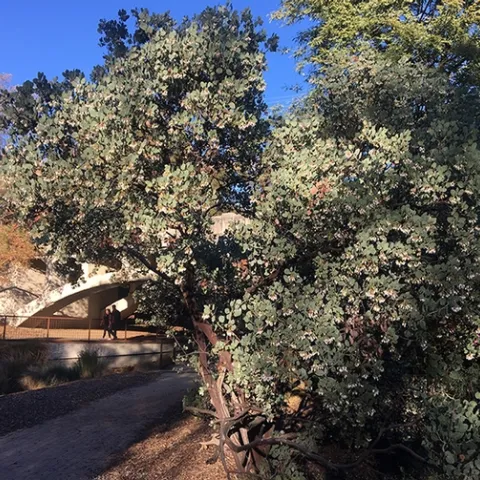
Dry swale & bridge
Spill the Beans: Article

The Pool is Gone - Project complete

November 9, 2020
by Mel Kendall We have been working on redoing our yard since March of this year. This is the fourth and final installment of that adventure.
View Article
Primary Image
Band steaming
UC Weed Science (weed control, management, ecology, and minutia): Article

Evaluation of banded steam for weed and disease control in lettuce

November 8, 2020
By Steven A Fennimore
Despite the tremendous need, there are currently no preemergence herbicides that are organic-compliant. Steam injected into the soil such that the soil temperatures reach >140F for 15-20 minutes will kill weed seed in the soil.
View Article
Primary Image
The composter my husband built out of old fence boards. (Terry Pellegrini)
The Stanislaus Sprout: Article

Composting - From Garden Waste to Garden Gold

November 8, 2020
By Anne E Schellman
With the Fall upon us the leaves have are turning colors and have begun to drop. Soon we will be raking, trimming trees and bushes to prepare for the winter. But what to do with all those leaves, twigs, and garden waste.
View Article