A Natural Solution for California's Herds: African Catfish Peptides

California's cattle producers and agricultural communities are all too familiar with the rising challenge of antibiotic resistance, making common bacterial infections harder to treat in livestock. But imagine a future where we could tackle these infections with a natural, powerful alternative. Our research points to just that: antimicrobial peptides (AMPs) found in African catfish.

We're really excited about these peptides because African catfish thrive in pathogen-rich freshwater, naturally producing these robust immune compounds in their skin mucus as a defense. This natural origin makes them highly appealing alternatives to synthetic drugs.

Predicted Safety and Potent Action

One of the most compelling aspects of these AMPs is their predicted safety for mammals. Our initial computer analyses suggest that various catfish AMPs are generally recognized as safe (GRAS). We predict they'll be absorbed in the human intestine without causing liver, brain, or heart toxicity. Furthermore, lab tests on a promising peptide, NACAP-II, confirmed it was non-hemolytic, meaning it didn't damage rabbit red blood cells—a strong indicator of its potential safety for mammalian cells.

Beyond safety, these peptides demonstrate effectiveness against problematic bacteria. One study revealed NACAP-II's strong activity against Extended-Spectrum Beta-Lactamase (ESBL)-producing Escherichia coli—a critical concern for both animal and human health due to its resistance to many common antibiotics. Another peptide, ACAP-IV, also showed antibacterial activity against E. coli and Staphylococcus aureus. We believe these AMPs work by directly disrupting bacterial cell membranes, a mechanism that makes it harder for bacteria to develop resistance compared to how they resist traditional antibiotics.
Primary Image
A male monarch, Danaus plexippus, spreads its wings on a tower of jewels (Echium wildpretii) in Vacaville, Calif. on Sunday, May 23. (Photo by Kathy Keatley Garvey)
Bug Squad: Article

Portraits of a Monarch Just Stopping By

May 25, 2020
By Kathy Keatley Garvey
Welcome, Danaus plexippus! A monarch butterfly, the first of the year, fluttered through our family pollinator garden in Vacaville, Calif. last Sunday and hung around for about two hours. We clocked him in at 5 p.m. and he exited around 7.
View Article
Primary Image
bombus vosnesenski Coville
Topics in Subtropics: Article

Hedgerows and Pollinators

May 25, 2020
By Ben A Faber
The Buzz about Hedgerows Hedgerows are an approved practice under California Department of Agriculture's Healthy Soils Grant Program. That means, growers are eligible to receive grant funding for planting hedgerows.
View Article
Primary Image
IMG 20190730 081001
UC Weed Science (weed control, management, ecology, and minutia): Article

Johnsongrass in processing tomatoes

May 25, 2020
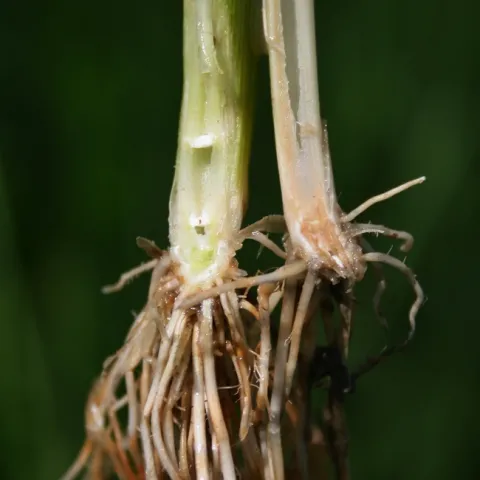
In 2019, my colleague Sarah Light (UCCE Agronomy Advisor: Sutter-Yuba and Colusa counties) and myself were in Year 2 of a Healthy Soils Demonstration Project in Sutter County, CA. Our field site was planted to tomatoes and was in it's first year of certified organic production.
View Article
Primary Image
blue white
Spill the Beans: Article

Bearded Iris

May 25, 2020
by Melody Kendall Spring is amazing! The plants in the garden, seemingly overnight, leap out of the ground in a mind- boggling array of varying shades of green and early bloomers. I find that I, too, am rejuvenated and invigorated with the crisp cool mornings and warm breezy afternoons.
View Article
Primary Image
Male longhorn bee and red admiral butterfly on Tithonia. (Kathy Keatley Garvey, UC Davis Entomology and Nematology)
The Stanislaus Sprout: Article

Native Pollinators in Your Garden Tuesday May 26

May 24, 2020
By Anne E Schellman
We hope you can join us Tuesday night at 6 p.m. for our Native Pollinator Gardening class. If you signed up, you should have received two emails. A confirmation email, and a second email with the Zoom Webinar Link and password. If you didn't receive an email from ucmgstanislaus@ucanr.
View Article
Primary Image
Photo by Monika Grabkowska on Unsplash
UC Cooperative Extension, Ventura County: Article

News You Can Use: Food Preservation Video Library, New UC ANR California Water Podcast, and More

May 23, 2020
By Rose M Hayden-Smith
Here's news we hope you find useful, including food preservation resources, a new podcast, and a reading recommendation. The citrus IPM advisor will help fill the role of retiring UCCE citrus entomology specialist Beth Grafton-Cardwell and will be based at the Lindcove Research and Extension Center.
View Article