A Natural Solution for California's Herds: African Catfish Peptides

California's cattle producers and agricultural communities are all too familiar with the rising challenge of antibiotic resistance, making common bacterial infections harder to treat in livestock. But imagine a future where we could tackle these infections with a natural, powerful alternative. Our research points to just that: antimicrobial peptides (AMPs) found in African catfish.

We're really excited about these peptides because African catfish thrive in pathogen-rich freshwater, naturally producing these robust immune compounds in their skin mucus as a defense. This natural origin makes them highly appealing alternatives to synthetic drugs.

Predicted Safety and Potent Action

One of the most compelling aspects of these AMPs is their predicted safety for mammals. Our initial computer analyses suggest that various catfish AMPs are generally recognized as safe (GRAS). We predict they'll be absorbed in the human intestine without causing liver, brain, or heart toxicity. Furthermore, lab tests on a promising peptide, NACAP-II, confirmed it was non-hemolytic, meaning it didn't damage rabbit red blood cells—a strong indicator of its potential safety for mammalian cells.

Beyond safety, these peptides demonstrate effectiveness against problematic bacteria. One study revealed NACAP-II's strong activity against Extended-Spectrum Beta-Lactamase (ESBL)-producing Escherichia coli—a critical concern for both animal and human health due to its resistance to many common antibiotics. Another peptide, ACAP-IV, also showed antibacterial activity against E. coli and Staphylococcus aureus. We believe these AMPs work by directly disrupting bacterial cell membranes, a mechanism that makes it harder for bacteria to develop resistance compared to how they resist traditional antibiotics.
Primary Image
photos by Melinda Nestlerode
Under the Solano Sun: Article

Pandemic Promotes Planting

May 14, 2020
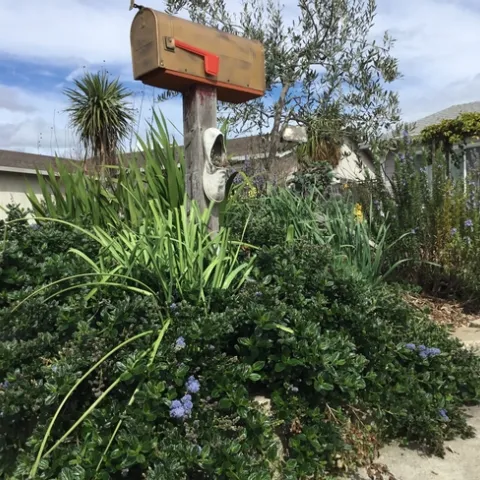
In typical years we have travel plans during the spring and summer. This year, my husband was planning to walk the epic Camino de Santiago, in Spain, so I had decided 2020 was the year of the women.
View Article
Primary Image
Lynn Kimsey, director of Bohart Museum of Entomology, UC Davis, with an Asian giant hornet specimen. This one is a queen and measures about 1.5 inches in length.
Entomology & Nematology News: Article

Bohart Museum's First-Ever Virtual Open House to Feature Wasps

May 14, 2020
By Kathy Keatley Garvey
The Bohart Museum of Entomology's first-ever virtual open house, to focus on wasps, is set for 11 a.m., Friday, May 22 on FacebookLive. Lynn Kimsey, director of the Bohart Museum and professor of entomology, UC Davis Department of Entomology and Nematology, will answer questions from 11 a.m.
View Article
Kern County: Article

Virtual English Field Day

May 14, 2020
Virtual Field Day for all 4-H Horse Project Members Online entries due May 25th See attached for information and links!...
View Article
Stanislaus County: Article

Evapotranspiration Report - 5/7/2020

May 14, 2020
Hello all, Please find the attached document to provide the previous weeks estimated water use report in terms of evapotranspiration for almonds, peaches, walnuts, established vineyard, alfalfa, and pasture in Stanislaus County.
View Article
Stanislaus County: Article

Evapotranspiration Report - 4/30/2020

May 14, 2020
Hello all, Please find the attached document to provide the previous weeks estimated water use report in terms of evapotranspiration for almonds, peaches, walnuts, established vineyard, alfalfa, and pasture in Stanislaus County.
View Article
Stanislaus County: Article

Evapotranspiration Report - 4/23/2020

May 14, 2020
Hello all, Please find the attached document to provide the previous weeks estimated water use report in terms of evapotranspiration for almonds, peaches, walnuts, established vineyard, alfalfa, and pasture in Stanislaus County.
View Article
Stanislaus County: Article

Evapotranspiration Report - 4/16/2020

May 14, 2020
Hello all, Please find the attached document to provide the previous weeks estimated water use report in terms of evapotranspiration for almonds, peaches, walnuts, established vineyard, alfalfa, and pasture in Stanislaus County.
View Article
Primary Image
UC Davis distinguished professor Walter Leal is organizing and moderating the second COVID-19 symposium on May 14.
Bug Squad: Article

Covering the COVID-19 Pandemic: Symposium on May 14

May 13, 2020
By Kathy Keatley Garvey
The stage is set. All systems are go. The experts are ready to deliver their presentations and answer questions. The second COVID-19 Symposium, organized and moderated by UC Davis distinguished professor Walter Leal, will take place from 1:30 to 4:30 p.m. on Thursday, May 14.
View Article