A Natural Solution for California's Herds: African Catfish Peptides

California's cattle producers and agricultural communities are all too familiar with the rising challenge of antibiotic resistance, making common bacterial infections harder to treat in livestock. But imagine a future where we could tackle these infections with a natural, powerful alternative. Our research points to just that: antimicrobial peptides (AMPs) found in African catfish.

We're really excited about these peptides because African catfish thrive in pathogen-rich freshwater, naturally producing these robust immune compounds in their skin mucus as a defense. This natural origin makes them highly appealing alternatives to synthetic drugs.

Predicted Safety and Potent Action

One of the most compelling aspects of these AMPs is their predicted safety for mammals. Our initial computer analyses suggest that various catfish AMPs are generally recognized as safe (GRAS). We predict they'll be absorbed in the human intestine without causing liver, brain, or heart toxicity. Furthermore, lab tests on a promising peptide, NACAP-II, confirmed it was non-hemolytic, meaning it didn't damage rabbit red blood cells—a strong indicator of its potential safety for mammalian cells.

Beyond safety, these peptides demonstrate effectiveness against problematic bacteria. One study revealed NACAP-II's strong activity against Extended-Spectrum Beta-Lactamase (ESBL)-producing Escherichia coli—a critical concern for both animal and human health due to its resistance to many common antibiotics. Another peptide, ACAP-IV, also showed antibacterial activity against E. coli and Staphylococcus aureus. We believe these AMPs work by directly disrupting bacterial cell membranes, a mechanism that makes it harder for bacteria to develop resistance compared to how they resist traditional antibiotics.
Primary Image
Aedes aegypti, the yellow fever mosquito (CDC Photo)
Bug Squad: Article

UC Davis Team: Mosquito Odorant Receptors Are Sensitive to Floral Compunds

August 19, 2019
By Kathy Keatley Garvey
It's well known that female mosquitoes possess a highly developed sense of smell. They manage to find us, don't they? Even when we're doing our best to try to avoid them! It's not so well-known that mosquitoes, both male and female, frequent plants to feed on nectar for energy.
View Article
Primary Image
FY17-18 Fund Sources
ANR Adventures: Article

Diversifying funding so that everyone wins

August 19, 2019
By Wendy Powers
We wrap up the 5-location Information Sessions on Friday of this week, with 3 of those five sessions taking place the last portion of the week. It has been nice to get out and see those whom I don't often get a chance to see. Also, there have been some new folks that I hadn't met in person yet.
View Article
Primary Image
MG Sally T instructing a Liberty High student. (photo by Monique Moench)
Under the Solano Sun: Article

Become a Master Gardener Volunteer

August 19, 2019
If you enjoy gardening, constantly learning more about gardening, and are interested in helping your local community, then consider becoming a UCCE Master Gardener.
View Article
Primary Image
Waxy deposits left behind by giant whiteflies. (Linda Schultz)
The Stanislaus Sprout: Article

Giant Whitefly Settles in Stanislaus County

August 19, 2019
By Anne E Schellman
Last week, someone called our helpline about a strange phenomenon happening on her backyard plants. She described the symptoms as big, white, masses of fluffy cotton. I asked her to email some photos our helpline address (ucmgstanislaus@ucanr.edu).
View Article
Primary Image
Artist conception of the water bear (tardigrade) sculpture in front of Bohart Museum of Entomology.
Entomology & Nematology News: Article

Bohart Museum Planning Water Bear Sculpture

August 19, 2019
By Kathy Keatley Garvey
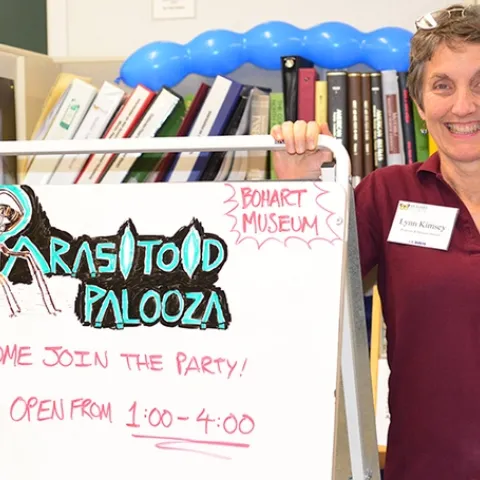
A water bear or tardigrade sculpture may soon grace the entrance to the Bohart Museum of Entomology. "I've been in touch with the sculptor Solomon Bassoff (Faducciart) in Roseville," said Lynn Kimsey, director of the Bohart Museum and professor of entomology at UC Davis.
View Article
Cooperative Extension San Joaquin County: Article

Soil Health and Cover Cropping Field Meeting

August 19, 2019
UC Cooperative Extension will host a Soil Health and Cover Cropping Field Meeting on Wednesday, September 4, 2019 from 10:00am to noon, on Staten Island in the San Joaquin County Delta. The agenda is pasted below and attached.
View Article
Primary Image
Cowpea cover crop with volunteer triticale.
UC Small Grains Blog: Article

Soil Health and Cover Cropping Field Meeting

August 19, 2019
By Michelle M Leinfelder-Miles
UC Cooperative Extension will host a Soil Health and Cover Cropping Field Meeting on Wednesday, September 4, 2019 from 10:00am to noon, on Staten Island in the San Joaquin County Delta. The agenda is pasted below and attached.
View Article
Primary Image
GEM avocados are tear-drop shaped.
ANR News Blog: Article

Avocado tasters are wrapping up a their work at UC sensory lab

August 19, 2019
By Jeannette Warnert
A group of trained and dedicated volunteers have been tasting avocado samples at the UC Kearney Agricultural Research and Extension Center in Parlier to determine whether the GEM avocado variety can stand up to the tried-and-true Hass in grocery stores, reported Dale Yurong on ABC 30 Action News.
View Article
Primary Image
Cowpea cover crop with volunteer triticale.
SJC and Delta Field Crops: Article

Soil Health and Cover Cropping Field Meeting

August 19, 2019
By Brenna J Aegerter, Michelle M Leinfelder-Miles
UC Cooperative Extension will host a Soil Health and Cover Cropping Field Meeting on Wednesday, September 4, 2019 from 10:00am to noon, on Staten Island in the San Joaquin County Delta. The agenda is pasted below and attached.
View Article