A Natural Solution for California's Herds: African Catfish Peptides

California's cattle producers and agricultural communities are all too familiar with the rising challenge of antibiotic resistance, making common bacterial infections harder to treat in livestock. But imagine a future where we could tackle these infections with a natural, powerful alternative. Our research points to just that: antimicrobial peptides (AMPs) found in African catfish.

We're really excited about these peptides because African catfish thrive in pathogen-rich freshwater, naturally producing these robust immune compounds in their skin mucus as a defense. This natural origin makes them highly appealing alternatives to synthetic drugs.

Predicted Safety and Potent Action

One of the most compelling aspects of these AMPs is their predicted safety for mammals. Our initial computer analyses suggest that various catfish AMPs are generally recognized as safe (GRAS). We predict they'll be absorbed in the human intestine without causing liver, brain, or heart toxicity. Furthermore, lab tests on a promising peptide, NACAP-II, confirmed it was non-hemolytic, meaning it didn't damage rabbit red blood cells—a strong indicator of its potential safety for mammalian cells.

Beyond safety, these peptides demonstrate effectiveness against problematic bacteria. One study revealed NACAP-II's strong activity against Extended-Spectrum Beta-Lactamase (ESBL)-producing Escherichia coli—a critical concern for both animal and human health due to its resistance to many common antibiotics. Another peptide, ACAP-IV, also showed antibacterial activity against E. coli and Staphylococcus aureus. We believe these AMPs work by directly disrupting bacterial cell membranes, a mechanism that makes it harder for bacteria to develop resistance compared to how they resist traditional antibiotics.
Thrips/TSWV Kings: Article

The 2019 season opens

March 7, 2019
By Neil McRoberts
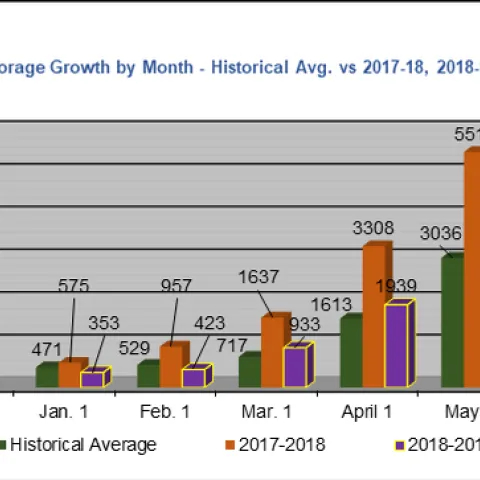
Hello. This is the first update for 2019 for the UC western flower thrips/tswv outlook for processing tomato. General outlook As a reminder, the base temperature we use for estimating thrips development is 45F.
View Article
Thrips/TSWV Fresno: Article

The 2019 season opens

March 7, 2019
By Neil McRoberts
Hello. This is the first update for 2019 for the UC western flower thrips/tswv outlook for processing tomato. General outlook As a reminder, the base temperature we use for estimating thrips development is 45F.
View Article
Placer County 4-H: Article

March - April 2019

March 7, 2019
In this issue: Public Speaking in 4-H Summer Camp Opportunities 2019 Fairs Dates & Weigh-In Dates CA State 4-H Field Day Upcoming Dates in 2019...
View Article
Primary Image
A crab spider dining on a stink bug. (Photo by Kathy Keatley Garvey)

Why You Should Love Spiders--Or at Least Like Them!

March 7, 2019
By Kathy Keatley Garvey
We recently posted information about the Bohart Museum of Entomology's upcoming open house on "Eight-Legged Wonders," and several people responded that they absolutely HATE spiders, and that we should have prefaced it with a SPOILER ALERT: "SPIDER PHOTOS! BEWARE!" Spiders--especially jumping spiders...
View Article
Cooperative Extension, Sutter-Yuba Counties: Article

Rancher Workshops - March 2019

March 7, 2019
Register today for two UCCE rancher-focused workshops in March 2019! Wednesday, March 20 - 2019 Cattlemen's Symposium: Join UC Davis and UCCE experts in cattle marketing, beef cattle genetics, cattle health, and pasture weed management! This half-day symposium will be held at Correia Livestock in Li...
View Article
Primary Image
A jumping spider peers at the camera. (Photo by Kathy Keatley Garvey)
Entomology & Nematology News: Article

Five Things to Love About Spiders

March 7, 2019
By Kathy Keatley Garvey
Arachnophobia, the fear of spiders, is a common phobia, but there are five good reasons to like spiders, according to Jason Bond of the UC Davis Department of Entomology and Nematology.
View Article
Primary Image
2019 Mar Bodie
Ranching in the Sierra Foothills: Article

Dogs Worrying Livestock

March 7, 2019
By Daniel K Macon
Whenever I'm asked to talk about livestock and predators with a non-ranching group, I poll the audience about what predators give me the most problems in our sheep operation. Most say coyotes, some say mountain lions; inevitably, a few say black bears.
View Article