A Natural Solution for California's Herds: African Catfish Peptides

California's cattle producers and agricultural communities are all too familiar with the rising challenge of antibiotic resistance, making common bacterial infections harder to treat in livestock. But imagine a future where we could tackle these infections with a natural, powerful alternative. Our research points to just that: antimicrobial peptides (AMPs) found in African catfish.

We're really excited about these peptides because African catfish thrive in pathogen-rich freshwater, naturally producing these robust immune compounds in their skin mucus as a defense. This natural origin makes them highly appealing alternatives to synthetic drugs.

Predicted Safety and Potent Action

One of the most compelling aspects of these AMPs is their predicted safety for mammals. Our initial computer analyses suggest that various catfish AMPs are generally recognized as safe (GRAS). We predict they'll be absorbed in the human intestine without causing liver, brain, or heart toxicity. Furthermore, lab tests on a promising peptide, NACAP-II, confirmed it was non-hemolytic, meaning it didn't damage rabbit red blood cells—a strong indicator of its potential safety for mammalian cells.

Beyond safety, these peptides demonstrate effectiveness against problematic bacteria. One study revealed NACAP-II's strong activity against Extended-Spectrum Beta-Lactamase (ESBL)-producing Escherichia coli—a critical concern for both animal and human health due to its resistance to many common antibiotics. Another peptide, ACAP-IV, also showed antibacterial activity against E. coli and Staphylococcus aureus. We believe these AMPs work by directly disrupting bacterial cell membranes, a mechanism that makes it harder for bacteria to develop resistance compared to how they resist traditional antibiotics.
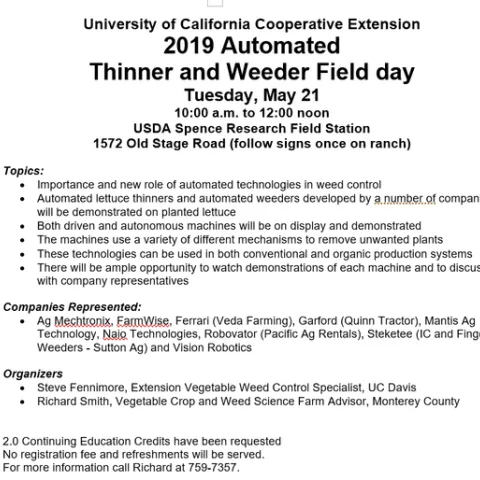
UCCE in the County of San Luis Obispo: Article

Upcoming Meeting information

February 28, 2019
Hello, For your information, I'm sending you an announcement for upcoming Cal-Pac SRM Meeting. Please see attachment.
View Article
Primary Image
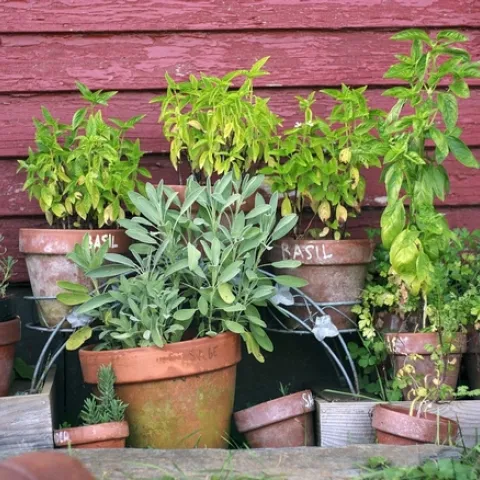
photos by Janet Snyder
Under the Solano Sun: Article

Here Comes the Rain for the Weekend!

February 28, 2019
I'm always happy to see some rain arrive and give my plants a much-needed drink of water (because I'm pretty thrifty with water, even in the wintertime).
View Article
Tehama County: Article

March 2019

February 28, 2019
Congratulations and thank you to the Taylor's for 50 years of service! County Ambassador Info Meeting, March 8 Ambassador Event: Canine Bark for Life, March 16 Event Results Scholarship Opportunities Call for Makers - Makers Showcase 2019 Youth Leadership Opportunities And more!...
View Article
Primary Image
Three brown mottled Asian citrus psyllid adults feed on young citrus leafs alongside their small yellow orange eggs.
Pests in the Urban Landscape: Article

Insect Pests on Citrus Trees

February 28, 2019
[This post has been modified from the article originally published in the Fall 2018 issue of the Retail Nursery and Garden Center IPM News.] Citrus trees remain a popular choice for home gardeners in California, largely due to their ease of care, beauty, and functionality for food and shade.
View Article
Primary Image
Up close image of a green citrus leaf with serpentine tunnel damage caused by feeding of a citrus leafminer larva, shown at the top of the leaf.
Pests in the Urban Landscape: Article

Citrus Leafminer

February 28, 2019
[This post has been modified from the article originally published in the Fall 2018 issue of the Retail Nursery and Garden Center IPM News.] Citrus leafminer is a moth that arrived in California in 2000 and has invaded citrus throughout the state.
View Article
Primary Image
Several small white clusters of mealybug colonies feed on citrus leaves.
Pests in the Urban Landscape: Article

What Are Those Big White Bugs on Citrus Trees?

February 28, 2019
[This post has been modified from the article originally published in the Fall 2018 issue of the Retail Nursery and Garden Center IPM News.] As a home gardener, you may find big white bugs clinging to the twigs and leaves of your citrus trees and need help with identifying and managing these pests.
View Article
Primary Image
Three brown mottled Asian citrus psyllid adults feed on young citrus leaves alongside their tiny, yellow orange eggs.
Pests in the Urban Landscape: Article

Asian Citrus Psyllid

February 28, 2019
[This post has been modified from the article originally published in the Fall 2018 issue of the Retail Nursery and Garden Center IPM News.] The Asian citrus psyllid, Diaphorina citri, is a tiny, mottled brown insect about the size of an aphid (Figure 1).
View Article
Primary Image
Up close image of a reddish black ant harvesting honeydew from an orange colored Asian citrus psyllid nymphs. A cluster of Asian citrus psyllid nymphs and their waxy honeydew are clustered in the foreground.
Pests in the Urban Landscape: Article

Ant Control for Insect Pests on Citrus

February 28, 2019
[This post has been modified from the article originally published in the Fall 2018 issue of the Retail Nursery and Garden Center IPM News.] Most citrus tree problems in home gardens can be solved by pruning the trees to allow better air flow and by controlling ants.
View Article

Why blog?

February 27, 2019
By Wendy Powers
Someone asked me why I write a blog. The fact that I do surprises me, too, mainly because it is similar to homework. But here's why I do it: I am fortunate enough to work with amazing people, all across UC ANR. The people I have met and the work they have shared with me inspires me.
View Article