A Natural Solution for California's Herds: African Catfish Peptides

California's cattle producers and agricultural communities are all too familiar with the rising challenge of antibiotic resistance, making common bacterial infections harder to treat in livestock. But imagine a future where we could tackle these infections with a natural, powerful alternative. Our research points to just that: antimicrobial peptides (AMPs) found in African catfish.

We're really excited about these peptides because African catfish thrive in pathogen-rich freshwater, naturally producing these robust immune compounds in their skin mucus as a defense. This natural origin makes them highly appealing alternatives to synthetic drugs.

Predicted Safety and Potent Action

One of the most compelling aspects of these AMPs is their predicted safety for mammals. Our initial computer analyses suggest that various catfish AMPs are generally recognized as safe (GRAS). We predict they'll be absorbed in the human intestine without causing liver, brain, or heart toxicity. Furthermore, lab tests on a promising peptide, NACAP-II, confirmed it was non-hemolytic, meaning it didn't damage rabbit red blood cells—a strong indicator of its potential safety for mammalian cells.

Beyond safety, these peptides demonstrate effectiveness against problematic bacteria. One study revealed NACAP-II's strong activity against Extended-Spectrum Beta-Lactamase (ESBL)-producing Escherichia coli—a critical concern for both animal and human health due to its resistance to many common antibiotics. Another peptide, ACAP-IV, also showed antibacterial activity against E. coli and Staphylococcus aureus. We believe these AMPs work by directly disrupting bacterial cell membranes, a mechanism that makes it harder for bacteria to develop resistance compared to how they resist traditional antibiotics.


Primary Image
sun stress

And Human Heat Stress

August 1, 2018
By Ben A Faber
Cal/OSHA HEAT ADVISORY When employees work in hot conditions, employers must take special precautions in order to prevent heat illness. Heat illness can progress to heat stroke and be fatal, especially when emergency treatment is delayed.
View Article
Primary Image
Pickle border lean left
Master Food Preservers San Bernardino County: Article

Basic Pickles from Cucumbers: Tasty, Delicious Pickles, two ways to save them.

August 1, 2018
Pickling season is here. If you don't have any in a garden you can harvest, check at your local grocery or Farmers' Market for pickling cucumbers and pickle away. Pickles are pretty easy to do, but the fresh refrigerator pickles, well you could have your children make them with a little supervising.
View Article
Primary Image
Armyworm on strawberry
Strawberries and Caneberries: Article

Armyworms on the March

July 31, 2018
By Mark P Bolda
Interesting farm call this morning. A strawberry grower near Watsonville reported a large group of worms (caterpillars) migrating north out of the mixed cover crop including barley and mustard.
View Article
Kern County: Article

Kern UCCE/DWR Weekly Crop Water Use Report 07-30-2018

July 31, 2018
Please see below link to access "How To Use Weekly Crop Water Use (ET) Reports to Assist Farm Water Management" How To Use Weekly Water Use Report Please see below link to access "Weekly ET Report 07-30-18" ET Report 07-30-18 Please see disclaimer link below: University of California Division of Agr...
View Article
Tehama County: Article

August 2018

July 31, 2018
Enrollment Open for the 2018-19 Program Year Record Books Welcome Leader's Council Officers Event results Ron Knight Memorial Award Honoree 4-H Program Framework; Fixed Mindset vs.
View Article
Primary Image
34962865 1924560637556832 2037458135043538944 n
Farming in the Foothills: Article

Working on the Business

July 31, 2018
By Daniel K Macon
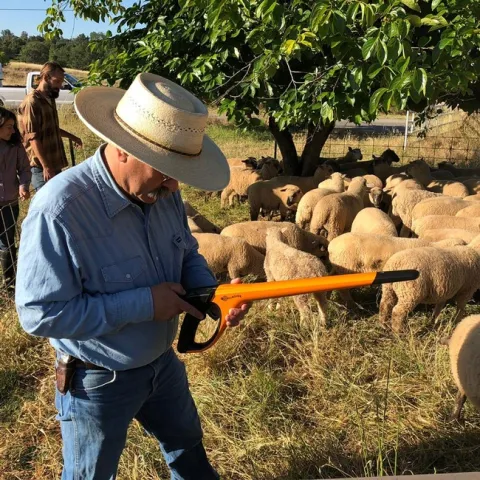
Earlier this month, I had the opportunity to attend the Sheep Industry Innovators Conference organized by lamb processor Superior Farms at UC Davis. The conference brought together sheep producers from throughout the U.S. - both large and small.
View Article
Primary Image
Glenda Humiston FAVE

Merit-based salary program for staff announced

July 31, 2018
By Pamela S Kan-Rice
I'm happy to announce that UC ANR is implementing a merit-based salary increase program for policy-covered (non-represented) staff employees for the 2018-19 fiscal year. The merit increases will be effective July 1, 2018, for both monthly and bi-weekly paid employees.
View Article
Article

Every 65 Seconds, Someone Develops Alzheimer’s Disease.

July 31, 2018
By Basilisa M Rawleigh
More than 5.7 million Americans live with Alzheimer's disease, a number expected to rise to 14 million by 2050, according to a March 2018 report by the Alzheimer's Association. There is one new Alzheimer's case every 65 seconds. Sadly, U.S. Latinos are 1.
View Article