A Natural Solution for California's Herds: African Catfish Peptides

California's cattle producers and agricultural communities are all too familiar with the rising challenge of antibiotic resistance, making common bacterial infections harder to treat in livestock. But imagine a future where we could tackle these infections with a natural, powerful alternative. Our research points to just that: antimicrobial peptides (AMPs) found in African catfish.

We're really excited about these peptides because African catfish thrive in pathogen-rich freshwater, naturally producing these robust immune compounds in their skin mucus as a defense. This natural origin makes them highly appealing alternatives to synthetic drugs.

Predicted Safety and Potent Action

One of the most compelling aspects of these AMPs is their predicted safety for mammals. Our initial computer analyses suggest that various catfish AMPs are generally recognized as safe (GRAS). We predict they'll be absorbed in the human intestine without causing liver, brain, or heart toxicity. Furthermore, lab tests on a promising peptide, NACAP-II, confirmed it was non-hemolytic, meaning it didn't damage rabbit red blood cells—a strong indicator of its potential safety for mammalian cells.

Beyond safety, these peptides demonstrate effectiveness against problematic bacteria. One study revealed NACAP-II's strong activity against Extended-Spectrum Beta-Lactamase (ESBL)-producing Escherichia coli—a critical concern for both animal and human health due to its resistance to many common antibiotics. Another peptide, ACAP-IV, also showed antibacterial activity against E. coli and Staphylococcus aureus. We believe these AMPs work by directly disrupting bacterial cell membranes, a mechanism that makes it harder for bacteria to develop resistance compared to how they resist traditional antibiotics.

Primary Image
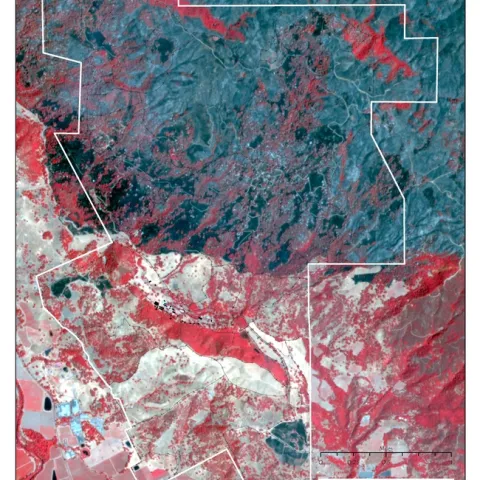
A crabronid wasp or beewolf foraging on a pineapple sea lily (Eryngium horridum) at the Morningsun Herb Farm, Vacaville, Calif. (Photo by Kathy Keatley Garvey)

Why Beauty Is in the Eye of the Bee-Holder

July 9, 2018
By Kathy Keatley Garvey
Irish novelist Margaret Wolfe Hungerford was right. In Molly Bawn, published in 1878, Hungerford wrote "Beauty is in the eye of the beholder," meaning that our perception of beauty is subjective. Beauty is also in the eye of the bee-holder, that is, a predator that "holds" bees.
View Article
Lake County: Article

July 2018

July 9, 2018
Upcoming Council Elections...Seeking Candidates for President & Secretary, NEW 4-H YEAR has begun - RE-ENROLL ONLINE!!, Fair and end of year reminders, Photo Contest for 4-H Banner, Family Fun Shoot, Llama Packing Project Offered, Enrollment Instruction.
View Article
Primary Image
UCCE natural resources advisor Sabrina Drill is a fire science expert.

More people live in fire-prone communities

July 9, 2018
By Jeannette Warnert
As the human population on planet earth, now about 7.6 billion people, continues to grow, more will settle in areas prone to wildfire, reported Mary Beth Griggs in Popular Science magazine.
View Article
Primary Image
Irene Lavagi
Lindcove Research and Extension Center News: Article

Can dwarfed citrus trees help us save water and money?

July 9, 2018
By Elizabeth Grafton-Cardwell
UC Riverside scientists are investigating whether dwarfed citrus trees can help citrus growers to save time, money, fertilizers, pesticides, water and labor.
View Article
Primary Image
Late June Drop of Gravenstein Apples.
The Backyard Gardener: Article

The June Drop (In July)

July 9, 2018
If you have fruit trees you are probably now getting a little tired of raking up fallen fruits which are the result of a natural occurrence known as the June Drop. This year the phenomenon is extending well into July, to the point that one wonders if there will be a crop left to harvest.
View Article
Primary Image
lavender
Nutrition News in the Butte Cluster: Article

Whether you are planting a home garden, school garden, or a small farm, pollinators may be the key to your success! Here’s why!

July 9, 2018
What is pollination and who are the pollinators? Pollination occurs when pollen is moved within flowers or carried from flower to flower by pollinators. Pollinators consist of birds, bees, bats, butterflies, moths, beetles, hummingbirds, ladybugs, and various others including the wind.
View Article
Central Sierra Livestock & Natural Resources: Article

July 2018

July 9, 2018
A gray wolf visits Nevada County Is your ranch ready for fire season?
View Article