A Natural Solution for California's Herds: African Catfish Peptides

California's cattle producers and agricultural communities are all too familiar with the rising challenge of antibiotic resistance, making common bacterial infections harder to treat in livestock. But imagine a future where we could tackle these infections with a natural, powerful alternative. Our research points to just that: antimicrobial peptides (AMPs) found in African catfish.

We're really excited about these peptides because African catfish thrive in pathogen-rich freshwater, naturally producing these robust immune compounds in their skin mucus as a defense. This natural origin makes them highly appealing alternatives to synthetic drugs.

Predicted Safety and Potent Action

One of the most compelling aspects of these AMPs is their predicted safety for mammals. Our initial computer analyses suggest that various catfish AMPs are generally recognized as safe (GRAS). We predict they'll be absorbed in the human intestine without causing liver, brain, or heart toxicity. Furthermore, lab tests on a promising peptide, NACAP-II, confirmed it was non-hemolytic, meaning it didn't damage rabbit red blood cells—a strong indicator of its potential safety for mammalian cells.

Beyond safety, these peptides demonstrate effectiveness against problematic bacteria. One study revealed NACAP-II's strong activity against Extended-Spectrum Beta-Lactamase (ESBL)-producing Escherichia coli—a critical concern for both animal and human health due to its resistance to many common antibiotics. Another peptide, ACAP-IV, also showed antibacterial activity against E. coli and Staphylococcus aureus. We believe these AMPs work by directly disrupting bacterial cell membranes, a mechanism that makes it harder for bacteria to develop resistance compared to how they resist traditional antibiotics.

Bug Squad: Article

There's an Assassin in Your Garden

July 7, 2017
By Kathy Keatley Garvey
Ever seen assassination attempts in your garden? They are not pretty if you're the prey. Neither are the successful attempts. Take the Zelus renardii, aka the leafhopper assassin bug. They've been hanging out in our nectarine tree, cosmos, passionflower vine and Cleveland sage.
View Article
Bug Squad: Article

Want to Try Your Hand at Maggot Art?

July 6, 2017
By Kathy Keatley Garvey
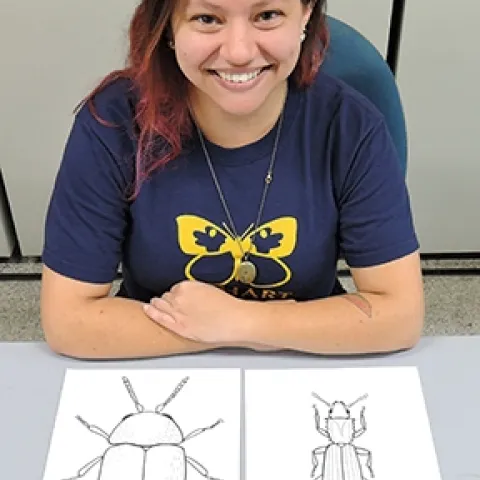
Want to try your hand at Maggot Art? If you've ever visited Briggs Hall during the annual campuswide Picnic Day at the University of California, Davis, you probably know about Maggot Art, an arts-and-crafts activity that fuses entomology with art.
View Article
Primary Image
Dates
Topics in Subtropics: Article

2017 Date Field Day: A Success!

July 5, 2017
By Sonia I Rios
The University of California Cooperative Extension (UCCE), UC Riverside, United States Department of Agriculture/Agriculture Research Service (USDA/ARS), and the California Date Commission hosted a Date Field Day on February 15, 2017 at the UC Riverside Coachella Valley Agricultural Research Station...
View Article
Bug Squad: Article

Dragonfly vs. Bee: Catch of the Day

July 5, 2017
By Kathy Keatley Garvey
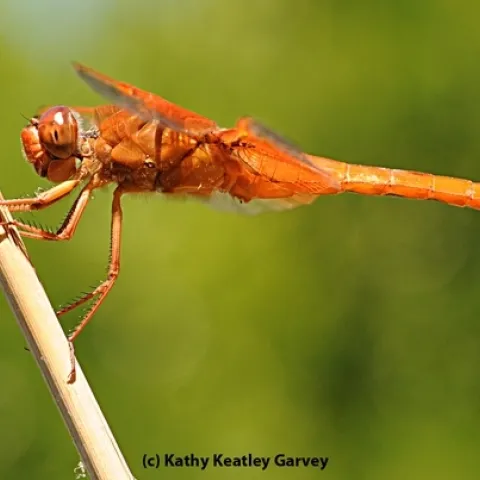
The red flameskimmer dragonfly (Libellula saturata) waits oh-so-patiently atop a bamboo stick at the edge of the pollinator garden. She's in Vacaville, Calif.
View Article
Primary Image
bee avocado flower
Topics in Subtropics: Article

Bumble Buzzing Pollen Gathering

July 5, 2017
By Ben A Faber
Imagine going to the supermarket to stock up on groceries but coming home empty-handed because you just couldn't figure out how to work the shopping cart or figure out how to get to the ice cream tubs in the freezer aisle. Welcome to the life of a bumblebee.
View Article
Bug Squad: Article

Hurrah for the Red, White and Blue!

July 4, 2017
By Kathy Keatley Garvey
It's the Fourth of July, and amid our celebration of the adoption of the Declaration of Independence 241 years ago on July 4, 1776 and our glorious nation, we celebrate the red, white and blue--the colors of our flag.
View Article
Primary Image
olive map
Topics in Subtropics: Article

California Olives and the Mystery of Santa Cruz Island

July 3, 2017
By Ben A Faber
Recent advances in understanding the history of olive domestication Elizabeth Fichtner, Farm Advisor, UCCE Tulare and Kings Counties Olives are thought to have first been domesticated in the northeastern Levant, an area near the border of present-day Turkey and Syria. Map captured from Google Maps.
View Article