A Natural Solution for California's Herds: African Catfish Peptides

California's cattle producers and agricultural communities are all too familiar with the rising challenge of antibiotic resistance, making common bacterial infections harder to treat in livestock. But imagine a future where we could tackle these infections with a natural, powerful alternative. Our research points to just that: antimicrobial peptides (AMPs) found in African catfish.

We're really excited about these peptides because African catfish thrive in pathogen-rich freshwater, naturally producing these robust immune compounds in their skin mucus as a defense. This natural origin makes them highly appealing alternatives to synthetic drugs.

Predicted Safety and Potent Action

One of the most compelling aspects of these AMPs is their predicted safety for mammals. Our initial computer analyses suggest that various catfish AMPs are generally recognized as safe (GRAS). We predict they'll be absorbed in the human intestine without causing liver, brain, or heart toxicity. Furthermore, lab tests on a promising peptide, NACAP-II, confirmed it was non-hemolytic, meaning it didn't damage rabbit red blood cells—a strong indicator of its potential safety for mammalian cells.

Beyond safety, these peptides demonstrate effectiveness against problematic bacteria. One study revealed NACAP-II's strong activity against Extended-Spectrum Beta-Lactamase (ESBL)-producing Escherichia coli—a critical concern for both animal and human health due to its resistance to many common antibiotics. Another peptide, ACAP-IV, also showed antibacterial activity against E. coli and Staphylococcus aureus. We believe these AMPs work by directly disrupting bacterial cell membranes, a mechanism that makes it harder for bacteria to develop resistance compared to how they resist traditional antibiotics.
Primary Image
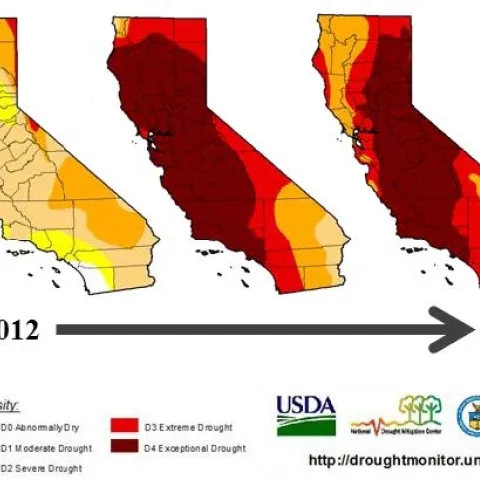
Ca drought
Topics in Subtropics: Article

Drought Information Resources

February 27, 2015
By Ben A Faber
California is suffering historic drought conditions. The information on this webpage offers farmers and ranchers links to valuable resources, carried out by researchers and specialists, on a vast array of issues they are facing during this extremely dry and difficult year.
View Article
Primary Image
Vern Burton at 85. (Photo by Kathy Keatley Garvey)
Bug Squad: Article

Remembering Vernon Burton: 1924-2015

February 26, 2015
By Kathy Keatley Garvey
Family, friends and colleagues are remembering Vernon Burton, 90, known for his 38-year exemplary career with UC Cooperative Extension, including 10 years as a Kern County farm adviser in Bakersfield, and 28 years with UC Davis Department of Entomology (now the UC Davis Department of Entomology and...
View Article
Primary Image
Emcee Bill Rains (left) congratulations Robbin Thorp. (Photo by Kathy Keatley Garvey)
Bug Squad: Article

Two Who Make a Difference

February 25, 2015
By Kathy Keatley Garvey
They are two who make a difference. Native pollinator specialist Robbin Thorp, emeritus professor of entomology, received the 2015 Distinguished Emeritus Award and Hugh Dingle, emeritus professor of entomology, received an Edward A.
View Article
UC Weed Science (weed control, management, ecology, and minutia): Article

JOB OPENING :: Assistant Professor of Weed Science

February 25, 2015
By Gale Perez
This is a tenure-track position at the Assistant Professor level, approximately 80% Research and 20% Extension on a 12-month appointment. The position is available on or after August 1, 2015.
View Article
Primary Image
A honey bee gathering nectar from a bush germander at CornerStone Sonoma. (Photo by Kathy Keatley Garvey)
Bug Squad: Article

How Are These Two Alike?

February 24, 2015
By Kathy Keatley Garvey
What does a bee have in common with a bulldog? If you've ever been to Cornerstone Sonoma on Arnold Drive (Highway 121) in Sonoma, and admired the luxurious gardens and intriguing shops, you know. The bees go head-first in the blossoms and Axel, an English bulldog, goes head-first in a bucket.
View Article
Primary Image
ACP traps
Topics in Subtropics: Article

A New Psyllid Trap

February 24, 2015
By Ben A Faber
Scientists at the Florida Department of Agriculture and Consumer Services have developed a SmartTrap using 3D printing technology to more efficiently catch and study the Asian citrus psyllid, the vector of citrus greening.
View Article
UC Weed Science (weed control, management, ecology, and minutia): Article

Reminder - International IPM Symposium

February 24, 2015
By Cheryl A Wilen
The 8th International IPM Symposium to be held March 23-26,2015 in Salt Lake City, UT is approaching. Thank you to those of you who have already registered for the meeting. Don't miss the opportunity to hear plenary talks from: Dr.
View Article