A Natural Solution for California's Herds: African Catfish Peptides

California's cattle producers and agricultural communities are all too familiar with the rising challenge of antibiotic resistance, making common bacterial infections harder to treat in livestock. But imagine a future where we could tackle these infections with a natural, powerful alternative. Our research points to just that: antimicrobial peptides (AMPs) found in African catfish.

We're really excited about these peptides because African catfish thrive in pathogen-rich freshwater, naturally producing these robust immune compounds in their skin mucus as a defense. This natural origin makes them highly appealing alternatives to synthetic drugs.

Predicted Safety and Potent Action

One of the most compelling aspects of these AMPs is their predicted safety for mammals. Our initial computer analyses suggest that various catfish AMPs are generally recognized as safe (GRAS). We predict they'll be absorbed in the human intestine without causing liver, brain, or heart toxicity. Furthermore, lab tests on a promising peptide, NACAP-II, confirmed it was non-hemolytic, meaning it didn't damage rabbit red blood cells—a strong indicator of its potential safety for mammalian cells.

Beyond safety, these peptides demonstrate effectiveness against problematic bacteria. One study revealed NACAP-II's strong activity against Extended-Spectrum Beta-Lactamase (ESBL)-producing Escherichia coli—a critical concern for both animal and human health due to its resistance to many common antibiotics. Another peptide, ACAP-IV, also showed antibacterial activity against E. coli and Staphylococcus aureus. We believe these AMPs work by directly disrupting bacterial cell membranes, a mechanism that makes it harder for bacteria to develop resistance compared to how they resist traditional antibiotics.
Primary Image
Center pivot irrigation hub (USDA-ARS photo)
Conservation Agriculture: Article

UC's first center pivot irrigation system to be dedicated Sept. 13

August 16, 2012
By Jeannette Warnert
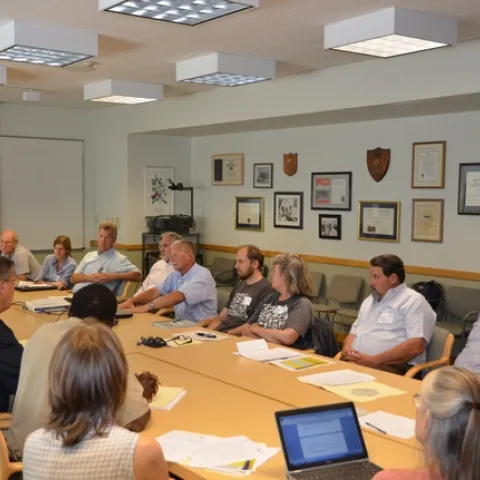
In a clear sign of changing times in California agriculture, the University of California dedicates its first full-sized center pivot overhead irrigation system at the UC West Side Research and Extension Center during the Twilight Conservation Agriculture field day at 4 p.m. Sept. 13.
View Article
Primary Image
Honey bee heading toward tower of jewels (Echium wildpretii). (Photo by Kathy Keatley Garvey)

The Bounty of Pollination

August 15, 2012
By Kathy Keatley Garvey
If you want to learn more about honey bees and other pollinators, then The Bounty of Pollination: More Than Just Honey is the place to bee on Saturday, Oct 27 at the Robert Mondavi Institute for Wine and Food Science (RMI), University of California, Davis.
View Article
Primary Image
iron dieback citrus
Topics in Subtropics: Article

New, Yellow Leaf Flush?

August 15, 2012
By Ben A Faber
Lime-induced Iron Chlorosis: a nutritional challenge in the culture of several subtropical perennial crops in California Elizabeth Fichtner, UCCE Tulare County and Rachel Elkins, UCCE Lake and Mendocino Counties Spring, and new leaves are coming out, but this could, but yellow could be a sign of iro...
View Article
UC Weed Science (weed control, management, ecology, and minutia): Article

Pursuit herbicide injury to almond

August 15, 2012
By Mick M Canevari, Brent A Holtz
In June we visited a first-leaf almond orchard that had started the season growing normally, but as the root system expanded, the trees growth became rapidly stunted (Fig. 1). The newly expanding shoot tips showed little leaf symptoms (Fig.
View Article
Primary Image
Katydid climbing a wall. (Photo by Kathy Keatley Garvey)

The Sounds of Katydids

August 14, 2012
By Kathy Keatley Garvey
Ever heard the sound of katydids? The meadow katydids, the true katydids, the round-headed katydids, the bush katydids and the shiedback katydids? They're all there, in all their glory. Entomologist/educator/author/lecturer/photographer/broadcaster Art Evans of Richmond, Va.
View Article
Primary Image
Headed rice
UC Rice Blog: Article

High temperatures and rice

August 14, 2012
By Luis Espino
In the past few days we've seen some unusual high temperatures in the Sacramento Valley, and looks like the hot weather is going to continue for a few more days.
View Article
Primary Image
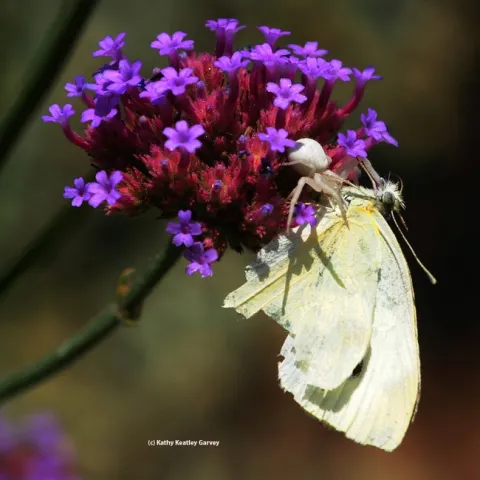
Freeloader fly sharing a meal with a spider. (Photo by Kathy Keatley Garvey)

Buddy, Can You Share a Meal?

August 13, 2012
By Kathy Keatley Garvey
The next time you see a spider eating a bee snared in its web, look closely. The spider may not be alone. It may have a dinner companion. A freeloader fly. The common name, "freeloader fly," refers to the Milichiidae family.
View Article
UC Weed Science (weed control, management, ecology, and minutia): Article

Rice Field Day and Aquatic Weed School 2012

August 12, 2012
By Gale Perez
Reminder Here are 2 events you dont want to miss. Centennial Celebration and Rice Field Day Program Rice Experiment Station, Biggs, CA Wednesday, August 29, 2012 Aquatic Weed School 2012 Bowley (Plant) Science Teaching Center, UC Davis Sept.
View Article
Primary Image
Honey bee nectaring in the Haagen-Dazs Honey Bee Haven at UC Davis. (Photo by Kathy Keatley Garvey)

The Great Bee Count

August 10, 2012
By Kathy Keatley Garvey
Are you ready for the Great Bee Count? It's happening Saturday, Aug. 11. You're encouraged to be a "citizen scientist" and count the bees in your backyard or garden over a 15-minute period and to watch or listen to a national online video broadcast at http://www.yourgardenshow.
View Article